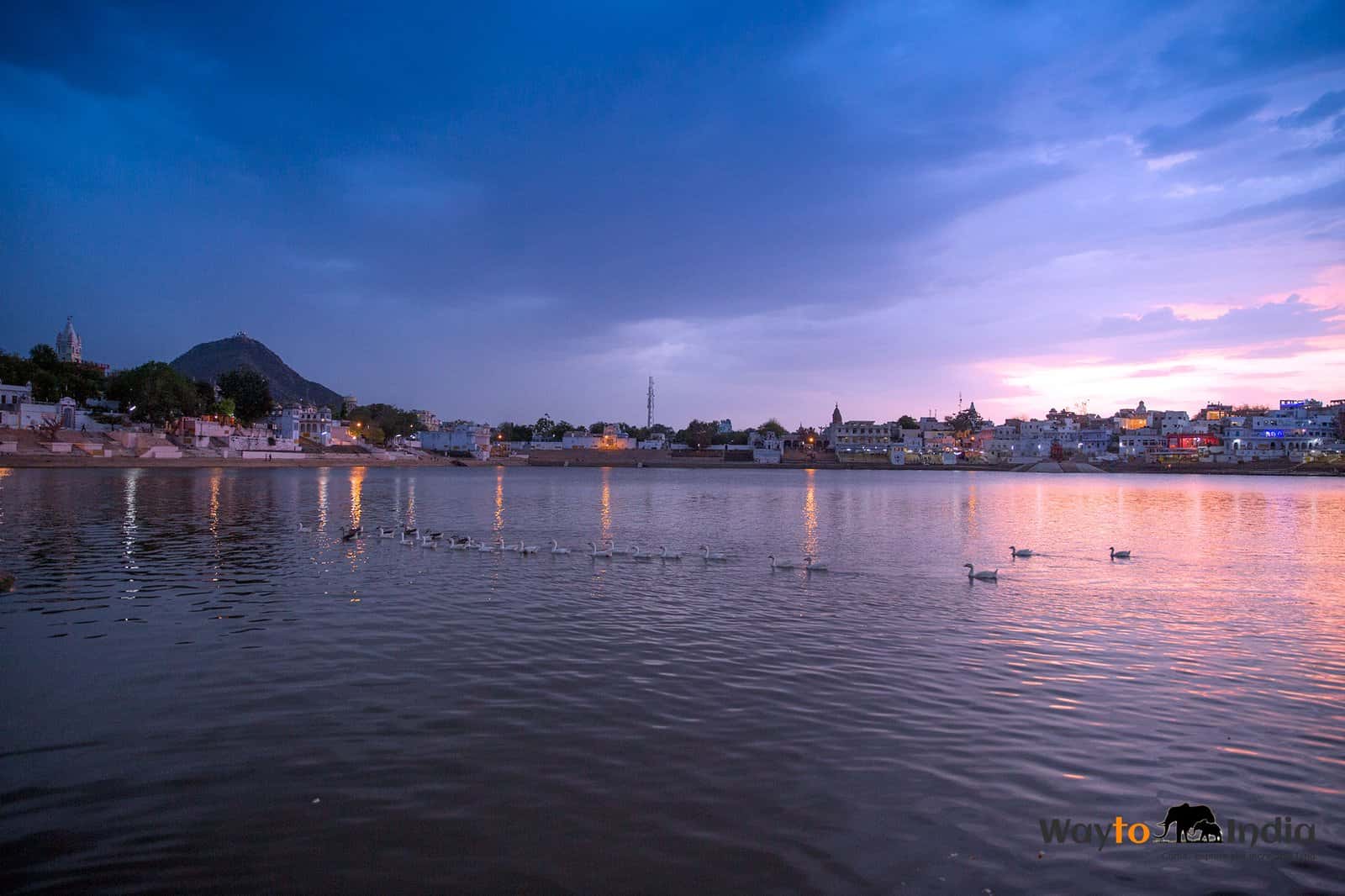
Pushkar Travel Guide
The best months are October to March , and the great set-piece is the Pushkar Camel Fair around Kartik Purnima in November. Decide early whether you want the fair crowds or the...
When to visit Pushkar, and the fair to plan around
The best months are October to March, and the great set-piece is the Pushkar Camel Fair around Kartik Purnima in November. Decide early whether you want the fair crowds or the quieter town.
- November to February: cool and clearThe most comfortable time, pleasant by day and genuinely cold at night, so carry a layer. November also brings the famous Camel Fair, so the town is at its liveliest and its most crowded around then.
- October and March: warm but fineStill good for the lake and the temples, with fewer visitors than fair season. By late March the desert afternoons begin to warm up quickly, so do the ghats and the ropeway early.
- April to June: hot, and best avoidedHigh summer on the desert plain is fierce, tiring for the open ghats and the climb to the hill temples. If you must come then, keep the middle of the day for rest and shade.
- Fair or no fair, decide firstThe Camel Fair is a wonderful spectacle but rooms are scarce and dear, and the quiet town in late January or February is gentler and more reflective. Both are lovely, so choose the experience you want before you book.
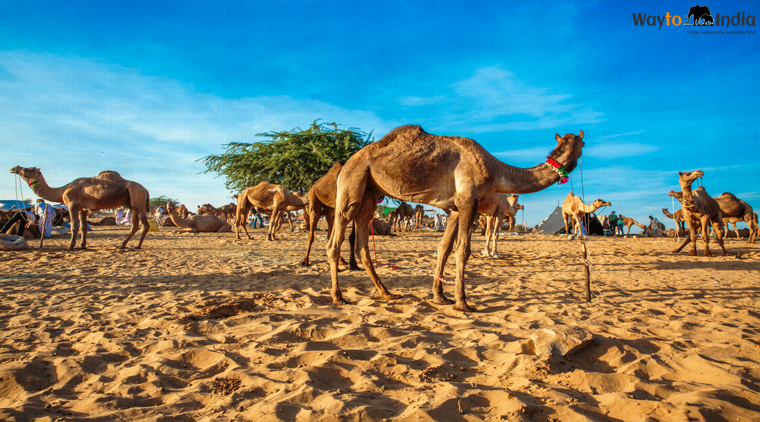
The fair is timed to Kartik Purnima, which in 2026 falls on about 24 November. Tour operators widely expect the fair to run about 17 to 24 November 2026, with the livestock trading and competitions first and the holy bathing climax on Purnima, but those dates are not yet posted on the official Rajasthan Tourism calendar. Treat 17 to 24 November as expected, not confirmed, and reconfirm the official dates on the Rajasthan Tourism site before you book flights or rooms. Beware pages that quote a fixed date as fact, as old dates are copied across the web every year.
How to reach Pushkar
Pushkar has no airport or railway of its own. Almost everyone comes through Ajmer, just over the hill, or down from Jaipur by road.
- Via Ajmer, the nearest railheadAjmer is the nearest big railway station, only about 11 to 15 km away over the Nag Pahar hill, roughly 30 to 40 minutes by road by taxi or shared auto. Many visitors pair the Ajmer Sharif Dargah with Pushkar in a single trip.
- From Jaipur by roadJaipur is about 146 to 150 km away, roughly 3 hours by car on a good highway, and has the nearest major airport with wide connections. Pushkar slots neatly onto a Jaipur and Rajasthan loop, and we can arrange a car with an experienced driver.
- From DelhiDelhi is the main long-distance gateway, around 400 km and a long day by road, so most travellers break the journey in Jaipur or take a train to Ajmer and drive the short hop over the hill.
- Nearest airportsKishangarh airport is the closest at about 28 to 37 km but has only limited and changeable flights, so check current routes before relying on it; Jaipur, about 3 hours away, is the practical and reliable airport for most travellers. There are no flights into Pushkar itself.
Fly into Delhi, the main international gateway, then reach Pushkar via Jaipur by train or road, or continue your Rajasthan loop down through Ajmer. Pushkar has no international flights of its own.
Fly into Delhi or directly to Jaipur, then drive about 3 hours to Pushkar. It sits easily on the Jaipur, Ajmer and Jodhpur road circuit.
Take a train to Ajmer and drive the short hop over the hill, or drive from Jaipur. The Ajmer railhead, well served by the Delhi and Jaipur lines, is the simplest way in by rail.
The Brahma Temple, the lake, and the temple rules
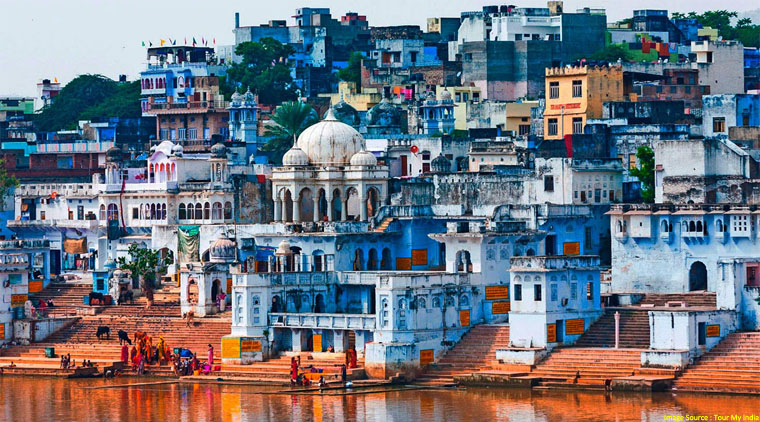
Pushkar is its sacred lake, the rare Brahma Temple, and the hill temples above town. A few entry rules are worth knowing before you go.
- The Brahma TempleOne of very few temples anywhere dedicated to Lord Brahma, the creator, and the reason most pilgrims come. Entry is free. Leather belts, wallets and bags must be left outside, and it is best to leave your phone and camera out of the inner sanctum. The temple usually shuts for a couple of hours in the early afternoon, roughly about 1:30 pm to 3 pm, so come in the morning or later in the day.
- Pushkar Lake and the 52 ghatsThe holy lake ringed by 52 bathing ghats is the soul of the town, most beautiful at sunset and during the evening aarti. Go barefoot near the water, dress modestly, and read the safety section before anyone offers you a flower.
- Savitri and Gayatri temples on the hillsSavitri Temple sits on the higher hill above town, reached by a steep climb or the aerial ropeway, with the classic sunrise view over the lake and the dunes. Gayatri (Pap Mochani) Temple on the opposite hill is the gentler sunset climb. The two temples carry the heart of Pushkar's founding legend.
- The bazaar and Old Rangji TempleSadar Bazaar, the main lane, is full of music, textiles and rose-petal stalls, and the south Indian style Old Rangji Temple nearby is a quiet contrast to the busy ghats.
Pushkar is a deeply religious place. Cover shoulders and knees near the temples and ghats, remove shoes where asked, and do not picnic, drink or swim at the ghats. Remember the town is strictly vegetarian and alcohol-free, covered in the logistics and overseas sections below.
Signature experiences in Pushkar
Beyond the temples, these are the experiences people remember, and how to arrange them without the tourist-trap version.
- Sunset over the lake from a rooftopThe loveliest free experience in Pushkar: a chai or coffee on a lakeside rooftop cafe as the aarti bells start and the light goes gold over the ghats. Many of the famous cafes line the lake and the bazaar, and no one minds if you linger.
- Sunrise at Savitri Temple by ropewayTake the ropeway or climb up to Savitri Temple before dawn for the best panorama in town, the lake on one side and the desert dunes on the other. The ropeway runs roughly 8 am to 7 pm and costs about 180 rupees return for an adult, saving seniors the climb of around 1,100 steps.
- The evening aarti at the ghatsThe lamp-lit aarti at sunset, around 5:30 pm in winter and about 7 pm in summer, is the emotional heart of a visit. Varah Ghat and Brahma Ghat are good places to watch it; arrive 15 to 20 minutes early, and read the safety section so the donation touts do not spoil it.
- A sunset camel or horse ride in the dunesShort camel and horse rides into the dunes at the edge of town are a gentle classic, especially at sunset, typically about 600 to 800 rupees for an hour. Agree the price and the length of the ride before you set off, as rates are negotiable and quoted high to visitors.
- The Camel Fair, if your dates matchIf you visit around Kartik Purnima you can watch the livestock trading, the camel competitions, folk music and, on some days, hot air balloon rides. It is dusty, crowded and unforgettable; go early in the day for the best of it.
- Slow shopping in Sadar BazaarPushkar is good for textiles, silver, music and rose products. Browse and bargain gently, and there is no pressure to buy. A relaxed afternoon in the lanes is part of the charm.
If you do only one thing slowly, make it the lake at either end of the day. The sunrise from Savitri Temple and the lamp-lit evening aarti are what people remember long after the bazaar and the rides fade, and both are free. Give yourself an unhurried morning and an unhurried evening, and Pushkar opens up in a way a quick stop never allows.
Where to stay in Pushkar, and how many nights
Stay in the lakeside old town to be in the thick of it, or on the quiet desert edge for space and calm. One to two nights is the sweet spot.
- Lakeside and Sadar Bazaar: in the thick of itWalking distance to the ghats, the Brahma Temple, the cafes and the bazaar. Atmospheric and convenient, but busier, noisier and with more touts, and rooms can be small. Best for first-timers who want to step straight into the scene.
- Desert-edge resorts: space and calmQuieter properties on the outskirts with pools, gardens and sunset-dune views, but you will need transport into town. Better for couples, families and anyone who wants to slow down, and the natural choice for the tented camps during the fair.
- How many nightsOne full day and night is enough to cover the lake, the Brahma Temple, the Savitri ropeway at sunrise or sunset, the bazaar and one aarti. Add a second night for a desert safari or a slow cafe-and-yoga pace. Half a day, on the way to Jodhpur, just about lets you see the temple and the lake.
- Room budgetsOff-season, budget rooms run from about 600 to 1,500 rupees, mid-range about 1,500 to 4,000 rupees, and boutique or heritage stays about 5,000 to 15,000 rupees. All of these rise steeply around the fair, so book early.
During the Camel Fair, rooms and tented camps are scarce and sold months in advance at several times the normal price. If your dates fall on the fair, book well ahead, or base yourself in Ajmer and commute over the hill.
Pushkar costs and a realistic daily budget
Pushkar is gentle on the wallet outside fair season. Here is what the main things cost, so you can plan and avoid being overcharged.
- A rough daily budgetExcluding your room and long-distance transport, plan on about 1,200 to 2,000 rupees a day as a backpacker, about 3,000 to 5,000 rupees mid-range, and about 6,000 rupees and up for a comfortable day with cafes, a ride and some shopping.
- The fixed-price thingsThe Brahma Temple is free to enter. The Savitri ropeway is about 180 rupees return for an adult, about 140 rupees for a child, and about 110 rupees one way. These are the rare prices in town that are not negotiable, which makes them a useful anchor.
- The negotiable thingsA short sunset camel or horse ride is typically about 600 to 800 rupees for an hour, bazaar goods are quoted high to visitors, and any ghat puja should have its amount agreed before it begins. Settle the price first and the only common friction in Pushkar disappears.
- Cash and cardsCafes and bigger shops take cards or UPI, but the bazaar, the rides and small vendors run on cash. There are bank ATMs in the main market, so carry enough cash for the day to keep things smooth.
Everything except the temple and the ropeway is negotiable, so the single habit that saves money in Pushkar is to ask the price and agree it before anything begins, whether that is a camel ride, a bazaar purchase or a ghat puja. Quotes to visitors start high and come down without any drama, and a sum agreed in advance turns the town's only friction into a non-event.
Practical logistics: food, money, SIM and getting around
The small things that make a Pushkar day smooth, from the dry-and-vegetarian rule to ATMs, walking and local transport.
- Vegetarian and dry, by ruleMeat, eggs and alcohol are not openly sold in the town and temple zone, roughly within about 2 km of the Brahma Temple. The vegetarian food is excellent, so lean into it, and save any drink for Ajmer, Jaipur or your next stop.
- Getting around townThe core, the lake, the ghats, the Brahma Temple and Sadar Bazaar, is compact and best explored on foot. Auto-rickshaws and shared transport handle the short hops to Ajmer and out to the desert-edge resorts.
- Money and ATMsBank ATMs from SBI, ICICI, Axis and others are in the main market. Carry cash for the bazaar, the rides and small eateries, as not everyone takes cards or UPI.
- SIM, signal and languageMobile coverage in town is generally fine for calls and data. Hindi and Rajasthani are the local languages, but English is widely understood in the cafe and tourist trade, so communicating is easy.
Safety, the donation trap, and staying well
Pushkar is gentle and welcoming, but the lake-side donation pressure catches a lot of first-timers. A little awareness keeps the visit happy.
- The Pushkar Passport donation trap, and how to handle itNear the ghats, a man posing as a priest, or a friendly young tout, offers a free puja for your ancestors, presses a flower into your hand, walks you to the water, ties a red moli thread, then demands a large donation, often from about 500 rupees up to several thousand or a sum in dollars. Decline the flower, keep your hands closed, and walk on. No payment is required to visit any ghat or temple.
- Two simple counter-tricksHave hotel staff tie a red thread on your wrist before you go down to the lake, so you can show you already have a Pushkar Passport. And use a quieter ghat away from the busiest tourist steps. If you genuinely want a puja, choose the priest and agree the amount yourself, first.
- Other small scamsA woman carrying a child may ask you to buy food rather than give money, then steer you to a shop where milk powder or flour is priced absurdly high. A polite no is enough. Agree all ride and shopping prices before you commit.
- Heat, water and healthDrink bottled or filtered water, take the usual care with street food, and in the warmer months carry sun protection and water for the open ghats and the hill climb. The ropeway spares you the steep steps if the heat is tiring.
Most solo women find Pushkar manageable with standard precautions. The persistent friction reported on traveller forums is sales pressure and the flower-and-donation touts rather than violent crime. Dress modestly near the temples, be firm with the touts, and prefer the busier lakeside lanes after dark, and Pushkar is one of the gentler Rajasthan stops to travel alone.
Pushkar for every kind of traveller, and on access
Pushkar suits very different visitors in different ways. Here is what it offers you, and the one tip that matters for each, including how a senior visits comfortably.
- CouplesSlow, soulful and romantic: rooftop sunsets over the lake, the evening aarti and quiet desert dunes. An overnight rather than a day trip lets you catch both sunset and sunrise.
- Families with childrenEasy and colourful, with camel rides, the bazaar and the lake. During the fair it is crowded and dusty, so keep little ones close and visit the fairground early in the day.
- Senior travellers and on accessibilityVery doable with a little planning. Stay near the lake to limit walking, use the ropeway rather than the steep climb to Savitri Temple, visit the ghats in the cool of morning or evening, and skip the crush of peak fair days if you prefer calm. The old-town lanes are flat but uneven and can be busy, so take them slowly.
- Backpackers and budget travellersA long-loved travellers hub, full of cafes, music and cheap, characterful guesthouses near the lake. Easy to reach by bus or train via Ajmer, and a great place to slow down for a few days.
- Solo female travellersGenerally relaxed and well used to independent travellers. Dress modestly near the temples, be firm with the flower-and-donation touts, and prefer the busy lakeside lanes after dark. One of the gentler Rajasthan stops for solo women.
- PhotographersSunrise from Savitri Temple, the ghats at the evening aarti, and the colour and dust of the fair. Ask before photographing people at prayer, and remember the camera ban inside the Brahma Temple.
A suggested Pushkar itinerary
How to shape one or two unhurried days so you catch the lake at its best light and the temple at the right hours.
- Day one, morningStart early at the Brahma Temple before the midday closing, then wander the ghats while the light is soft, keeping a firm no ready for the flower-sellers. Break for breakfast at a lakeside cafe.
- Day one, afternoon and eveningRest through the heat, browse Sadar Bazaar in the late afternoon, then take the ropeway up to Savitri Temple for sunset or settle on a rooftop for the lake view, and end at the evening aarti.
- Day two, if you have itCatch sunrise from Savitri Temple, then take a gentle camel or horse ride into the dunes, or simply slow down in the cafes. A second night turns a tick-the-box stop into the calm pause that Pushkar does best.
- The half-day versionOn a Jaipur to Jodhpur drive you can stop for the Brahma Temple and a short walk by the lake in two or three hours, though you will miss the magic of the light at either end of the day.
The single thing that breaks a tight Pushkar plan is arriving at the Brahma Temple during its early-afternoon closing, roughly about 1:30 pm to 3 pm. Build your day so the temple falls in the morning or the later afternoon, keep the hot middle of the day for a cafe or a rest, and you will never find yourself standing at a shut gate with the clock running.
The real questions travellers ask about Pushkar
Straight answers to the questions that come up again and again on traveller forums, so you arrive already knowing the score.
- Is one night enough?One full day and night covers the essentials comfortably. Two nights is better if you want a desert safari, a sunrise and sunset both, or simply a slower pace. Half a day in transit only scratches the surface.
- Pushkar or Ajmer as a base?Stay in Pushkar for the lake, the cafes and the atmosphere. Base in Ajmer only if you have an early train to catch or you cannot find a fair-season room, since the two are just over the hill from each other.
- Is it overrated or too touristy?Pushkar is touristy around the lake and the bazaar, and the donation touts frustrate some visitors, but the temple, the hill sunrises and the quiet early mornings are the real thing. Manage the touts and it rewards you.
- Can I really not get meat or a drink?Correct: the town is vegetarian and alcohol-free by rule, so do not plan on either inside Pushkar. The vegetarian food is a highlight, and a drink waits at your next stop.
- How do I get across from Ajmer to Pushkar?It is a short hop of about 11 to 15 km over the Nag Pahar hill, roughly 30 to 40 minutes. Take a pre-paid taxi, an auto-rickshaw or one of the frequent shared autos and local buses from Ajmer; if you are arriving by train, this is the last leg of almost every journey into Pushkar.
- When exactly is the aarti and where do I watch it?The evening aarti is at sunset, about 5:30 pm in winter and about 7 pm in summer; Varah Ghat and Brahma Ghat are the usual spots. Arrive 15 to 20 minutes early, sit quietly, and keep a firm no ready for anyone pressing a flower on you.
Planning Pushkar from abroad
Pushkar is the gentle, spiritual heart of a Rajasthan trip and pairs naturally with Jaipur and Ajmer. A little preparation makes the holy-town rules and the donation trap easy to handle.
- Know it is a vegetarian, dry townMeat, eggs and alcohol are not openly sold inside Pushkar. Eat the excellent vegetarian food, enjoy the cafes, and if you want a drink, plan it for Ajmer, Jaipur or your next stop. It is a defining part of Pushkar's character, not an inconvenience.
- Be ready for the donation approachAt the ghats, someone may offer you a flower and a quick blessing, then ask for a large mandatory donation, sometimes quoted in dollars. This is the one thing to be ready for. A firm, friendly no and a walk-on is all it takes, and the rest of the town is warm and easy.
- Pair it with Jaipur and AjmerFly into Delhi or Jaipur, then loop Jaipur, Pushkar and Ajmer, and on to Jodhpur or Udaipur. Pushkar is the soulful pause between the big forts, an easy 3 hour drive from Jaipur.
- Gentle and senior-friendly with planningStay by the lake to keep walking short, use the ropeway to Savitri Temple, and choose a calm period over the peak fair days if comfort matters. Pushkar is one of the easier, gentler stops in Rajasthan for parents and grandparents.
Money, connectivity and timing for foreign visitors
The practical basics an overseas traveller needs for a small temple town: cash, cards, a SIM, and how many days to give it on a wider India trip.
- Carry cash, expect to bargainCards and UPI work in cafes and bigger shops, but the bazaar, the camel rides and small eateries are cash places, and prices are negotiable. Draw cash at the main-market ATMs and keep small notes for rides and tips.
- Get a SIM at the airportPick up an Indian tourist SIM or an eSIM when you land in Delhi or Jaipur rather than hunting for one in a small town. Coverage in Pushkar itself is fine for maps, calls and ride-hailing to Ajmer.
- How long to give it on a bigger tripOn a first Rajasthan trip, one to two nights in Pushkar is the right weight between Jaipur and Jodhpur or Udaipur: enough for the temple, the lake and a sunrise, without slowing the whole itinerary.
- Time your visit to your comfortOctober to March is the comfortable window. If you want the spectacle of the Camel Fair, plan around Kartik Purnima and book far ahead; if you want calm, come in the quieter weeks and you will have the mornings almost to yourself.
Pushkar is an unusually gentle introduction to India: small, walkable, deeply atmospheric and, because it is dry and vegetarian, calmer than a big city. Slot it after Jaipur, give it a night or two, and let it be the slow, soulful chapter between the forts. Many overseas visitors say it ends up being the part of Rajasthan they remember most warmly.
Why Brahma is worshipped here, and almost nowhere else
Pushkar takes its name from the lotus, pushpa. In the old story Lord Brahma, the creator, slew the demon Vajranabha with a lotus flower; its petals fell to earth and where they touched, a sacred lake sprang up. Brahma chose this spot for a great yagna, a fire sacrifice that had to be performed beside his wife at the auspicious hour. When his consort Savitri was delayed, Brahma completed the rite beside Gayatri instead. Arriving to find another in her place, Savitri cursed Brahma that he would be worshipped nowhere on earth, then, relenting, softened it so that Pushkar alone would keep his temple. To this day the two hills above the lake carry the Savitri temple on the higher peak, reached by the ropeway, and the Gayatri temple on the other, and Pushkar remains among the most revered tirthas in India.
Planning a Pushkar trip?
Our Rajasthan travel experts plan your full journey for you: route, hotels, darshan timings and transport. You get a free day-by-day plan and an exact quote on WhatsApp, usually within a few hours. No payment is needed to get your plan.
Tour packages that visit Pushkar
Every journey below is private, hand-crafted and fully customizable. Tell us your dates and we tailor the itinerary, the pace and the priests or guides around you.
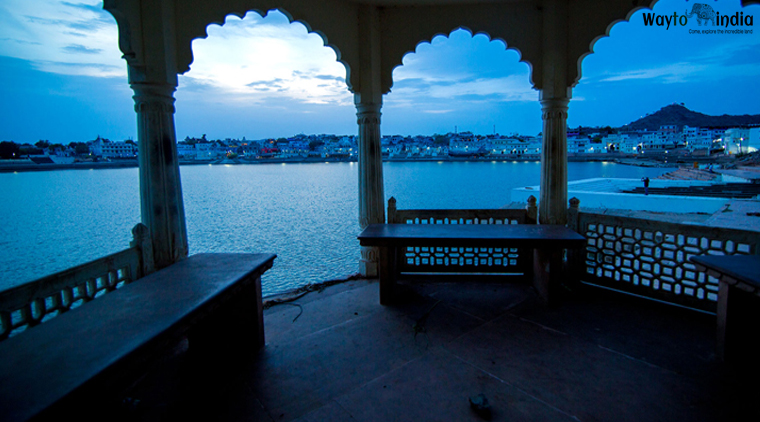 5D / 4N
5 Days Rajasthan Tour Package
- Jaipur
- Pushkar
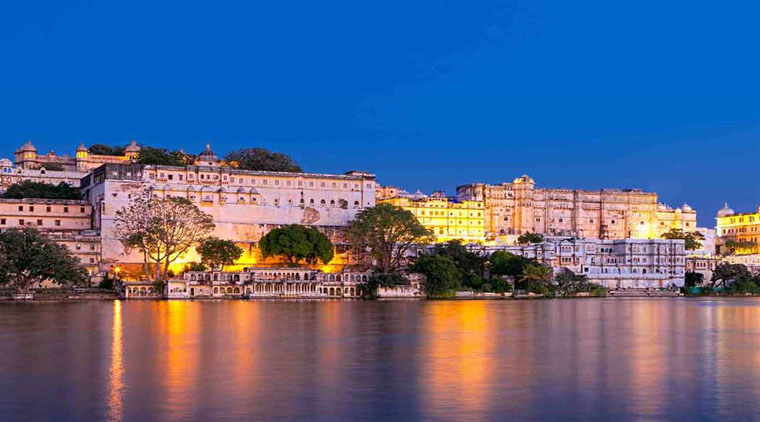 7D / 6N
Golden Triangle Tour With Udaipur
- Sightseeing in Delhi
- Visit Taj Mahal & Agra Fort
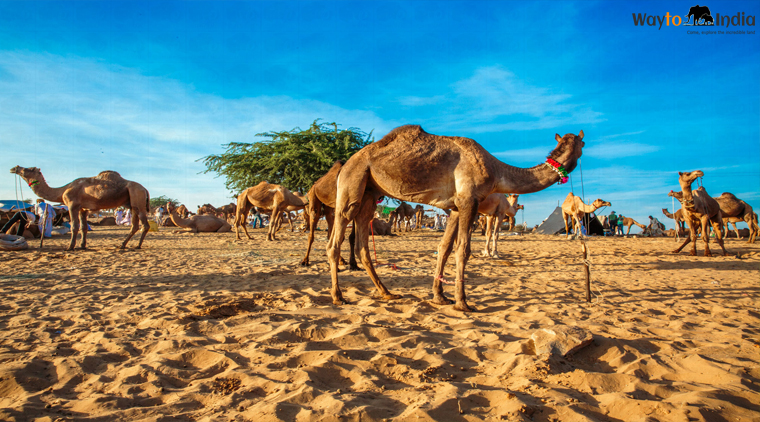 4D / 3N
Pushkar Fair Tour Package
- Largest cattle & livestock fair
- Enjoy folk music & dances of Rajasthan
 4D / 3N
Jaipur Ajmer Pushkar Tour
- Visit famous Ajmer Sharif Dargah
- Visit Jal Mahal
 5D / 4N
Jaipur Ajmer Pushkar Tour Packages From Delhi
- Visit Red Fort
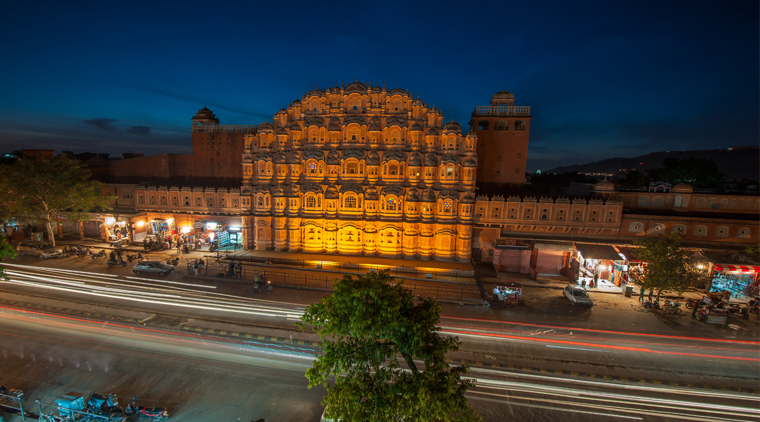
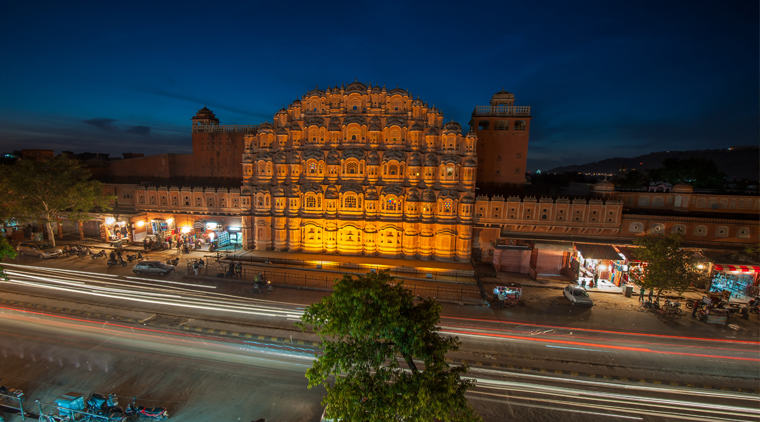
- Visit Hawa Mahal
 8D / 7N
Mewar Tour Packages
- Visit Taj Mahal
- Visit City Palace
 12D / 11N
Horse Safari in Rajasthan
- Visit Ranakpur
- Visit Kotri
 10D / 9N
Golden Triangle Tour with Pushkar
- Delhi
- Agra
 8D / 7N
Best of Mount Abu Tour
- Visit Nakki Lake and Sunset Point
- Visit Famous Jain Temple