
Dhanushkodi Travel Guide
The kind season is the cooler, drier one, about October to March , avoiding the fierce summer heat and the risk of cyclones in the late year.
The best time to visit Dhanushkodi
The kind season is the cooler, drier one, about October to March, avoiding the fierce summer heat and the risk of cyclones in the late year.
- October to March is the seasonThe pleasant months to visit Dhanushkodi run from about October to March. The coastal heat has eased then, and the days are bright and dry. This is the comfortable window for standing out at the exposed tip, walking among the ruins, and enjoying the sea and sky, without the punishing sun of high summer. It is also the main pilgrimage and holiday season. So popular spots can be busy, especially at weekends and on festival days.
- Avoid the fierce summerFrom about April to June, the sun on this open coast is very strong, and the heat and humidity can drain you, especially out at the tip, where there is no shade. If you must come in summer, go early in the morning or late in the afternoon. Carry plenty of water, and cover up well. For most travellers, though, the cooler months are far kinder and more enjoyable for this exposed, treeless place.
- Mind the cyclone seasonThis stretch of the Tamil Nadu coast can be struck by cyclones and heavy weather, particularly late in the year. That is the very season that brought the great disaster of 1964. Keep an eye on the weather forecast if you travel from about October to December. Be ready for your plan to change if a storm is warned. Never venture out to the exposed tip in rough or threatening weather.
- Time your day wellWhenever you come, treat Dhanushkodi as a day trip from Rameswaram, and time it for the softer light. Early morning is cool and quiet, and good for the ruins and the birds. The late afternoon gives beautiful light over the sea, and a memorable sunset from the shore. Avoid the harsh midday hours out at the tip. Aim to be back toward Rameswaram before dark, on the long, lonely road.
Dhanushkodi is an open, treeless spit with no shade, so the season and the time of day matter. Come in the cooler months of about October to March. Visit in the early morning or late afternoon, rather than the midday glare. Watch the weather in the late year cyclone season, carry water and sun protection whatever the month, and never go out to the exposed tip when rough weather is warned.
How to reach Dhanushkodi, by way of Rameswaram
Everything runs through Rameswaram, reached by the famous Pamban bridge; from there it is a short drive down the spit to the tip at Arichal Munai.
The gateway is Rameswaram, the holy island town, reached across the famous Pamban bridge over the sea. The nearest airport is Madurai International Airport, about 191 km away, from which it is a road journey of some hours. Rameswaram has its own railway station, with trains from Madurai, Chennai and beyond. Most visitors base themselves in Rameswaram, and make Dhanushkodi a half day or day trip from there.
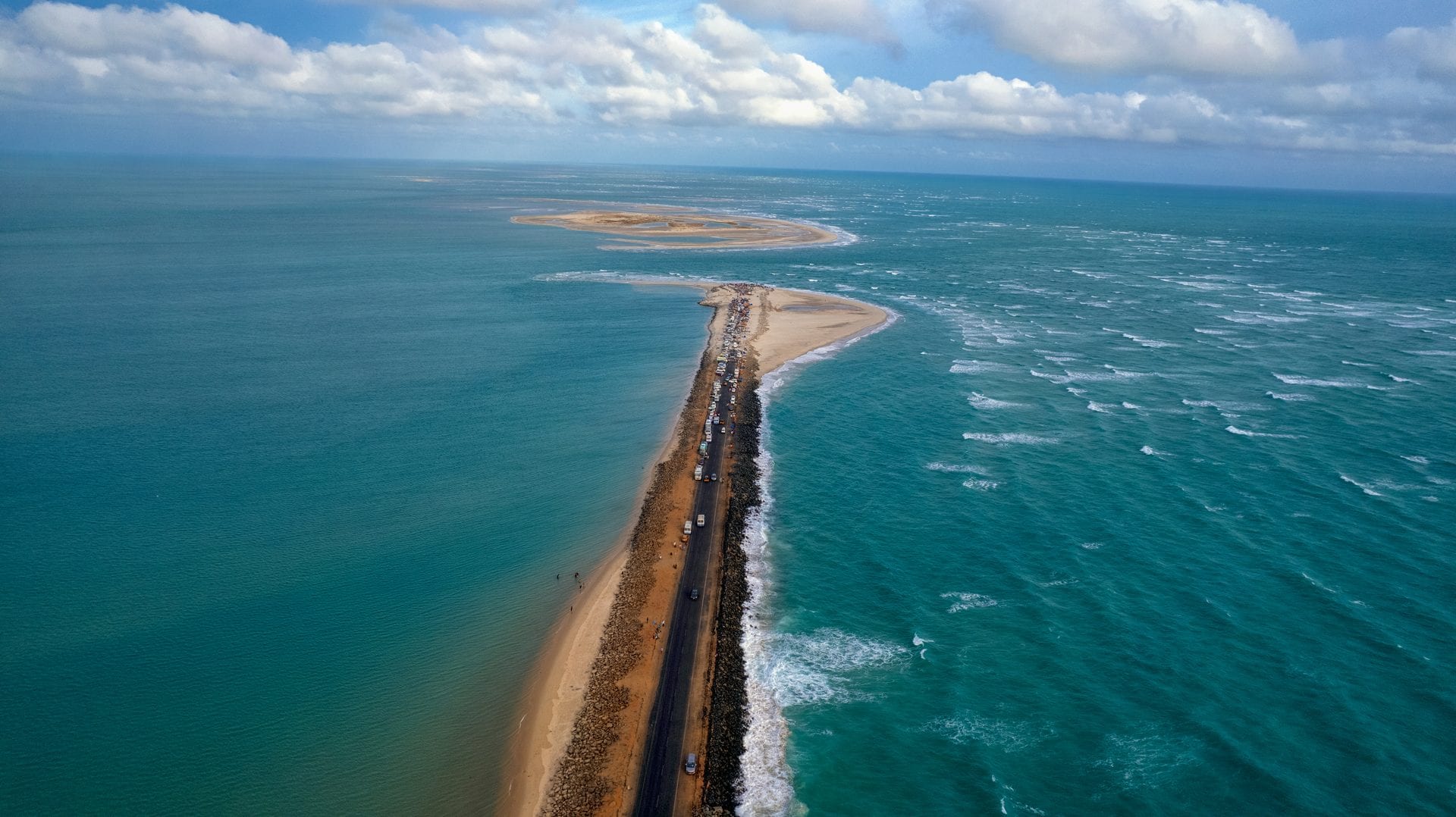
From Rameswaram it is roughly 13 to 20 km down the narrowing island to Dhanushkodi. The very tip at Arichal Munai is a little further along the sand spit. A motorable road, completed around 2016, now carries you most of the way. For decades after the cyclone, only jeeps and vans could cross the sand here. It is a stark, beautiful drive, with sea on both sides of you as the land narrows.
You can reach Dhanushkodi by hired car or taxi from Rameswaram, or by local bus to the village. For the final stretch out to the tip, you may take a shared jeep or van, as private vehicles can be limited there. Arranging a car or a jeep through your hotel or a local operator is the easiest way. It lets you combine the tip, the ghost town ruins and the Kothandaramaswamy temple in one smooth trip.
The tip is exposed and has no facilities, so plan your trip around the cooler parts of the day, and carry what you need. Allow a few unhurried hours to take in the land's end, the ruins and the temple. Aim to be back toward Rameswaram before dark, as the road down the spit is long, lonely and unlit. Check the day's weather before you set out for the open tip.
There is no public transport to the very tip. So arrange a hired car or taxi from Rameswaram, or a local bus and a shared jeep for the final stretch to Arichal Munai, through your hotel or a local operator. This lets you combine the Kothandaramaswamy temple, the ghost town ruins and the tip in one smooth trip, and get back toward Rameswaram before dark on the long, unlit spit road.
Land's end, the ghost town and the sacred bridge
The wonders are Arichal Munai where two seas meet, the haunting ruins of the ghost town, and the Ram Setu stretching toward Lanka.
- Arichal Munai, the land's endThe tip itself, Arichal Munai, is the great sight. It is the very point where the land runs out, and the calmer waters of the Gulf of Mannar meet the open Bay of Bengal. To stand here, with sea on three sides and the wind and the light all around, is to feel truly at the end of India. From here, by tradition, the sandbanks of Ram Setu reach out toward Sri Lanka across the water.
- The ghost town ruinsAlong the spit stand the ruins of the old town that the 1964 cyclone destroyed. You see the roofless shell of a church, the remains of the railway station, and a broken water tank, bleached by sun and salt. They are haunting and moving, a whole community swept away in a single terrible night. Walk quietly among them, with the sea sighing nearby. It is a powerful reminder to you of the force of nature and the lives lost here.
- The Kothandaramaswamy templeOn the way to the tip, about 13 km from Rameswaram, stands the Kothandaramaswamy temple. It is remarkable as the only structure to survive the 1964 cyclone. By tradition, it marks the spot where Vibhishana, the brother of Ravana, surrendered to Lord Rama, and where Rama later crowned him king of Lanka. It is a serene and sacred stop for you, tying the ruined coast firmly to the great story of the Ramayana.
- The sacred Ram SetuDhanushkodi is where, in the Ramayana, Lord Rama pointed with the end of his bow. He asked the vanara army to build the bridge across the sea to Lanka, to rescue Sita. That bridge, Ram Setu or Adam's Bridge, survives as a chain of sandbanks and shoals, stretching from here toward Talaimannar, only about 24 km away. To gaze out toward it from the tip is, for a Hindu pilgrim, to stand within the epic itself.
Dhanushkodi is both a sacred site of the Ramayana and the scene of a great human tragedy, so it asks for a certain quiet respect. Treat the Kothandaramaswamy temple as the living shrine it is. Walk among the cyclone ruins gently, rather than treating them as a mere backdrop for photographs. Take in Arichal Munai and the view toward Ram Setu with the reverence such a place deserves. That spirit is what makes the visit stay with you.
The experiences worth the journey
Stand where two seas meet, walk the ghost town, catch a sea sunrise or sunset, and watch the flamingos on the flats.
- Stand where two seas meetThe simplest and greatest thing to do is to walk out to Arichal Munai, and simply stand there, at the tip of the land. The pale Gulf of Mannar lies on one side, and the deeper Bay of Bengal on the other, with the wind off the sea. Give it your time. This is one of those rare places where geography and legend come together for you. A few quiet minutes here leave a deep impression that no photograph quite captures.
- Walk the ghost townTake time to walk slowly among the ruins of the old town, the church, the station, the scattered remains, and to feel the weight of what happened here in 1964. Read the story of the cyclone before you come, and your walk is far more moving. It turns bleached stones into the memory of a living town, and the people who were lost. It is history you can stand inside, out in the wind and the salt.
- Sunrise, sunset and the lightThe light here is glorious. A sunrise over the Bay of Bengal, or a sunset over the Gulf of Mannar, seen from the empty shore with the ruins as silhouettes, stays with you. The soft early and late hours are also the kindest to you in the heat. Photographers especially will find endless frames in the sea, the sand, the ruins and the sky, if they come at the edges of the day.
- Birds and the shallow flatsThe shallow lagoons and flats around Dhanushkodi draw migratory birds: gulls wheeling over the surf and, in season, flamingos feeding in the shallows. The nearby Gulf of Mannar marine national park is rich in sea life. Keep an eye on the water and the shoreline as you travel the spit. Carry binoculars if you have them, and let the birds add another layer of life to this strange and beautiful land's end.
Where to stay, and how the visit fits
Stay in Rameswaram and visit Dhanushkodi as a half day or day trip; there is nowhere to stay at the tip.
- Rameswaram is your baseYou stay in Rameswaram, not at Dhanushkodi, which is an uninhabited tip with no hotels. Rameswaram has a good range of places to stay, for pilgrims and tourists, from simple lodges near the great Ramanathaswamy temple to comfortable hotels. Most are within easy reach of the temple and the sea. Base yourself here for a night or two, do your temple worship, and make Dhanushkodi a trip from town.
- Half a day to a dayThe Dhanushkodi trip is a half day to a full day from Rameswaram, taking in the Kothandaramaswamy temple, the ghost town ruins and the tip at Arichal Munai. Half a day is enough for you to see the main sights at a fair pace. A full day lets you linger for the light, the birds and a quiet walk among the ruins. Either way, it pairs naturally with your time at the Rameswaram temple.
- Part of a Rameswaram pilgrimageFor most visitors, Dhanushkodi is one part of a Rameswaram pilgrimage, rather than a destination on its own. Give your main time to the Ramanathaswamy temple, one of the twelve Jyotirlingas and a great Char Dham shrine, with its bathing rituals and famous corridors. Then let Dhanushkodi complete the visit, carrying you to the very edge where the Ramayana story reaches the sea. Together they make a whole.
- Book ahead in seasonIn the cooler pilgrimage season and around festivals, Rameswaram fills with devotees, and rooms can be tight, so book your stay ahead. This also lets you arrange the car or jeep for Dhanushkodi in good time. Outside the peak you have more freedom. Even then, it is wise to have your first night settled before you arrive in this busy and much loved pilgrim town.
Dhanushkodi is best understood as the seaward end of a Rameswaram pilgrimage. Give your central time to the Ramanathaswamy temple, one of the twelve Jyotirlingas of Lord Shiva and one of the Char Dham, with its sacred baths and long pillared corridors. Then let the trip to Dhanushkodi and Arichal Munai carry the pilgrimage to the very shore where, in the Ramayana, the bridge to Lanka began. Planned together, the two are far more than the sum of their parts.
A gentle guide to the cost of the visit
Dhanushkodi itself is inexpensive; the main costs are the stay in Rameswaram and the car or jeep to the tip, and it helps to carry cash.
- Getting to the tipThe main cost of your day is transport. You take a hired car or taxi from Rameswaram, or a local bus and then a shared jeep or van for the last stretch to Arichal Munai. Sharing a vehicle among a family or group keeps it modest. There is no large entry charge for the tip or the ruins. So it is the ride, not the site, that sets your budget for the Dhanushkodi part of the trip.
- Your stay in RameswaramWhere you sleep in Rameswaram is the bigger choice, from simple pilgrim lodges to comfortable hotels, with prices climbing in the peak season and around festivals. You will find the food mostly good value South Indian fare. A pilgrim town like Rameswaram is easy on the pocket if you keep things simple. Treat the stay, not Dhanushkodi, as the main line in your budget for the trip.
- Small things at the tipOut at Dhanushkodi there is little to spend on. A few stalls near the more visited spots may sell tea, snacks and trinkets, but the tip itself has almost nothing. Carry your own water and snacks, rather than relying on finding them. Keep a little cash for a shared jeep, a cup of tea or a small offering. Do not count on card payment out here on the spit.
- Carry cashBring enough cash from Rameswaram for the whole trip, as the tip has no reliable cash machines, and mobile payment can fail where the signal is weak. Small amounts for transport, tea and offerings are all cash matters here. As so often away from the towns, it is far better to carry a little too much cash than to be caught short at a remote and beautiful land's end.
Practical tips: no facilities, the sun and the sea
A few plain facts save trouble: carry water and sun protection, respect the dangerous sea, and time the exposed tip for the cooler hours.
- Carry your own water and foodThis is the practical point that matters most. The tip has almost no shops, no reliable drinking water and few or no proper toilets. So carry enough water for everyone, some snacks, and any medicines you need. Do not set out expecting to buy these on the spit. Coming prepared turns a visit to this exposed, empty place from an uncomfortable scramble into an easy and memorable few hours.
- Cover up against the sunDhanushkodi is flat, treeless and open to the sky, with no shade at the tip, so the sun is strong even on a mild day. Wear a hat, use sunscreen, cover your arms, and carry sunglasses. Favour the early morning or late afternoon over the harsh midday. This simple sun sense keeps your visit comfortable, and prevents the sunburn and exhaustion that catch out unprepared visitors on this bare coast.
- Respect the seaThe sea here is beautiful but dangerous, with strong currents and sudden high tides, and it is not safe for swimming. Enjoy the shore, the view and the meeting of the waters from a safe distance. Keep children well back from the edge of the water, and do not wade out. The same forces that destroyed the town in 1964 still move these waters, and they deserve real respect.
- Mind the weather and the lightCheck the day's weather before heading out, especially in the late year cyclone season, and do not go to the exposed tip if rough weather is warned. Aim to reach the tip for the softer light of morning or late afternoon, and to be back on the road toward Rameswaram before dark. The long spit road is lonely and unlit at night. Let the weather and the light shape your timing.
Two warnings matter above all at Dhanushkodi. First, the tip has almost no shops, drinking water or toilets, so carry your own water, snacks and sun protection, and do not rely on finding them there. Second, the sea has strong currents and high tides and is not safe for swimming, so enjoy it from the shore and keep children back from the water. Come prepared and treat the sea with respect, and it is a safe and memorable visit.
Safety at Dhanushkodi
The dangers are the sea, the sun and the remoteness; respect all three and the visit is safe and rewarding.
- Do not swim, respect the tidesThe single biggest safety point is the sea. The waters where the two seas meet carry strong, unpredictable currents, and the tides can rise quickly, so swimming is dangerous and not allowed at the tip. Stay on the shore, keep children firmly back from the water, and do not wade in for a photograph, however inviting the sea looks. Admire the meeting of the waters from safe, dry ground.
- Guard against sun and heatWith no shade at the tip, sunstroke and dehydration are the next real risks, especially for children and older travellers. Carry and drink plenty of water, wear a hat and sunscreen, and rest in what shade you can find. Keep the exposed part of the visit to the cooler hours. If anyone feels faint, dizzy or unwell in the heat, move them into shade, cool them and give water at once.
- Prepare for remotenessDhanushkodi is remote, with no hospitals, few people and often weak phone signal, so help is far away if something goes wrong. Carry any personal medicines and a small first aid kit, and keep your group together. Do not wander off alone along the spit. Tell your hotel roughly when you expect to be back, and keep some slack in the day, so a slow return does not leave you on the road after dark.
- Watch the weatherThis coast is exposed to cyclones and sudden storms, especially late in the year. Check the forecast before you go, heed any local warnings, and never venture out to the open tip in threatening weather, when wind and waves can turn dangerous fast. The 1964 disaster is a solemn reminder that this is a place where the sea and sky must always be respected, not defied.
The waters where the two seas meet carry strong, unpredictable currents, and the tide can rise fast, so swimming at Dhanushkodi is dangerous and not allowed. Enjoy the meeting of the seas from the shore, keep children well back from the water, and never wade in for a photograph. The same forces that destroyed the town in 1964 still move these waters, so treat the sea with real respect.
Dhanushkodi for every kind of traveller
The place moves pilgrims, history lovers, families and photographers alike, each with a little preparation for the sun and the sea.
- Pilgrims and Ramayana devoteesFor pilgrims, Dhanushkodi is the seaward heart of a Rameswaram journey, the very place where Lord Rama began the bridge to Lanka, with the Kothandaramaswamy temple along the way. Come with reverence, and pair it with worship at the Ramanathaswamy Jyotirlinga. Let the land's end carry your pilgrimage to the edge of the epic. For the devout, few places make the Ramayana feel as near and as real as this.
- History and heritage loversFor those drawn to history, the ghost town is deeply moving, a whole settlement destroyed in one night in 1964 and left as haunting ruins by the sea. Read the story before you come, walk the remains slowly, and let the scale of the disaster, and the endurance of the surviving temple, sink in. It is one of the most moving pieces of recent history you can stand inside anywhere in India.
- Families with childrenFamilies do well here with a little care. The open space, the ruins and the meeting of the seas fascinate children, but the sun and the dangerous water call for your close watching. Bring water, hats and sunscreen for your family, keep children well back from the sea, favour the cooler hours, and keep the visit relaxed. Handled gently, it is a grand adventure and a gentle history lesson in one memorable day.
- Photography loversFor photographers, Dhanushkodi is a gift: the ruins against the sky, the two seas meeting, the birds, and the extraordinary light at dawn and dusk. Come at the edges of the day for the best of it, and protect your gear from sun, sand and salt spray. Be patient for the moments when light and place come together. Few coasts in India offer such a mix of beauty, history and legend to frame.
A suggested plan around Dhanushkodi
Tie Dhanushkodi to Rameswaram, Madurai and the far south, over about three to five days of temples and coast.
- Base and worship at RameswaramBegin at Rameswaram with a night or two. Give your central time to the Ramanathaswamy temple, one of the twelve Jyotirlingas and a Char Dham shrine, with its sacred baths and famous corridors. This grounds your trip in worship. It also lets you settle in, arrange transport for Dhanushkodi, and enjoy the holy island town, before you head out to its wild and moving southern tip.
- A day at DhanushkodiGive a half day or full day to Dhanushkodi. See the Kothandaramaswamy temple on the way, the ghost town ruins, and the tip at Arichal Munai, where two seas meet and the Ram Setu begins. Time it for the cooler, softer hours, carry water and sun protection, and let yourself linger for the light and the quiet. For many travellers, it is the emotional high point of a Rameswaram visit.
- Add Madurai on the wayMost journeys to Rameswaram pass through Madurai. So give it a day for the magnificent Meenakshi Amman temple, one of the greatest temple complexes in India, and for the life of that ancient city. Set at the start or end of your trip, Madurai adds a second great temple to the pilgrimage. It also breaks the road journey between the plains and the coast in the finest possible way.
- Extend to the far southWith more time, carry on down to Kanyakumari, at the very tip of the mainland, where three seas meet and the Vivekananda memorial stands on its rock. It is a natural companion to the land's end at Dhanushkodi. Over about three to five days, this southern circuit of Madurai, Rameswaram, Dhanushkodi and Kanyakumari makes one of the richest temple and coast journeys in all of India.
The real questions travellers ask about Dhanushkodi
Short, honest answers to the questions that come up again and again before a Dhanushkodi trip.
- What happened to the town?On the night of 22 to 23 December 1964, a fierce cyclone struck Dhanushkodi and destroyed it. Winds were estimated around 280 km per hour, and tidal waves about 7 metres high. Around 1,800 people died, including about 115 on a train that was washed away. The government later declared the place a ghost town, unfit for living. The haunting ruins you see today are what the storm left behind.
- What is the Ramayana connection?By the Ramayana, this is where Lord Rama pointed with the end of his bow, giving the place its name, the tip of the bow. He asked his army to build the bridge, Ram Setu, across the sea to Lanka to rescue Sita. The Kothandaramaswamy temple nearby marks where Vibhishana surrendered to Rama. For Hindu pilgrims, Dhanushkodi is a deeply sacred part of the epic.
- Is there a road, and any facilities?Yes. A motorable road built around 2016 now carries you most of the way to the tip, where once only jeeps crossed the sand. The final stretch may still use shared jeeps. But there are almost no shops, drinking water or toilets at the tip. So carry your own water, snacks and sun protection, and treat it as a day trip from Rameswaram, rather than a place to linger unprepared.
- Can I swim, and how far is Sri Lanka?No, swimming is dangerous here, with strong currents and high tides, so enjoy the sea only from the shore. Sri Lanka is close, only about 24 km across the water to Talaimannar. On a clear day, you can see the sandbanks of Ram Setu stretching that way from the tip. It is a striking thought, to stand so near another country at the end of the land.
Planning Dhanushkodi from abroad
For overseas Hindu families, Dhanushkodi is the moving seaward end of a Rameswaram pilgrimage, easily reached through Madurai.
- Route in through Madurai or ChennaiFrom abroad, fly into Chennai or another Indian hub, and on to Madurai, the nearest airport to Rameswaram at about 191 km, or take the train. From Madurai it is a road journey to Rameswaram, ideally with a hired car and driver. Plan a night in Madurai for the Meenakshi temple on the way, so your pilgrimage begins well before you even reach the coast and the tip at Dhanushkodi.
- A pilgrimage, not just a beachFor an overseas Hindu family, the deep value here is the pilgrimage. Rameswaram is one of the twelve Jyotirlingas and one of the Char Dham, and Dhanushkodi is where the Ramayana reaches the sea, the place Lord Rama began the bridge to Lanka. Approach it this way, with worship at the temple and reverence at the tip, and the trip becomes a meaningful part of your family's faith, not merely a sightseeing stop.
- Give it enough daysAfter a long journey from abroad, allow a comfortable few days for the southern temple circuit, rather than rushing. A sensible shape gives Madurai a day, Rameswaram a day or two including Dhanushkodi, and, if time allows, Kanyakumari at the mainland's tip. This unhurried pace lets elders worship in peace, suits the heat of the coast, and turns a tiring dash into a rich and restful pilgrimage.
- Come prepared for the coastBring any regular medicines, good sun protection and comfortable clothing for the heat, and carry cash, as the tip has no facilities and weak signal. A trustworthy local operator can arrange the cars, the Rameswaram stay and the Dhanushkodi trip in the right order, and guide elders through the temple rituals. That removes the guesswork, and lets your family simply focus on the worship and the wonder.
Money, connectivity and timing for overseas visitors
Carry cash, expect weak signal at the tip, and time the trip for the cooler months, the same rules as for everyone but weightier from far away.
- Carry cash from RameswaramDraw enough Indian rupees in cash in Madurai or Rameswaram before the Dhanushkodi trip. The tip has no reliable cash machines, and mobile payment often fails where the signal is weak. Transport, tea, small offerings and stalls are all cash matters out here. For a visitor from abroad who cannot easily solve a money problem at a remote land's end, arriving with enough cash is simply sensible preparation.
- Expect patchy signal at the tipMobile coverage is weak or absent out on the exposed spit. So download your maps and any details before you set off, and tell family you may be briefly out of touch. An Indian prepaid SIM helps in the towns, but it will not give strong coverage at the tip. Treat the visit as a proper trip to the edge of the land, not somewhere you can count on being online for directions or payment.
- Time it for the cool, dry seasonAim for the cooler, drier months of about October to March. The fierce summer heat is especially hard on the exposed tip and on elders, and the late year cyclone season needs watching. If your travel from abroad is fixed for a hotter month, plan the Dhanushkodi part for early morning or late afternoon. Be generous with water and shade for the whole family.
- Lean on a trusted operatorBecause the coast is remote and the tip has no facilities, you are well served by a reliable local operator. They arrange the cars and jeeps, the Rameswaram stay and the timing of the Dhanushkodi day, and they help elders with the temple worship. That support turns a logistically fiddly trip to a far corner of India into a smooth and moving pilgrimage the whole family can enjoy.
Where the land ends and the bridge began
At the far south-eastern tip of the holy island of Rameswaram, where Tamil Nadu runs out into the sea, lies Dhanushkodi, the tip of the bow. Here two seas meet, the calmer Gulf of Mannar on one side and the open Bay of Bengal on the other, and here, by the Ramayana, Lord Rama pointed with the end of his bow and bade his army build the great bridge, the Ram Setu, across the water to Lanka, to cross and rescue Sita from the demon king Ravana. That chain of sandbanks still stretches from the shore toward Sri Lanka, only some twenty four kilometres away, and to stand at the land's end of Arichal Munai and gaze along it is, for a pilgrim, to stand within the epic itself. But Dhanushkodi carries a second, sadder story. On a December night in 1964 a monstrous cyclone rose out of the Bay, its winds and its seven metre waves smashing the thriving little town, sweeping away a train full of passengers and around eighteen hundred souls in a single night, until the government declared the place a ghost town, unfit for living. Today the bleached ruins of a church and a railway station stand alone in the wind and the salt, and only the Kothandaramaswamy temple, where legend says Vibhishana surrendered to Rama, survived the storm. To come to Dhanushkodi is to feel, in one windswept place, both the nearness of a great and holy story and the fragile smallness of human life before the sea.
Planning a Dhanushkodi trip?
Our Tamil Nadu travel experts plan your full journey for you: route, hotels, darshan timings and transport. You get a free day-by-day plan and an exact quote on WhatsApp, usually within a few hours. No payment is needed to get your plan.
Tour packages that visit Dhanushkodi
Every journey below is private, hand-crafted and fully customizable. Tell us your dates and we tailor the itinerary, the pace and the priests or guides around you.
 18D / 17N5.0
12 Jyotirlinga Tour Package
- Darshan of Somnath Jyotirlinga
- Mallikarjuna Jyotirlinga with Bhramaramba Shaktipeeth
 5D / 4N
Madurai Rameshwaram Kanyakumari Tour Package
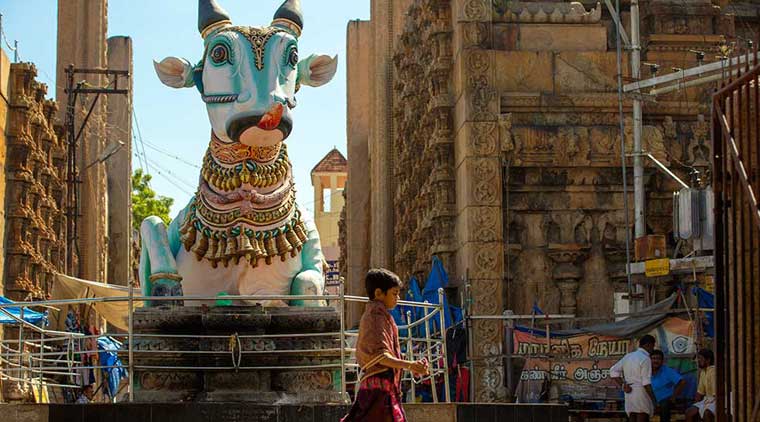
- Visit Meenakshi Temple
- Visit Alagar Koil Temple
 7D / 6N
Tirupati Madurai Rameshwaram Kanyakumari Tour Package
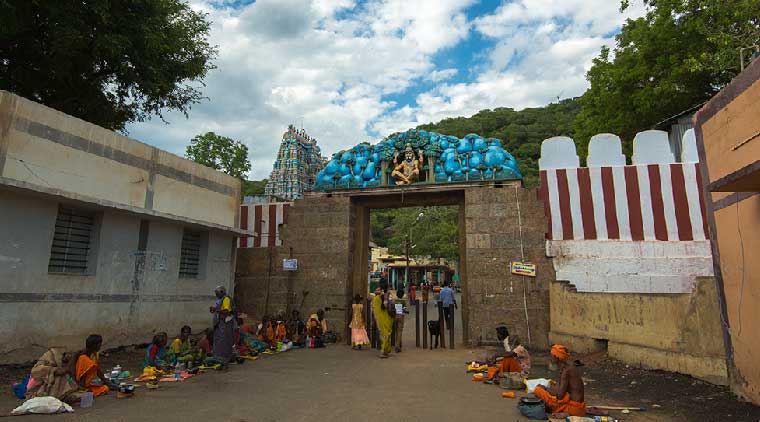
- Tirupati Balaji Temple
- Famous Annamalaiyar Temple
 4D / 3N
Rameshwaram Tour Package from Bangalore
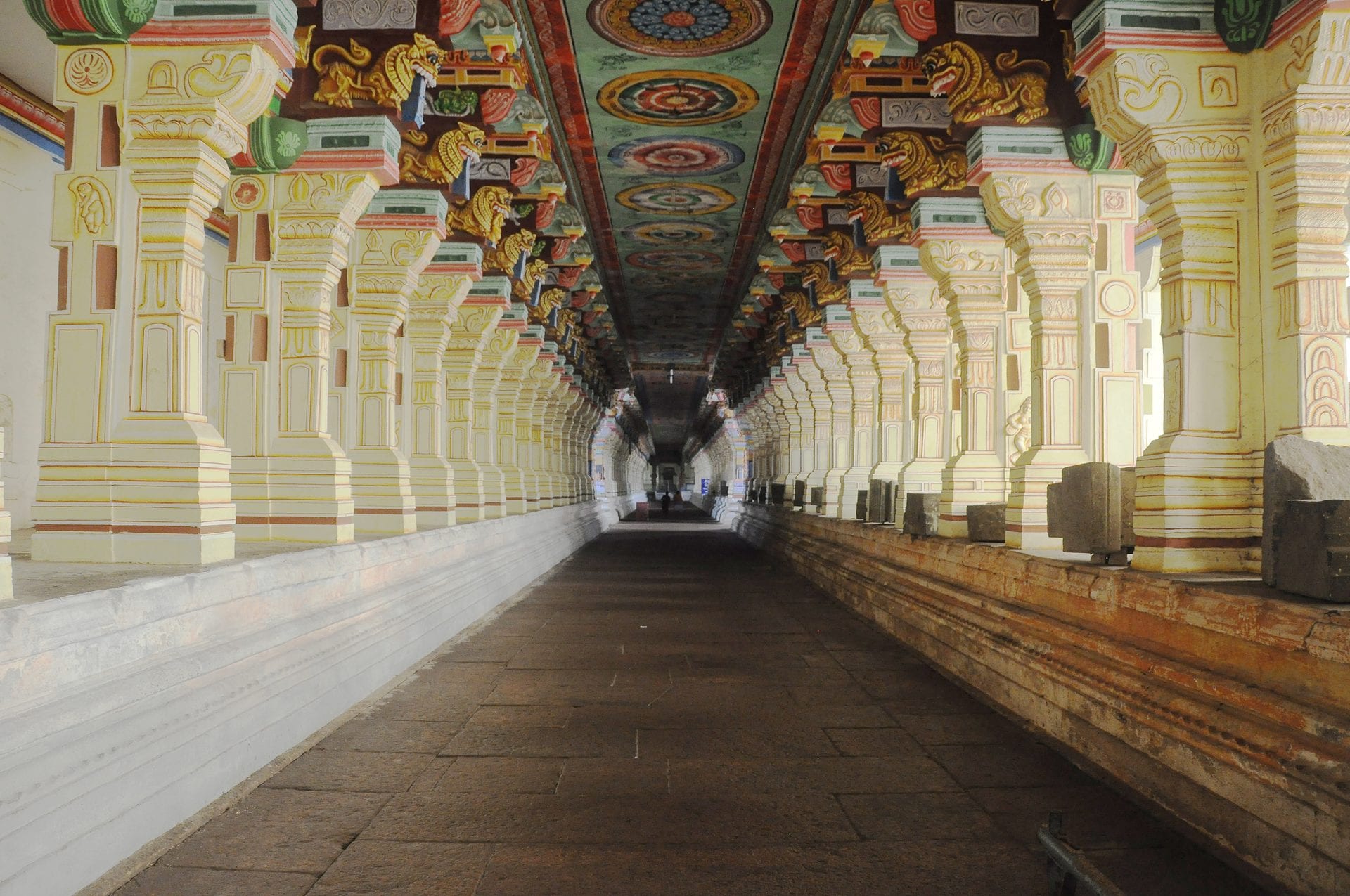
- A planned trip from Bangalore, quick by the one-hour flight or easy by the overnight train
- Darshan at the Ramanathaswamy Temple, home of the Rameshwaram Jyotirlinga
 5D / 4N
Rameshwaram Tour Package from Ahmedabad
- A planned trip from Ahmedabad, with the flight to Madurai and all the ground travel arranged
- Darshan at the Ramanathaswamy Temple, home of the Rameshwaram Jyotirlinga