Kanchipuram Travel Guide
The best months are October to March , pleasant for the temple-city and the silk lanes. The single thing to plan around is the temples themselves: almost all of them close for a...
When to visit Kanchipuram, and the midday rule
The best months are October to March, pleasant for the temple-city and the silk lanes. The single thing to plan around is the temples themselves: almost all of them close for a long midday break.
- October to March: comfortable and clearThe pleasant season for walking between the temples and the weaving lanes, with daytime temperatures roughly 20 to 30 degrees Celsius and cool mornings ideal for an early start. This is the peak window, and the right time to come for an unhurried temple-and-silk day.
- Plan a morning and an evening, not a middayDo the temples in the cool morning and again after about 4 pm, and use the hot middle of the day for lunch, a rest and the silk shops, which stay open. This is how locals and good drivers pace the day, and it is the difference between a calm visit and a wasted hour at a shut gate.
- April to June: hot, start at dawnHigh summer is genuinely hot, often above 35 degrees Celsius, tiring for the open temple courtyards. If you come then, start at first light for the temples and keep the afternoon for the air-conditioned silk showrooms, and carry water everywhere.
- July to September: green, with some rainThe monsoon brings moderate rain and a softer, greener landscape. Temple visits carry on through showers, but an umbrella and sandals you can slip off easily make the wet courtyards and barefoot stretches more comfortable.
Almost every living temple in Kanchipuram shuts for a long midday break, commonly about 12:30 pm to 4 pm. Build the temple day around a morning and an evening session, and the silk shopping fits neatly into the afternoon gap. The one temple that keeps different hours is the ASI-run Kailasanathar, covered in the sights section, so check each temple's window rather than assuming they all match.
How to reach Kanchipuram, and getting around
Kanchipuram is an easy day trip from Chennai, about 70 km away, and a natural stop on the way to Mahabalipuram, Vellore or Tiruvannamalai. The compact old town is best covered by a car and driver.
- By road from ChennaiKanchipuram is about 70 km from Chennai, roughly two hours by car, an easy full-day trip. From Chennai International Airport a one-way taxi commonly starts from about 1,050 rupees and a round trip from about 2,100 rupees. A car with a driver for the day is the simplest way to do the temples and the silk, because the temples are spread across the old town.
- By trainKanchipuram has its own railway station with connections to Chennai and nearby towns; from the station an auto-rickshaw or cab reaches the temple precincts quickly. Trains are cheap but less flexible than a car for hopping between temples in a single day.
- Getting around the old townThe core temples sit within a compact, mostly flat old town, but they are too far apart to walk between comfortably in the heat. Most visitors use a hired car or auto-rickshaws for the short hops, and walk the final stretches barefoot near each shrine.
- A stop on the way southKanchipuram pairs neatly with Mahabalipuram (Mamallapuram), the UNESCO site about 65 km away, for a temple-and-monument couple of days, and sits on the road to Vellore (the Golden Temple) and Tiruvannamalai. Many travellers combine it with Tirupati from the north as well.
Fly into Chennai, the gateway about 70 km away, then drive out for a temple-and-silk day. Kanchipuram is one of the seven holiest cities of India and the home of the Kanjivaram, an easy and meaningful day from the city.
Fly into Chennai and drive out to Kanchipuram. It pairs with Mahabalipuram for a short, rewarding heritage trip, and slots onto a wider South India temple circuit.
Chennai is the hub by air and rail; from there Kanchipuram is a short, easy drive, often combined with Mahabalipuram or with Tirupati on the road north. Kanchipuram's own railway station also links it to the region.
The temples that matter in Kanchipuram
Kanchipuram has hundreds of temples, but a handful are the ones to see: the earth-element Pancha Bhoota temple, the great goddess and Vishnu temples, the Murugan shrine between them, and the oldest, quiet Pallava gem.
- Ekambareswarar, the earth elementOne of the five Pancha Bhoota Sthalam temples, representing earth, with a rajagopuram among the tallest in the south, a thousand-pillared hall and a revered ancient mango tree. General darshan is free, open about 6 am to 12:30 pm and about 4 pm to 8:30 pm, with parking about 10 rupees. Start the day here at opening.
- Kamakshi Amman, the goddessThe great Shakti temple of Kanchi, linked to Adi Shankara, in the heart of the city. Free entry, open about 5:30 am to 12:15 pm and about 4 pm to 8:15 pm, with Friday until about 9:30 pm and full-moon Pournami until about 10:30 pm; parking is about 30 rupees and is a known crush on Fridays and weekends, so go early.
- Varadharaja Perumal, the Vishnu Divya DesamA grand Vaishnava temple, one of the 108 Divya Desams, commonly open about 7 am to 12 pm and about 3:30 pm to 8 pm (windows vary, so confirm locally). Free darshan; the 100-pillared mandapam is about 5 rupees, photography about 50 rupees and video about 100 rupees, parking about 50 rupees. Famous for the wooden Athi Varadar idol shown only about once every forty years, last in 2019 and next due about 2059.
- Kailasanathar, the oldest temple, and KumarakottamKailasanathar is the eighth-century Pallava sandstone temple, the oldest in the city, run and protected by the Archaeological Survey of India, quiet and exquisitely carved, commonly open about 6 am to 12 pm and about 4 pm to 7 pm. Nearby Kumarakottam, the Murugan temple between Ekambareswarar and Kamakshi, is open about 7 am to 12 pm and about 3:30 pm to 8 pm.
Dress modestly with shoulders and knees covered, leave footwear outside, and keep silence in the shrines. General darshan at all these temples is free; a puja or abhishekam in your name is arranged at the temple office, and the small parking, photography and mandapam fees above are the only routine costs. Remember the midday closure, fit the silk shopping into the afternoon, and note that Kailasanathar, being ASI-run, keeps its own hours.
The temple-city and the Kanjivaram
Kanchipuram is two famous things at once: one of the holiest temple cities in India, and the home of the Kanjivaram silk saree. A good day weaves the two together, the temples in the cool hours and the silk in the afternoon.
- Shiva Kanchi and Vishnu KanchiThe city is split into the Shaiva and Vaishnava quarters, so a visit naturally pairs the great Shiva temples (Ekambareswarar, Kailasanathar) with the Vishnu temple (Varadharaja) and the goddess (Kamakshi). As one of the seven Moksha-puri cities, where a pilgrimage is held to lead towards liberation, it carries deep significance for pilgrims of both traditions.
- The earth element of the fiveEkambareswarar is the earth among the five Pancha Bhoota Sthalam temples, with water at Thiruvanaikaval, fire at Thiruvannamalai, air at Srikalahasti and space at Chidambaram, so a visit here is one leg of that great five-temple journey across South India.
- Watch the silk being wovenA visit to a weaving centre, watching pure mulberry silk and the gold or silver zari worked on the loom, is the real Kanchipuram experience. The craft has continued here for over four hundred years, and seeing it explains why a genuine saree costs what it does.
- Buy a genuine KanjivaramA real Kanjivaram is pure mulberry silk with real zari, holds a GI tag and carries the government Silk Mark. Synthetics are widely sold as silk, so buy from a reputable weaving cooperative or established shop, ask for the Silk Mark, and do not let a driver or guide steer you to a commission shop. The costs and safety sections below give the price tells and the zari test.
A Kanchipuram day, and the Pallava art
Kanchipuram rewards a planned day: the key temples in the cool hours, the silk in the afternoon, and unhurried time for the quiet Pallava masterpiece that most rushed visitors skip.
- A sensible one-day planStart at Ekambareswarar at opening, then Kamakshi and the Kumarakottam Murugan temple before the midday closure; lunch and rest through the heat; Varadharaja and Kailasanathar in the late afternoon; silk shopping to finish. A car and driver makes it flow, and four to five temples is a comfortable day, not a dash through dozens.
- Linger at KailasanatharGive the oldest temple time. Its Pallava sandstone carvings, the 58 little shrines around the courtyard, the 16-sided Shivalinga and the early sculpture of Shiva and Parvati are a quiet wonder, best read slowly or with a good guide. Because it is ASI-run it is calmer and more museum-like than the busy living temples.
- Choose silk wellAllow unhurried time for the silk; a good cooperative or showroom will explain the weave, the zari and the Silk Mark, and let you handle the cloth. Buy what you love from a place you trust, not from a tout, and remember a genuine piece is a serious purchase, not a souvenir trinket.
- Eat simple and freshKanchipuram has good vegetarian meals halls and the famous soft, fluffy local Kanchipuram idli. Familiar names such as Saravana Bhavan and several South Indian halls do reliable thali meals; eat at busy, clean places and drink bottled or filtered water in the heat.
If you do only one thing slowly, make it Kailasanathar. The living temples are moving and grand, but the eighth-century Pallava sandstone here is the artistic root of everything that followed in South Indian temple building, and because it is quiet you can actually see it. Give it half an hour with the carvings rather than ten minutes on the way to the silk shops, and Kanchipuram opens up as a history lesson, not just a darshan stop.
Where to stay, and whether to stay at all
Most travellers day-trip Kanchipuram from Chennai or Mahabalipuram rather than stay over, but a night in town suits pilgrims who want the early-morning temples without a long drive.
- Day-trip from Chennai: the usual choiceChennai has the full range of hotels and the airport, and Kanchipuram is an easy two-hour drive, so most visitors base in Chennai and come for a full day of about 8 to 10 hours. This suits first-timers and anyone combining Kanchipuram with the city or the coast.
- Pair it with MahabalipuramMahabalipuram, about 65 km away, has beachside resorts and far more atmosphere for an overnight than Kanchipuram itself. A common plan is a night at Mahabalipuram for the Shore Temple and the sea, then a day inland at Kanchipuram for the temples and silk.
- Stay in Kanchipuram: for early darshanStaying in town makes sense mainly for pilgrims who want to be at the temples the moment they open. Rooms run mostly simple to mid-range, commonly from about 1,100 to 3,500 rupees a night, with a handful of comfortable mid-range hotels rather than luxury properties.
- How long you needOne full day covers the key temples and the silk comfortably. A second day only makes sense if you want a slow temple pilgrimage across more shrines, or to fold in Mahabalipuram properly. For most travellers, Kanchipuram is a rewarding single day rather than a multi-night base.
If you do stay, pick a place with reliable air-conditioning for the hot afternoons, and check the temple festival calendar before you fix dates. During big festivals the town fills and rooms tighten, and the temples are wonderful but extremely crowded, so decide whether you want the spectacle or the calm before you book.
Kanchipuram costs and a realistic budget
The temples are nearly free; the real money is the car, the silk and the small fees. Here is what the main things cost, so you can plan and avoid being overcharged.
- The temple costs are tinyGeneral darshan at the main temples is free. The only routine fees are small: parking about 10 rupees at Ekambareswarar, about 30 rupees at Kamakshi and about 50 rupees at Varadharaja, the 100-pillared mandapam about 5 rupees, and photography about 50 rupees with video about 100 rupees at Varadharaja. A puja in your name, if you want one, is arranged at the temple office.
- The big spends: the car and the silkThe two real costs are transport and silk. A return airport taxi from Chennai commonly starts from about 2,100 rupees, and a full day car with driver more; the silk is whatever you choose to spend on a saree. Mahabalipuram, if you add it, charges a single ASI ticket for the Group of Monuments of about 40 rupees for Indians and about 600 rupees for foreign visitors after a recent fee revision, so check the current rate at the ASI booking portal.
- What a genuine saree costsA genuine pure Kanjivaram rarely sells cheap. A basic real piece commonly starts from about 9,000 to 20,000 rupees, and richer designs run well above 50,000 rupees. If you see pure Kanchipuram silk advertised for about 2,000 to 5,000 rupees, treat it as a synthetic or art-silk fake, not a bargain.
- Cash, cards and foodBigger silk showrooms and hotels take cards and UPI, but parking, small eateries and autos run on cash, so carry some. A good vegetarian thali meal is inexpensive, often a modest few hundred rupees or less, and is one of the pleasures of the day.
The single habit that protects you in Kanchipuram is the price floor: a genuine pure Kanjivaram does not sell for about 2,000 to 5,000 rupees, full stop. Real silk with real zari starts much higher, commonly from about 9,000 rupees at a cooperative. If a price looks too good for pure silk, it is art silk, however convincing the shine, so anchor on the floor and the Silk Mark rather than the patter.
Practical logistics: timings, parking, food and etiquette
The small things that make a Kanchipuram day smooth, from the parking crush at Kamakshi to footwear, water and temple etiquette.
- Pace the day around the timingsThe temples open early, shut for a long midday break commonly about 12:30 pm to 4 pm, and reopen until evening. Treat the morning and the evening as your two temple windows and the afternoon as silk-and-lunch time. Carry a written list of each temple's hours rather than assuming they all match, because Kailasanathar and Kumarakottam differ.
- Mind the Kamakshi parking crushParking near the Kamakshi Amman temple is a known hassle on Fridays and weekends, when crowds peak. Go early, let a driver drop you and circle, or park a little further and walk in. Kumarakottam has no parking at the temple; visitors park at Ekambareswarar, about a 3-minute walk away.
- Footwear, water and heatYou will be barefoot a lot, so wear shoes you can slip off quickly and consider a thin pair of socks for hot stone in summer. Carry water and sun cover, drink bottled or filtered water, and keep the heaviest walking for the cool morning. The midday rest is not laziness, it is how the day is meant to work.
- Temple etiquetteDress modestly with shoulders and knees covered, remove footwear and leather where asked, keep silence near the shrines, and follow the clockwise direction of pradakshina around the sanctum. Photography is restricted or banned inside many sanctums, so look for signs and ask before you raise a camera.
Safety, fake silk, and staying well
Kanchipuram is a gentle, welcoming temple town with little crime, but the heat and the fake-silk trade are the two things to handle with a little awareness.
- The fake-silk trade, and how to handle itThe one real trap is buying a synthetic saree sold as pure Kanjivaram. Anchor on the price floor (genuine pure silk does not cost about 2,000 to 5,000 rupees), insist on the Silk Mark, and buy from a government weavers cooperative or an established shop rather than one a driver or guide takes you to for a commission. A trusted shop will not mind you checking.
- The zari scratch testIf a shopkeeper allows it, scratch the metallic surface of a loose zari thread at the end of the pallu. Real gold-dipped silver zari shows a red silk core underneath; a white or black core means artificial zari. Pure silk also warms quickly when rubbed between the palms, while synthetics stay cool and feel slippery.
- Commission touts and driversSome drivers and guides earn a commission for delivering you to a particular silk shop, which inflates your price. Decide your shop in advance, ideally a named cooperative, and be politely firm if you are steered elsewhere. The same applies to anyone offering to fast-track a darshan for a fee.
- Heat, water and healthThe biggest health risk is the heat. Drink bottled or filtered water, take the usual care with street food, eat at busy clean places, and carry sun protection for the open courtyards. Build the rest into the midday gap, and the day stays comfortable even in the warmer months.
Kanchipuram is a calm, traditional temple town and most travellers, including solo women, find it easy and unthreatening, with the usual friction being commission touts rather than anything worse. Dress modestly for the temples, keep to the busy lanes and daylight for the walking, and the town is one of the gentler Tamil Nadu stops to do independently.
Kanchipuram for every kind of traveller, and on access
Kanchipuram draws very different visitors. Here is what it offers you, and the one tip that matters for each, including how a senior pilgrim does it comfortably.
- Devotees and pilgrimsOne of the seven holiest cities, with the earth-element Pancha Bhoota temple, a great Shakti temple linked to Adi Shankara and a Vishnu Divya Desam. Plan around the midday closure, arrange the pujas at each temple office, and give yourself the morning and evening windows for unhurried darshan.
- Silk shoppersThe home of the Kanjivaram. Watch the weaving, ask for the Silk Mark, anchor on the price floor, and buy from a government cooperative or reputable shop, especially for a wedding saree, rather than a roadside or commission-shop fake.
- Heritage and art loversKailasanathar is an eighth-century Pallava jewel, ASI-run, quiet and exquisitely carved, the artistic root of South Indian temple building. Give it unhurried time with a good guide, and read the temple-city's long Pallava and Chola history.
- Senior travellers and on accessibilityVery doable in a gentle day with planning. The temples involve barefoot walking, some steps and real midday heat, so do them in the cool morning, use a car between them, avoid the Friday and weekend parking crush at Kamakshi, and keep the afternoon for the air-conditioned silk showrooms. A day trip from Chennai with a driver is the comfortable way.
- Families with childrenThe towering gopuram, the ancient mango tree and the weaving looms genuinely interest children. Plan around the heat and the closures, keep the day to the key temples plus the silk, and carry water and snacks for the gaps between stops.
- PhotographersThe gopurams, the Pallava carvings at Kailasanathar and the looms are wonderful, but many inner sanctums ban cameras and Varadharaja charges a photography fee. Shoot the architecture and the courtyards, ask before photographing people at prayer, and respect the no-camera signs at the shrines.
A suggested Kanchipuram itinerary
How to shape a single full day so you catch the temples in their open windows, rest through the heat, and still have unhurried time for the silk and the Pallava art.
- Early morning: leave Chennai, first templesLeave Chennai around dawn for the roughly two-hour drive and reach Kanchipuram as the temples open. Start at Ekambareswarar at opening, then Kumarakottam and Kamakshi, getting to Kamakshi early to beat the Friday and weekend parking crush.
- Late morning to midday: before the closureFit in one more temple before the long midday break, commonly about 12:30 pm to 4 pm. Then break for a vegetarian thali and the famous local idli, and rest through the heat rather than fighting it.
- Afternoon: silk in the gapUse the closed-temple hours for the silk: a weaving centre to watch the looms, then a government cooperative or trusted showroom to buy, with the Silk Mark and the price floor in mind. This is the part of the day the temples leave free.
- Late afternoon and evening: reopen and KailasanatharWhen the temples reopen about 4 pm, do Varadharaja, then end at the quiet ASI-run Kailasanathar for the Pallava art in soft evening light. Drive back to Chennai in the evening, a full and satisfying day of about 8 to 10 hours.
The single thing that breaks a tight Kanchipuram plan is arriving at a temple during the long midday break, commonly about 12:30 pm to 4 pm. Build the day so the temples fall in the morning and the later afternoon, keep the hot middle for lunch, rest and silk, and check each temple's hours rather than assuming they match, because the ASI-run Kailasanathar keeps its own windows.
The real questions travellers ask about Kanchipuram
Straight answers to the questions that come up again and again on traveller forums, so you arrive already knowing the score.
- Is a day trip from Chennai worth it?Yes, for the temples and the silk together. It is about a two-hour drive each way and a full day of roughly 8 to 10 hours, and travellers on the forums consistently say the depth of what you see makes it worth the time, especially with a driver who knows the timings.
- How many temples can I see in a day?Four to five of the key temples is a comfortable, rewarding day; trying to see dozens turns it into a tiring blur. Pick Ekambareswarar, Kamakshi, Varadharaja and Kailasanathar, add Kumarakottam if time allows, and leave the rest for a return pilgrimage.
- How do I avoid a fake Kanjivaram?Anchor on the price floor (genuine pure silk does not cost about 2,000 to 5,000 rupees), insist on the Silk Mark, do the loose-zari scratch test for a red silk core, and buy from a government weavers cooperative rather than a commission shop a driver takes you to.
- Can non-Hindus enter the temples?Foreign and non-Hindu visitors are generally welcome in the temple complexes and can enjoy the architecture and atmosphere, though entry right up to the innermost sanctum can be restricted at some shrines. Dress modestly, follow the staff's direction, and you will be welcome in the courtyards and halls.
- Why is Kamakshi parking such a problem?The Kamakshi Amman temple is in the busy heart of the city and draws large crowds, so parking nearby is a known crush on Fridays and weekends. Go early, have your driver drop you and circle, or park a short walk away and approach on foot.
- How do I combine it with Mahabalipuram?Mahabalipuram is about 65 km away, so a common plan is a night by the sea there for the Shore Temple and Pancha Rathas (a single ASI ticket for the Group of Monuments, about 40 rupees for Indians and about 600 rupees for foreign visitors after a recent revision, so verify the current rate), then a day inland at Kanchipuram for the temples and silk.
Planning Kanchipuram from abroad
Kanchipuram is one of India's seven holiest cities and the home of the Kanjivaram silk, an easy and rewarding day from Chennai for overseas and NRI travellers, with a little preparation on access and genuine silk.
- Make it a day from ChennaiDrive out from Chennai, about 70 km and two hours, for the key temples and the silk, or pair it with Mahabalipuram for a couple of heritage days by the sea. A car with a driver for the day is the simplest way to cover the spread-out temples around the midday closure.
- See the temples that matterEkambareswarar (the earth element of the five), Kamakshi (the goddess), Varadharaja (the Vishnu Divya Desam) and Kailasanathar (the oldest, ASI-run Pallava temple). Plan around the long midday closure, and arrange any pujas at the temple office on arrival.
- Know the access realityForeign and non-Hindu visitors are generally welcome in the temple complexes and can enjoy the architecture, though access to the innermost sanctum can be restricted at some shrines. Dress modestly with shoulders and knees covered, remove footwear and leather where asked, and follow the staff's direction.
- Buy a genuine wedding sareeFor a real Kanjivaram, watch the weaving, insist on the Silk Mark, remember the price floor (pure silk does not cost about 2,000 to 5,000 rupees), and buy from a government weavers cooperative rather than a commission shop. This is the trip to bring home the wedding silk, so give it unhurried time.
Money, connectivity and timing for foreign visitors
The practical basics an overseas traveller needs for a temple-and-silk day from Chennai: cash, cards, a SIM, and how to slot Kanchipuram into a wider South India trip.
- Carry cash, but cards work for silkBigger silk showrooms, cooperatives and hotels take cards and UPI, but parking, small eateries, autos and the temple fees run on cash, so keep small notes. Draw cash in Chennai before you set out, since a small temple town is not the place to hunt for a working ATM.
- Get a SIM in ChennaiPick up an Indian tourist SIM or an eSIM when you land in Chennai rather than in a small town. Coverage in and around Kanchipuram is fine for maps, calls and ride-hailing, which is all you need for a day of temple-hopping with a driver.
- Slot it into a South India tripKanchipuram works as a day from Chennai, as a pairing with Mahabalipuram for a heritage couple of days, or as a leg of a wider temple circuit that can include Tirupati to the north. One full day is enough for the highlights without slowing the whole itinerary.
- Time your visit to the cool seasonOctober to March is the comfortable window, roughly 20 to 30 degrees Celsius. If you must come in the April to June heat, often above 35 degrees Celsius, start at dawn for the temples and keep the afternoon for the air-conditioned showrooms, and carry water everywhere.
Kanchipuram is an unusually rich single day for a first-time visitor to South India: living temples of two great traditions, the artistic root of Dravidian architecture at Kailasanathar, and a craft you can watch on the loom and carry home. Slot it after Chennai or Mahabalipuram, give it one unhurried day with a driver who knows the timings, and it delivers far more than its size suggests.
Why Kailasanathar is the root of South Indian temple art
Long before the great Chola bronzes and the soaring gopurams of Madurai, the Pallava kings of Kanchipuram were learning to build in stone. The Kailasanathar temple, raised by King Rajasimha (Narasimhavarman II) about 700 to 728 CE, is the first major structural stone temple in South India, cut from soft sandstone on a granite base. Around its courtyard stand 58 small shrines, each once carrying painted sculpture of Shiva in his many forms, and the walls still hold the early Pallava carvings of Shiva and Parvati in dance. It is quiet now, run as a monument by the Archaeological Survey of India rather than as a busy living temple, which is exactly why you can stand close and read it: the moment South Indian temple architecture found its voice, before it grew vast. The living temples of Kanchipuram are moving and grand, but this is where the whole tradition begins. The dating and authorship rest on inscriptions and ASI scholarship rather than a single legend, so we give it as documented history, not myth.
Planning a Kanchipuram trip?
Our Tamil Nadu travel experts plan your full journey for you: route, hotels, darshan timings and transport. You get a free day-by-day plan and an exact quote on WhatsApp, usually within a few hours. No payment is needed to get your plan.
Tour packages that visit Kanchipuram
Every journey below is private, hand-crafted and fully customizable. Tell us your dates and we tailor the itinerary, the pace and the priests or guides around you.
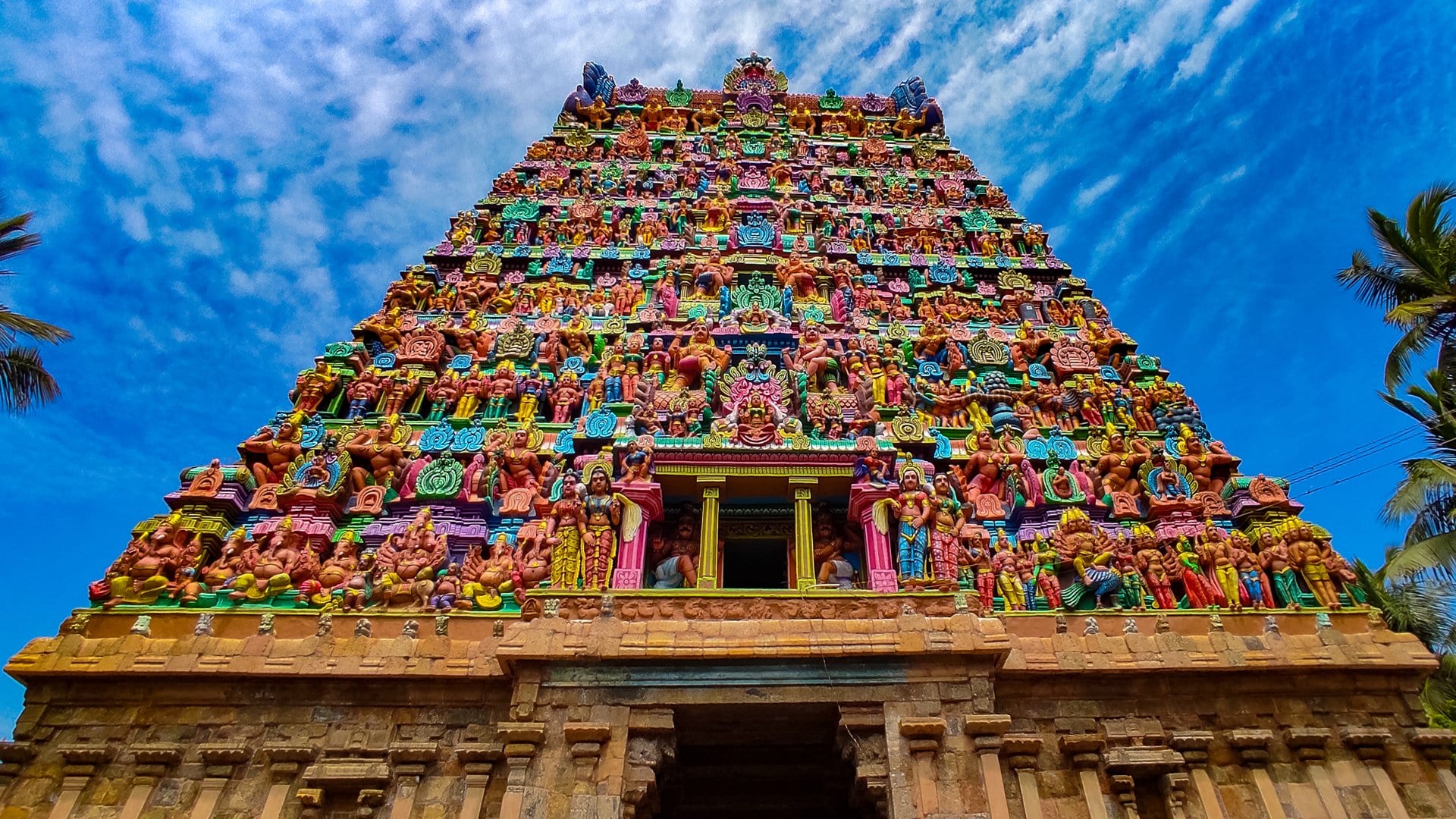 7D / 6N
Navagraha Temple Tour
- Visit Swetharanyeswarar Temple
- Visit Naganatha Swamy Temple
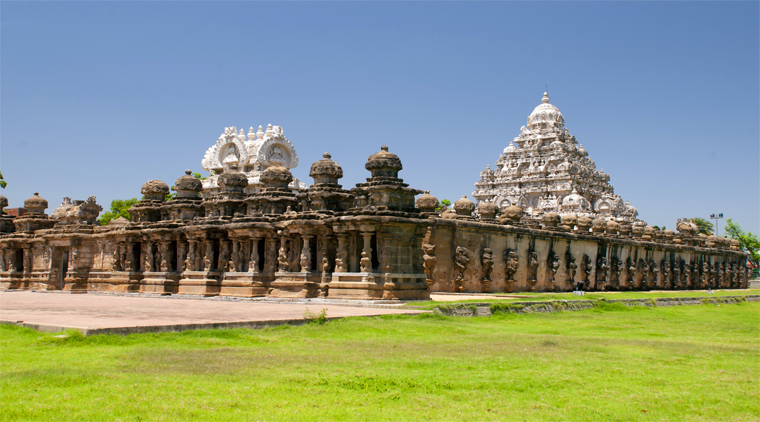 2D / 1N
Tirupati to Kanchipuram Tour Package
- Kanchipuram
- Mahabalipuram
 5D / 4N
Tamil Nadu Temples Tour
- Visit Srirangam Temple
- Visit Rock Fort Temple
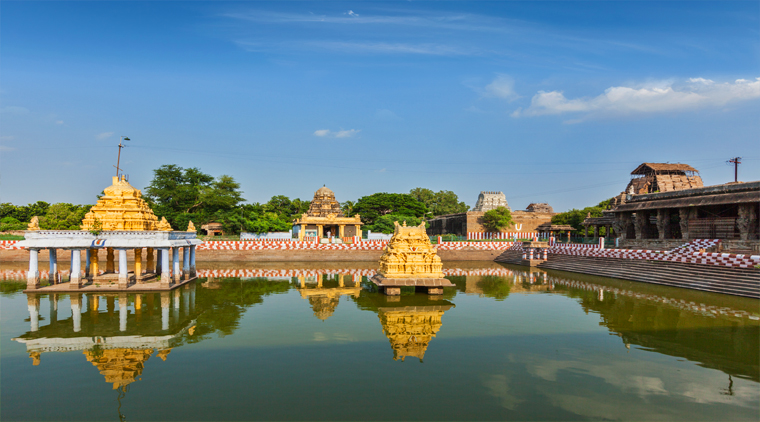 1D
1DChennai to Kanchipuram Tour Package
- Kamakshi Amman Temple, the presiding Goddess of Kanchipuram and a revered Shakti shrine
- Ekambareswarar Temple, the earth element among the five Pancha Bhoota Sthalams of Lord Shiva
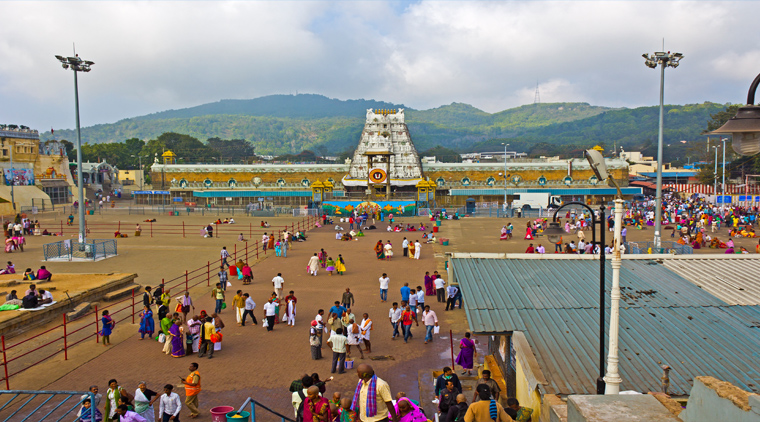 6D / 5N
Tirupati Tour Package From Chennai
- Visit Kalakshetra
- Visit Kapaleeshwarar Mylapore Temple