1
Kamakshi Amman Temple
Tamil Nadu
The presiding Goddess of Kanchipuram, a revered Sakthi Sthalam tied to the Kanchi Kamakoti Peetham
Overview
People call Kanchipuram the city of a thousand temples, and for once the nickname is fair. It served as the royal capital of the Pallavas and stayed important under the Cholas and the Vijayanagar kings, and every one of those dynasties left temples behind. It is also counted among the seven moksha-puris of India, the seven cities held to grant liberation, which is why pilgrims have walked here for well over a thousand years. For a traveller based in Chennai, the best part is simple: all of this is only about 72 to 75 km away, so you can see the finest of it and sleep in your own bed the same night.
There is one thing every honest guide must tell you first. Most temples in Kanchipuram close in the middle of the day, roughly from noon to about four in the afternoon. A day trip that leaves Chennai at nine in the morning, as many packages still suggest, reaches Kanchipuram with barely an hour before the shutters come down. That is why we start early. When you leave Chennai by about seven, you get the full, cool morning inside the temples, you keep the closed midday hours for the one temple that stays open, for lunch and for silk, and you still reach home in good time.
Kanchipuram is really two towns joined together. The eastern half is Vishnu Kanchi, home to the great Vaishnava temple of Varadaraja Perumal. The western half is Shiva Kanchi, where Ekambareswarar, Kamakshi Amman, Kumarakottam and Kailasanathar stand within a short drive of one another. Knowing this saves you an hour of doubling back.
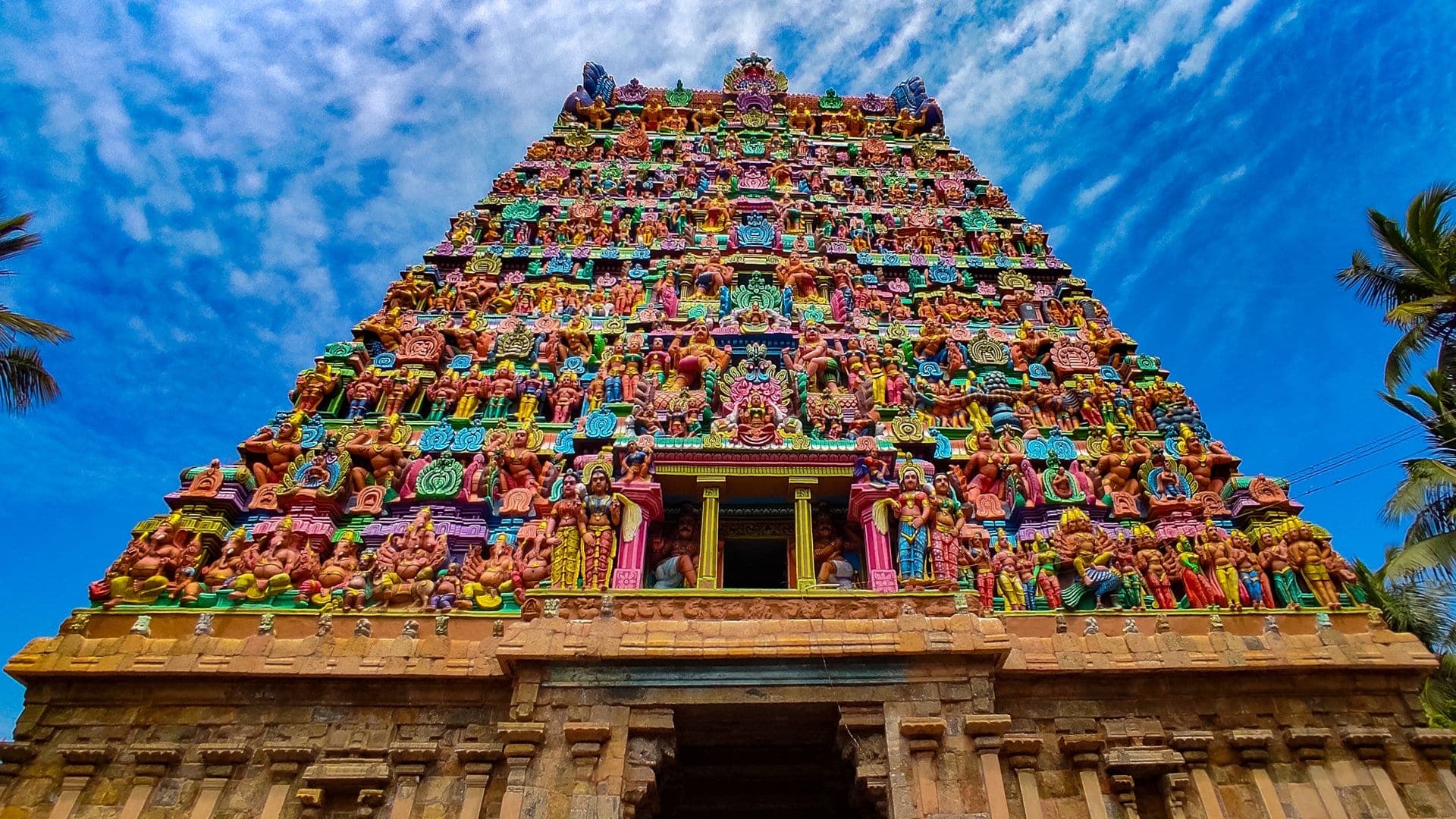
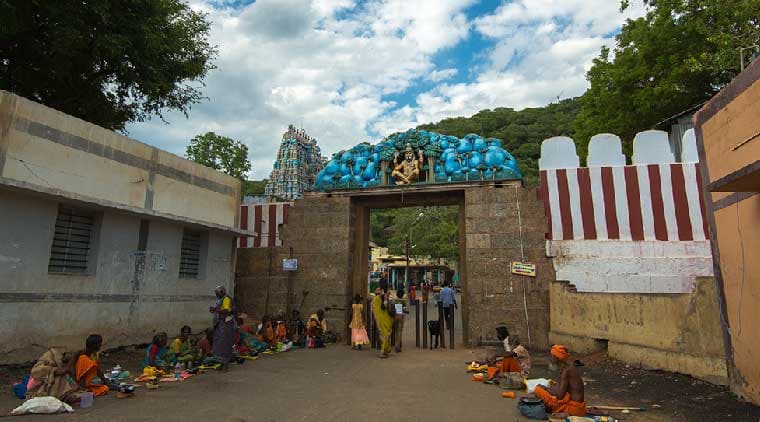
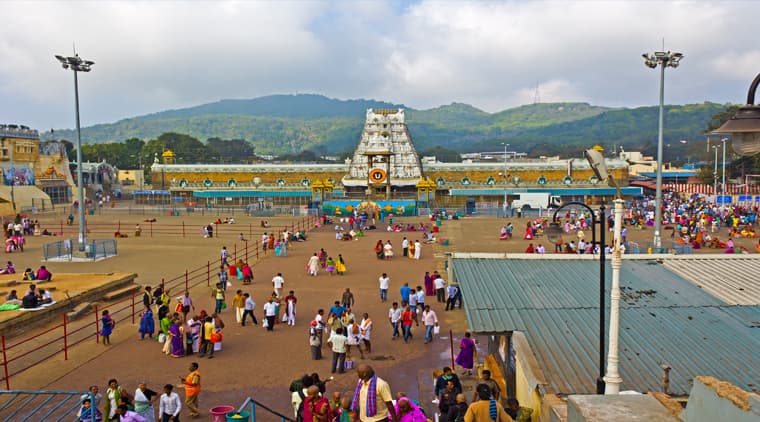
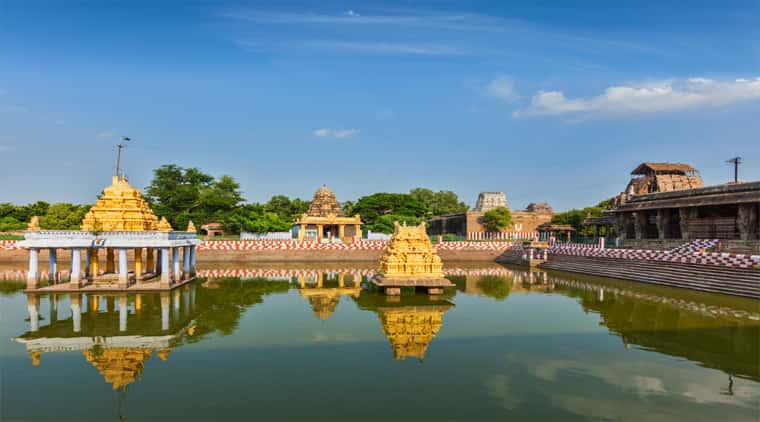
Kamakshi Amman Temple is the heart of the town. The Government of Tamil Nadu district record calls it an important Sakthi Sthalam, the Nabisthana Ottiyana Peetam, and notes that Kanchipuram has no other Parvati shrine apart from this one, which is unusual for a Shiva city. Tradition holds that Adi Shankara worshipped here and placed the Sri Chakra before the Goddess to calm her fierce form, and the temple remains tied to the Kanchi Kamakoti Peetham to this day. The Goddess sits in the Padmasana posture, the lotus seat, inside a sanctum reached through four entrances, and there is a temple tank outside that keeps the courtyard quiet.
Ekambareswarar Temple is the Shiva temple of the earth element, one of the Pancha Bhoota Sthalams, the five temples that stand for the five elements. Its Rajagopuram rises to about 59 metres, among the tallest temple towers in Tamil Nadu, and you see it long before you reach the gate. Inside are two things you should not miss: the Aayiram Kaal Mandapam, the hall of a thousand pillars built by the Vijayanagar kings, and the old mango tree in the inner courtyard, which the temple holds to be around 3,500 years old, with four branches said to give fruit of four different tastes. The inner walls carry rows of Siva lingams, counted in the district record at 1,008.
Varadaraja Perumal Temple, over in Vishnu Kanchi, is the grand Vaishnava temple and one of the 108 Divya Desams sung by the Alvars. The official record describes a complex of about 23 acres with nineteen vimanams and around four hundred pillared halls. Look up in the corridor around the sanctum for the two famous lizard figures on the ceiling, one sheeted in gold and one in silver, which pilgrims touch for the removal of past faults. The hundred-pillared hall carries fine carving, and in the temple tank rests the Athi Varadar, a wooden idol of the Lord that is brought out for public darshan only once in forty years. It was last shown in 2019, so the next occasion is a long way off, but the story is worth hearing while you stand by the tank.
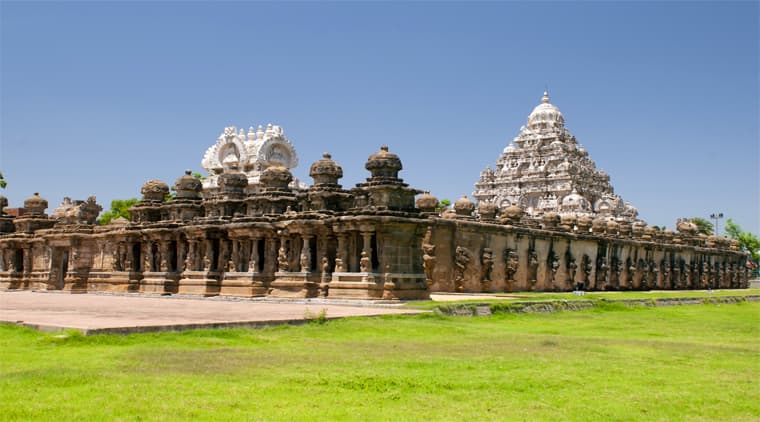
Kailasanathar Temple is the oldest of them all and, for many, the most moving. The district record credits it to the Pallava king Rajasimha, known also as Narasimhavarman II, in the 7th century, with the later addition finished under his son. The foundation is granite and the superstructure is carved from sandstone, which is why the surface looks soft and worn and human in a way granite never does. This is not a busy worship temple like the others. It is a quiet monument, protected now, with a row of small shrines around a central sanctum and carvings of Shiva in many forms. Because it is an open monument and not a working temple with a long midday break, this is the one place you can visit in the early afternoon while the rest of the town rests.
Kumarakottam Temple is dedicated to Lord Murugan, the son of Shiva and Parvati. It stands about half a kilometre north-west of the bus stand, set neatly between Ekambareswarar and Kamakshi Amman, which is why devotees say the son sits between the father and the mother, the Somaskanda form. It is smaller than the great temples and takes little time, so it fits easily into the morning between the other two.
Do not leave Kanchipuram without eating a Kanchipuram idli. It is not the soft white idli of a Chennai breakfast. This one is coarse and firm, seasoned with black pepper, cumin, dry ginger and cashew, and traditionally steamed in a deep mould as an offering in the temples, which is why locals also call it kovil idli, the temple idli. Several plain, clean vegetarian eateries in the town serve it, along with the usual dosa, pongal and full South Indian meals on a banana leaf.
Kanchipuram silk is woven from pure mulberry silk with real zari, and a good one lasts a generation. It is also widely copied, so buy with care. The safest route is a weavers cooperative society, where the price and the purity are controlled, or an established showroom in the town. Look for the Silk Mark label, which certifies pure silk, and if you want to test the zari yourself, check the thread at a loose end of the border: in true zari the core thread shows red. Buy from the town, keep the bill, and you carry home the one souvenir from Kanchipuram that only Kanchipuram can give.
October to March
Pilgrims and devotees, families, seniors, culture and history lovers, NRI and OCI travellers
Day by day
A carefully paced plan, day by day. Tap any day for the stay, meals and altitude detail.
About 7:00 am, leave Chennai. Have an early breakfast or carry it with you, and set off by about seven. The road runs about 72 to 75 km on a four-lane highway, and the drive takes roughly two to two and a half hours depending on where in Chennai you start and on the morning traffic. Reaching Kanchipuram by about nine gives you the full morning darshan window before the temples close for their midday rest.
About 9:30 am, Varadaraja Perumal Temple (Vishnu Kanchi). Start on the eastern side of the town, the side you reach first, at the great Vishnu temple. Walk the corridor around the sanctum and find the gold and silver lizard figures on the ceiling overhead. See the hundred-pillared hall, and stand a moment by the temple tank where the Athi Varadar rests, the wooden Lord shown to the public only once in forty years. Keep about an hour here, since the complex is large.
About 10:45 am, drive to Shiva Kanchi. It is a short drive of a few kilometres from Vishnu Kanchi to the cluster of Shiva Kanchi temples.
About 11:00 am, Kamakshi Amman Temple. Come to the Goddess at the centre of the town. This is the main shrine of Kanchipuram, the Sakthi Sthalam where Adi Shankara is believed to have placed the Sri Chakra. Take darshan of the Goddess seated on the lotus, and walk the calm outer courtyard by the tank.
About 11:40 am, Kumarakottam Temple. A few steps away is the Murugan temple that sits between the Goddess and Lord Shiva. It is small and quick, so a short, unhurried visit is enough.
About 12:00 noon, Ekambareswarar Temple. Reach the earth-element Shiva temple before the midday closing. Stand under the great tower that rises about 59 metres, see the thousand-pillar hall, and find the old mango tree with its four branches in the inner courtyard. If the sanctum is about to close, take a calm darshan and keep the hall and the tree for an unhurried look, since the outer areas stay open longer.
About 1:00 pm, lunch and the temple idli. By now the working temples are closing for the afternoon, which is exactly the right time to eat. Try a genuine Kanchipuram idli with a full South Indian meal. Review-backed vegetarian places in the town include Hotel Saravana Bhavan and Sri Saravana Bala, and Hotel Sri Ramanaas on Gandhi Road is known among locals for its kovil idli. Please treat these as suggestions and confirm the day and timing, since small-town eateries change their hours.
About 2:00 pm, Kailasanathar Temple. Spend the quiet early afternoon at the oldest temple in the city, the Pallava sandstone monument on the western edge. Because it is an open, protected monument and not a working temple with a long midday break, it stays accessible when the others are shut. The soft afternoon light on the worn sandstone is the best light of the day for photographs, and the crowds are thin. Walk the ring of small shrines and look closely at the early carvings of Shiva.
About 3:00 pm, silk shopping. With darshan done, use the afternoon for the town's other treasure. Visit a weavers cooperative society or an established silk showroom, look for the Silk Mark, check the red core thread in the zari, and take your time. This is a considered purchase, not a rushed one.
About 4:30 to 5:00 pm, start back to Chennai. Leave with enough daylight for an easy drive. You reach Chennai by about seven in the evening, a little tired, carrying blessings, a silk saree and the taste of a temple idli.
Special Tips for This Day. Dress modestly for the temples: shoulders and knees covered for everyone, and you will remove your footwear at every temple, so wear slip-on shoes and carry a thin pair of socks for the hot stone floors at midday. Some sanctums do not allow leather belts or bags inside, so keep a cloth bag handy. Carry small denomination notes for footwear stands, offerings and parking, and a bottle of water each. Photography is fine in the open courtyards and at Kailasanathar, but many sanctums do not allow cameras or phones inside, so ask before you raise your phone. If you are travelling with elders, tell us in advance and we will keep the car close to each temple entrance to cut the walking. The single most important tip is the early start: leave Chennai by about seven, and the whole day opens up in front of you instead of closing in your face at noon.
Travel tips
One of the seven moksha-puris of India, only about two hours from Chennai. Five great temples, a plan built around the midday closing, and time for a real silk saree and the famous temple idli.
The one thing that decides whether this trip works is your start time. Most Kanchipuram temples close from about noon to four in the afternoon.
Working temples in Kanchipuram shut for the afternoon, roughly noon to four. A nine o'clock start from Chennai reaches town with barely an hour of darshan before the doors close. Leave Chennai by about seven, reach by about nine thirty, and you get the full cool morning inside the temples.
This is not five copies of the same temple. Each belongs to a different faith, a different age and a different element or deity.
Kanchipuram silk is pure mulberry silk with real zari, and it is widely copied. A little care is the difference between a keepsake and a fake.
Do not judge it by the soft white idli of a Chennai breakfast. This one is coarse, firm and spiced, and it started as an offering to the gods.
Lunch around one in the afternoon works well, because that is when the working temples are closing for their midday rest anyway.
Small things that keep the day smooth, especially for families with elders and first-time visitors.
This is an easy, deeply rewarding first day in Tamil Nadu. There is no separate ticket rule here for citizens or OCI cardholders at these temples, and everything on this circuit is comfortable to do in a single day with our car and driver. Confirm any special-darshan or camera charges on the day, since they change.
Old stone in the morning, silk in the afternoon.
Kanchipuram gives you three things in one day that stay with you: the blessing of five temples that pilgrims have visited for over a thousand years, a pure silk saree woven where the craft was born, and the memory of a coarse, peppery temple idli eaten in the town that made it. Leave Chennai early, follow the day as it is planned, and you take all three home by evening.
What's included
What travellers say
“Had a wonderful experience with way to india for my badrinath kedarnath yatra.everything was well organized-from travel accommodation to food. A special thanks to Ms. Neha who managed everything so beautifully n was extremely supportive n cooperative throughout the journey. They took great care of us n darshan was done very smoothly.”a week ago · Google
“A big thanks to Way To India for organising such a truly memorable and spiritually fulfilling experience during our 12 Jyotirlinga Darshan pilgrimage from 1st May to 18th May. They organized the entire journey exceptionally well, ensuring that every aspect of the trip was smooth, comfortable, and hassle-free. From transportation and hotel arrangements to darshan planning and coordination, everything was managed professionally. Despite the extensive travel across multiple destinations, the itinerary was well-structured, allowing us to complete all the Jyotirlinga darshans comfortably. Thanks to staff of Way To India, especially, Ms Neha, who was supportive, responsive, and attentive throughout the journey, always ready to assist whenever needed. Her dedication and careful planning made this sacred pilgrimage stress-free and enjoyable. I sincerely appreciate their excellent service, commitment, and hospitality. Highly recommend Way To India to anyone planning a spiritual tour, especially for the 12 Jyotirlinga Yatra. Thank you for making this divine journey so special and memorable.”4 months ago · Google
“We have successfully completed the 12 Jyotirlinga Yatra, with Waytoindia and it was a truly blessed and unforgettable journey. Every aspect of the tour was well planned and professionally organized, from transportation and accommodations to temple visits and sightseeing. Visiting all twelve sacred Jyotirlingas was a deeply spiritual experience. The itinerary was designed efficiently, allowing us to have darshan at each shrine comfortably while enjoying the cultural and religious significance of every destination. We sincerely appreciate the excellent support and coordination throughout the trip. The team was always available to assist, ensuring a smooth and stress-free pilgrimage. Thank you Waytoindia for making our dream of completing the 12 Jyotirlinga Yatra a reality. We highly recommend this tour to anyone seeking a well-organized and spiritually enriching pilgrimage experience. Har Har Mahadev! 🙏🕉️”4 months ago · Google
Travelled with Way to India?
Share your experience on Google — it takes a minute and helps fellow travellers plan with confidence.
FAQ
Kanchipuram is about 72 to 75 km from Chennai by road, on a four-lane highway. The drive takes roughly two to two and a half hours one way, depending on your starting point in Chennai and the morning traffic. It is an easy same-day return trip.
Five main temples: Kamakshi Amman, Ekambareswarar, Varadaraja Perumal, Kailasanathar and Kumarakottam. The day is planned so you take darshan at the working temples in the morning, visit the open Kailasanathar monument in the afternoon, and still keep time for lunch and silk shopping.
Leave by about seven in the morning. Most Kanchipuram temples close from around noon to about four in the afternoon, so an early start gives you the full morning inside them. A late start means you arrive just as they close.
Yes. Dress modestly, with shoulders and knees covered. You remove footwear at every temple, so slip-on shoes help. Some sanctums do not allow leather items or bags inside. Traditional Indian wear is always welcome and comfortable in the queues.
Yes, the day keeps time for silk shopping. Buy from a weavers cooperative society or an established showroom in the town, look for the Silk Mark label that certifies pure silk, and check the border zari at a loose end, where true zari shows a red core thread. Always keep the bill.
The Kanchipuram idli, a coarse idli seasoned with pepper, cumin, dry ginger and cashew, traditionally made as a temple offering, which is why it is also called kovil idli, the temple idli. The town has many clean vegetarian eateries serving it with dosa, pongal and full South Indian meals.
Yes. The temples are close together and the day is not rushed. Tell us in advance if you are travelling with elders or small children, and we will keep the car near each entrance to reduce walking. Carry water, especially in the warmer months.
The Kailasanathar Temple, built by the Pallava king Rajasimha, also called Narasimhavarman II, in the 7th century. Its superstructure is carved from sandstone over a granite base. It is an open, protected monument, which is why we keep it for the afternoon when the other temples are closed.
October to March, when the weather is dry and pleasant. April to June is very hot, so if you travel then, start early and carry water. Weekdays are calmer than weekends and festival days.
Mahabalipuram lies to the south-east and is a common pairing with Kanchipuram, but seeing both properly in a single day from Chennai is a long, tiring stretch. If you want both, we suggest a two-day plan or a separate Mahabalipuram day trip. Tell us your dates and we will design it.
Before you book
You may also like
Tell us your dates and group size. A WayToIndia travel expert replies within a few hours with a plan you can customise freely. Planning India journeys since 2010.
Explore Way to India
© 2026 Way to India. All rights reserved.