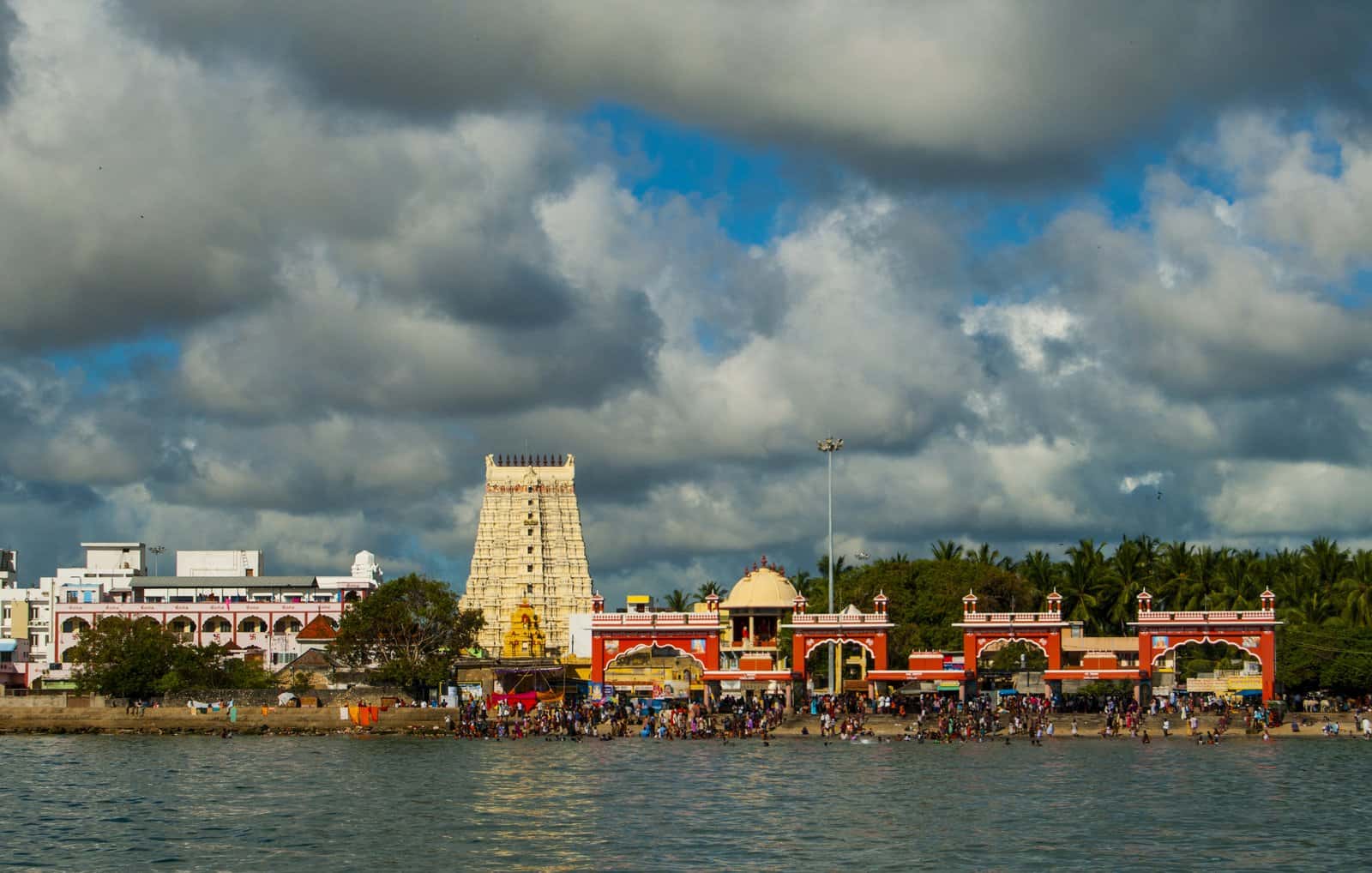
Rameshwaram Travel Guide
The best months are October to March , when the coast is pleasant for the long corridors and the wet rituals. One thing to plan around from the start: the temple closes in the...
When to visit Rameshwaram, and the midday rule
The best months are October to March, when the coast is pleasant for the long corridors and the wet rituals. One thing to plan around from the start: the temple closes in the middle of the day.
- October to March: cool and comfortableThe pleasant season, around 20 to 30 degrees, when the sea breeze makes the open granite corridors and the wet 22-well ritual far easier on the body. This is the best window for an unhurried pilgrimage, and the months most pilgrims choose.
- April to June: hot and humidHigh summer on the island is sticky and tiring, hard going for the queues and the long corridors. If you must come then, start at first light, do everything before the midday closure, and rest in the shade through the afternoon.
- Mind the festival peaksMaha Shivaratri (around February or March) and the Thirukalyanam festival (around July) draw very large crowds and long queues, so the special darshan is worth it then. If you prefer a calmer temple, avoid the festival days.
- The late-year monsoon and cyclonesThe north-east monsoon, roughly late October into December, brings heavy coastal rain and the occasional cyclone warning to this stretch of Tamil Nadu, and a severe one destroyed Dhanushkodi in 1964. Check the forecast before travelling in those weeks, especially for the Dhanushkodi day.
The Ramanathaswamy Temple is open about 5 am to 1 pm and again 3 pm to 9 pm, with the doors shut in between, about 1 pm to 3 pm. This single fact shapes the whole day: plan the Agni Theertham sea bath, the 22 wells and the main darshan for the morning, and keep the early afternoon for a meal and a rest. Reconfirm the current timings with the temple administration before a tight schedule, as ritual hours can shift on festival days.
How to reach Rameshwaram
Rameshwaram sits on an island reached by the famous Pamban crossing. Most pilgrims come through Madurai, by train over the new bridge or by road, and trains are running to the island again since 2025.
- By air via MaduraiThe nearest airport is Madurai, about 170 to 176 km away, roughly a 3 hour drive. Trichy and Chennai are the larger gateways further north with more flights. From Madurai a car or a train brings you onto the island, and many pilgrims pair the Madurai Meenakshi temple with the trip.
- By train over the new Pamban bridgeTrains run onto Pamban island again over the new vertical-lift sea bridge inaugurated on 6 April 2025, India's first of its kind, after the old bridge was closed for about two and a half years. The crossing over the open water is one of the most memorable arrivals in the south. Check current train services on IRCTC, as the schedule has been settling in since the line reopened.
- By road across the bridgeThe parallel Annai Indira Gandhi road bridge carries cars and buses across the sea to the island. From Madurai it is an easy half-day drive, and we can arrange a car with an experienced driver, often starting with the Madurai temple before crossing to Rameshwaram.
- Getting around the islandThe temple, the Agni Theertham beach and the lodges are walkable in the temple core. For Dhanushkodi, the Kalam memorial and Gandamadana Parvatham you will want an auto-rickshaw, a shared jeep or a hired car, as they are a few kilometres out of town.
Fly into Chennai, then continue by domestic flight to Madurai or by train, or fly via a metro hub straight to Madurai. Rameshwaram is the spiritual anchor of the Madurai to Rameshwaram to Kanyakumari temple journey, an easy loop to plan from abroad.
Fly into Chennai, Madurai or Trichy and continue by road or rail across the Pamban bridge. Rameshwaram is a natural add-on to the southern temple loop for diaspora pilgrims doing a Char Dham or Jyotirlinga trip.
Direct trains over the new Pamban bridge and a good road across the island make Rameshwaram straightforward to reach from Chennai, Madurai and across Tamil Nadu. Madurai is the usual jumping-off point by road.
The Ramanathaswamy Temple, and what you actually pay
The great temple, with the longest corridor in the world, is the reason to come. The darshan has a few choices and rules worth understanding before you join the queue.
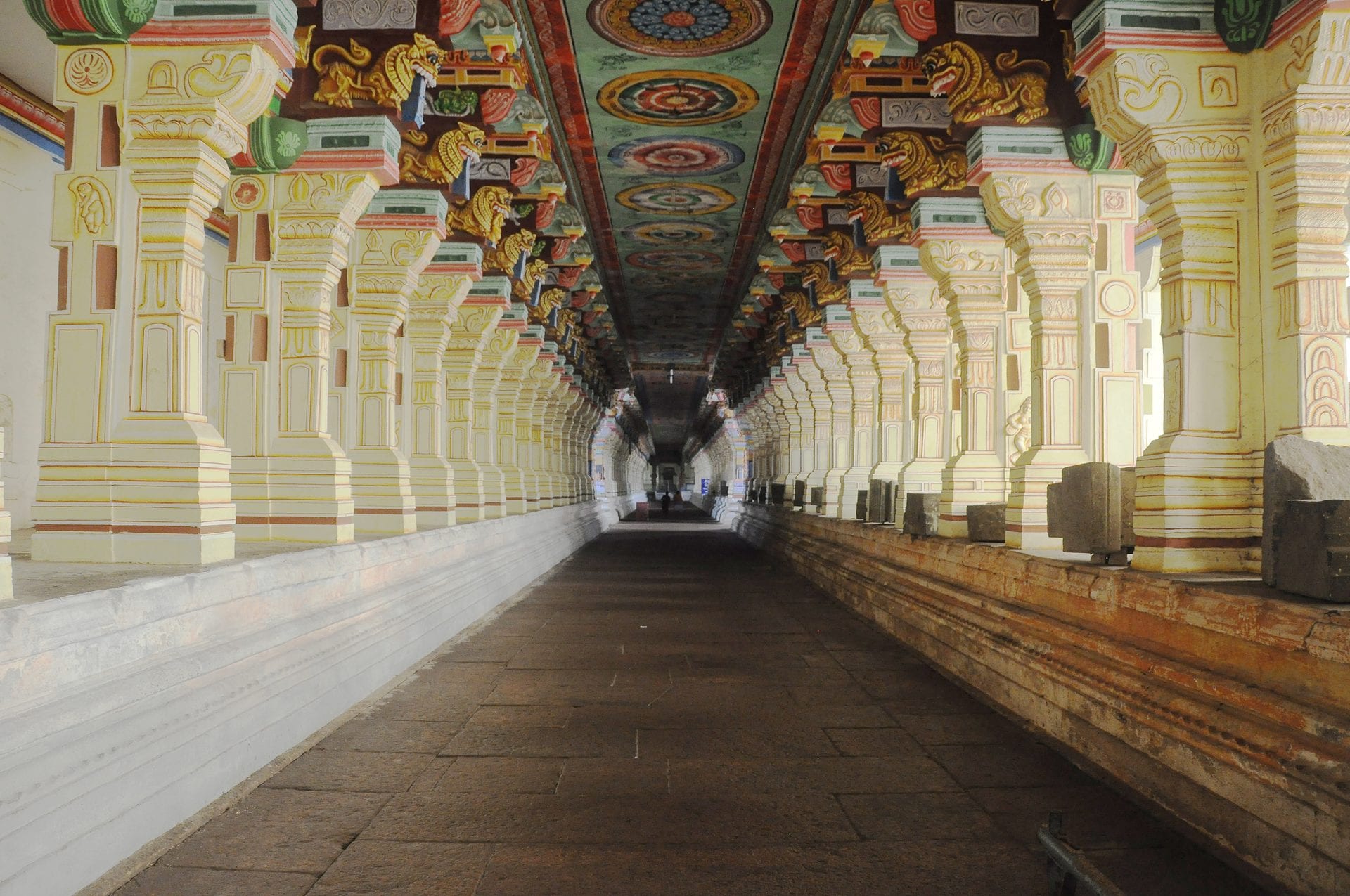
- The temple and its record corridorRamanathaswamy is both a Char Dham site and one of the twelve Jyotirlingas, and its pillared corridor, over a thousand carved granite columns running the better part of a kilometre, is the longest temple corridor in the world. Open about 5 am to 1 pm and 3 pm to 9 pm, closed in between for the midday rituals.
- Free, special or crystal-lingam darshanGeneral darshan is free but the queue can run one to three hours. A special or VIP darshan of about 200 rupees shortens that sharply. The rare Sphatika (crystal) Lingam darshan, said to have been given by Adi Shankaracharya, is about 50 rupees in an early slot around 5 am to 6 am, with a counter report time of about 4:30 am.
- The 22 wells, inside the templeThe 22 Theerthams (sacred wells) bath is a ticketed ritual of about 25 rupees, where temple staff pour water over you from each well in turn and you wear a wrist band. It runs through the morning and again in the afternoon. Bring a change of clothes, because you will be thoroughly soaked, and start early when the queue is thinnest.
- Photography is not allowed insidePhones, cameras and electronics are strictly not allowed past the gates, so there are no photos of the corridor or the sanctum. Save your camera for the Agni Theertham sunrise and the Pamban bridge, where the great views are anyway.
Dress is modest: men in a dhoti or trousers with a shirt, women in a saree or churidar, with shoulders and knees covered. Phones, cameras and electronics must be left outside, and paid lockers and cloakrooms by the gates take your bags and footwear. Arrive ready to go in and you will not lose time at the entrance. The next section sets out the full ritual order.
The Rameshwaram rituals, in the right order
Rameshwaram is a place of doing, not just seeing. The bathing rituals have a traditional order, and getting it right makes the morning flow and the meaning land. Here is the sequence and what each part costs.
- Start at Agni Theertham, the sea bathFirst, a dip in the sea at Agni Theertham, the shore directly east of the temple. There is no fee, sunrise over the Bay of Bengal is beautiful, and a beach priest can guide a simple ritual for a donation you agree in advance. This is the traditional first cleansing before you enter the temple, so come down to the water at first light.
- Then the 22 Theerthams insideBuy the 22-well ticket (about 25 rupees) at the counter on the left from the main gate, take your wrist band, and follow the temple staff from well to well as they draw and pour water over you. Allow roughly 45 minutes to 2 hours depending on the queue, and keep dry clothes in a bag to change into afterwards.
- The crystal lingam at dawn, if you canThe Sphatika Lingam darshan in the early slot, around 5 am to 6 am for about 50 rupees with a report time near 4:30 am, is special and quiet. It is counter booking only, so go to the temple counter rather than expecting to book it online, and it rewards the early start before the day warms and the crowds build.
- Finally the main darshanEnd with the main sanctum and the Ramalingam. Free darshan can run one to three hours; the special or VIP ticket of about 200 rupees is a kindness to tired legs and is the official way to skip much of the queue. Plan the whole sequence for the morning, before the midday closure at about 1 pm.
No. Travellers ask this constantly, and the honest answer from regular pilgrims is that the wells and the sea bath are entirely a matter of your own wish and belief, not a condition for darshan. You can have darshan without bathing at all. But for most pilgrims the 22 wells, each said to recall one of the arrows in Rama's quiver and each with its own taste and temperature, are the heart of the visit, so if your body and your time allow, do them. If a parent cannot manage the wet floors, they can skip straight to the darshan with a clear conscience.
Dhanushkodi, the Pamban bridge and Kalam's memorial
The island has far more than the temple: a ghost town at land's end where two seas meet, a record-breaking new bridge, the resting place of a beloved President, and a hilltop view over the whole island.
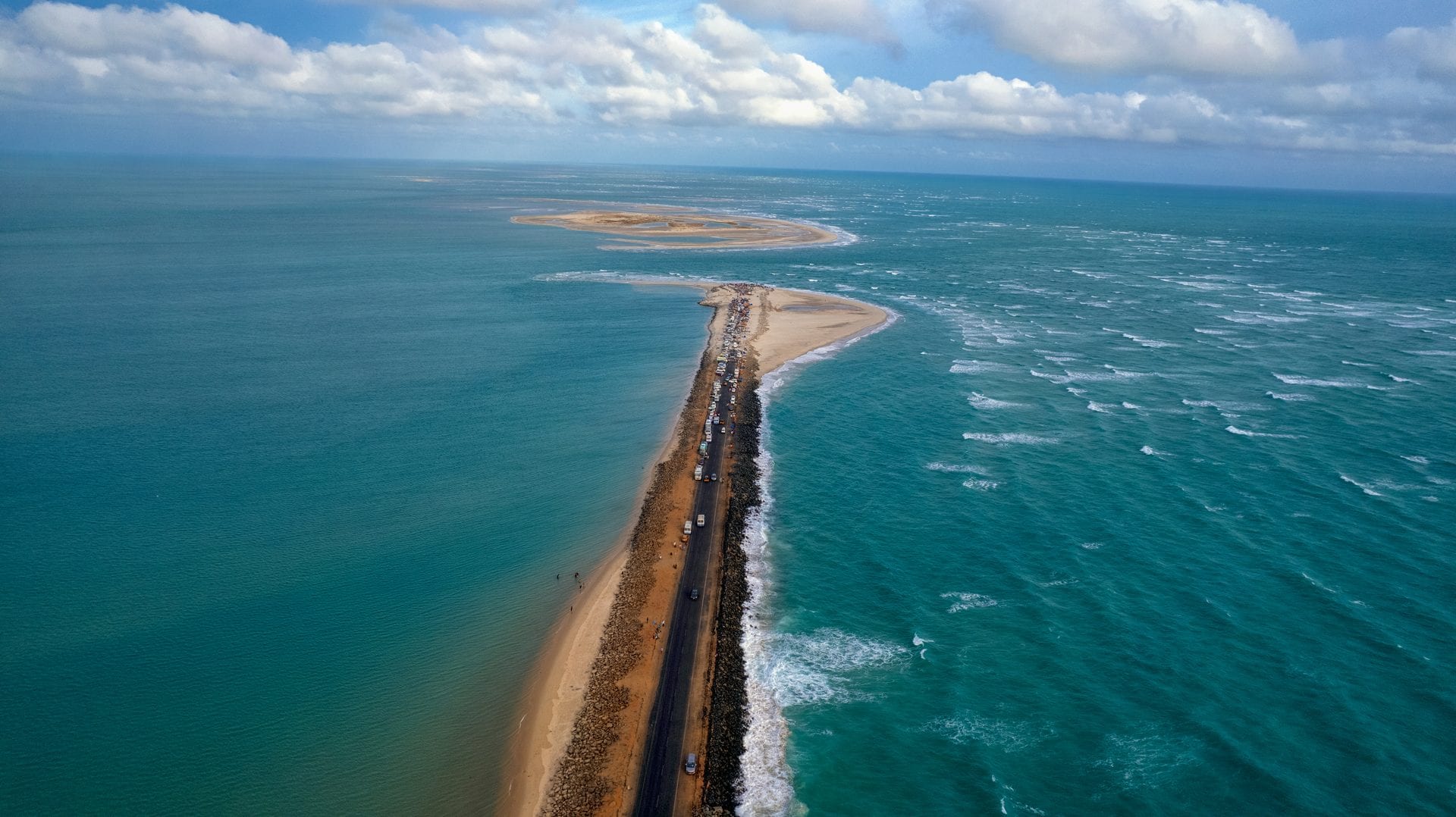
- Dhanushkodi, the ghost town at land's endAbout 18 to 20 km south-east, the town destroyed by the December 1964 cyclone is now a haunting strip of ruins between two seas. A police checkpoint stops private cars around the 12 km mark; from there a shared maxi-van of about 150 rupees per person runs the final sandy stretch to Arichal Munai, the tip where the Bay of Bengal and the Indian Ocean meet. Go in daylight, take the proper van rather than chancing the sand, and be back before dark, as there is no overnight stay out there.
- Getting to Dhanushkodi cheaplyYou do not need a private taxi. Shared jeeps from the Rameshwaram bus stand run about 50 to 70 rupees per person and government buses from near Agni Theertham about 30 rupees, both roughly every half hour to hour in daylight, leaving you only the maxi-van for the last bit. A hotel can book a private jeep for the whole trip for around 1,200 rupees if you prefer your own vehicle.
- The new Pamban vertical-lift bridgeIndia's first vertical-lift sea bridge, inaugurated on 6 April 2025 and about 2.07 km long, has a central span that lifts to let ships pass beneath the trains. The view across the lagoon, from the train and from the road bridge alongside, is gorgeous, especially near sunset. The century-old original Pamban rail bridge runs nearby, a sight in its own right.
- The Abdul Kalam National MemorialAt Pei Karumbu on the Dhanushkodi road, the memorial built by DRDO at the former President's burial place, open about 9 am to 5 pm and free to enter, tells the story of the local boy who became a missile scientist and head of state. A moving stop the town is rightly proud of, and an easy pairing with the Dhanushkodi run.
- Gandamadana Parvatham, the island viewAbout 3 km from the temple, this small two-storey hill shrine holds an imprint said to be of Lord Rama's feet and is the highest point on the island. On a clear morning you can pick out the Pamban bridge, the temple gopuram and the lighthouse from the top. A short, worthwhile early stop before the heat.
Rameshwaram is a vegetarian temple town. Clean South Indian meals, crisp dosas and idli, filter coffee and tiffin are the order of the day, and a full meal is cheap. Drink bottled or filtered water, take the usual care with anything from a roadside stall, and avoid a heavy meal right before the wells and the darshan, as the morning is long and on your feet.
Where to stay in Rameshwaram, and how many nights
Stay in the temple core on East or West Car Street to walk to everything, or a little out for more comfort. One night is the minimum, two if you want Dhanushkodi unhurried.
- The temple core: East and West Car StreetThe streets ringing the temple are the convenient choice, walking distance to the Agni Theertham beach and the morning rituals, which matters when you want to be at the wells by about 5:30 am. Busier and plainer, but unbeatable for the early start, and the natural base for pilgrims and seniors who want to limit walking.
- A little out of the centreQuieter hotels a short drive from the temple trade the early-morning walk for more space and calm, and some have sea views. Better for families and anyone who wants a comfortable room over location, with an auto-rickshaw or car for the short hop into the centre.
- How many nightsOne full day and night covers the sea bath, the 22 wells, the darshan and a quick Dhanushkodi run if you start at dawn. A second night lets you do Dhanushkodi, the Kalam memorial and Gandamadana Parvatham unhurried, catch a Pamban sunset, and not race the midday closure. Two nights is the comfortable choice.
- Room budgetsBudget lodges and dharamshalas near the temple commonly run about 500 to 1,000 rupees a night, simple hotels about 1,000 to 2,500 rupees, and better hotels from about 3,000 rupees up. Rooms tighten and prices rise around the big festivals and on weekends, so book ahead in season.
The single best stay decision in Rameshwaram is to be within a short walk of the temple and the Agni Theertham beach. The whole pilgrimage hinges on an early start, the sea bath at sunrise and the 22 wells before the queues build, and a room you can walk back to for dry clothes turns a hectic morning into a calm one. Save the location upgrade for the rituals and spend the comfort budget on a private jeep to Dhanushkodi instead.
Rameshwaram costs and a realistic daily budget
The core pilgrimage is remarkably cheap. Here is what the rituals, the darshan and the Dhanushkodi trip actually cost, so you can plan and not be overcharged.
- The fixed ritual costsAgni Theertham sea bath is free. The 22 Theerthams bath is about 25 rupees. The Sphatika crystal lingam darshan is about 50 rupees. A special or VIP darshan to skip much of the queue is about 200 rupees. General darshan is free. These are the rare set prices in town, and together the core rituals cost very little.
- The Dhanushkodi tripBy shared transport, a jeep from the bus stand is about 50 to 70 rupees per person and the government bus about 30 rupees, plus the final maxi-van of about 150 rupees per person to Arichal Munai. A private hotel jeep for the whole trip is commonly around 1,200 rupees, which suits a family or a senior who wants their own vehicle.
- Food and a daily budgetSouth Indian meals are cheap and excellent, roughly 50 to 150 rupees for a full meal. A realistic on-the-ground daily budget for food, local transport and darshan, excluding your room, is about 1,200 to 2,500 rupees per person, with the special darshan and a private jeep the things that move it up.
- Cash, cards and donationsCarry cash. The wells, the beach priest, the shared jeeps and small eateries run on cash, and the donation to a beach or temple priest should be a sum you decide yourself, not one you are pushed into. There are ATMs in town, but keep small notes for the rituals and the rides.
What surprises first-time visitors is how little the actual pilgrimage costs. The 22-well bath at about 25 rupees, the crystal lingam at about 50 rupees and the special darshan at about 200 rupees are small sums, the sea bath is free, and even Dhanushkodi by shared transport is little money. The budget you spend is mostly room and food, not rituals. Decide in advance what donation you will give a beach priest and stick to it, and the only real friction in town disappears.
Practical logistics: the 22-well sequence, lockers, water and getting around
The small things that make a Rameshwaram morning smooth, from where to leave your phone to how the wet ritual actually works and how to handle the island's distances.
- How the 22-well sequence worksAfter the sea bath, change into clothes you do not mind soaking, buy the ticket on the left of the main gate, and a temple worker leads you well to well, hauling a bucket and tipping the water over your head at each one. The floors are wet and crowded, so wear footwear you can slip off and keep your dry change and a towel sealed in a bag for the end.
- Phones, lockers and bagsPhones, cameras and electronics are not allowed inside, so use the paid lockers and cloakrooms at the gates for your phone, bag and footwear. Take only what you need for the rituals and your darshan ticket. This is the most common thing first-timers get caught out by at the entrance.
- Getting around the islandThe temple, the beach and the lodges are walkable. Auto-rickshaws and shared jeeps cover Dhanushkodi, the Kalam memorial and Gandamadana Parvatham, all a few kilometres out. Agree the auto fare before you set off, as meters are rare and visitors are quoted high.
- Water, heat and food timingCarry water and drink only bottled or filtered, take the usual care with street food, and in the warmer months keep sun protection for the open beach and the corridors. Eat light before the rituals; the morning is long and on your feet, and a heavy breakfast before the wells is a mistake.
Safety, the sea, Dhanushkodi and temple etiquette
Rameshwaram is gentle and devout, but the sea, the slippery ritual floors, the remote tip at Dhanushkodi and a few pushy touts are worth knowing about so the pilgrimage stays happy.
- The sea bath and slippery floorsAgni Theertham is a public bathing shore, not a swimming beach, so stay where the water is shallow and the crowd is, and do not wade out, as currents can be strong. Inside, the 22-well floors are wet and busy, the commonest cause of a slip, so move slowly and give an older pilgrim a steadying arm.
- Dhanushkodi: daylight only, no overnightThe tip is a remote, uninhabited spit with the last stretch over sand and two open seas. Go by day, take the official maxi-van rather than walking or driving onto the sand, watch the tide and the wind, and head back well before sunset. There is no overnight stay, and the area cleared at dusk for good reason after the 1964 cyclone.
- Touts and instant-darshan offersPeople offering instant VIP entry, a quick puja or a paid guide cluster near the gates and on the beach. Buy the official special or VIP darshan ticket yourself, agree any priest's donation in advance, and arrange a guide through your hotel or operator rather than on the street.
- Heat, water and respectDrink only bottled or filtered water, carry sun protection for the open beach and corridors, and pace the long morning. This is a deeply sacred place, so dress modestly, follow the no-photography rule inside, remove footwear where asked, and keep the quiet and the queue with patience.
If you take only one safety note from this page, make it the Dhanushkodi rule: go in daylight, use the maxi-van for the sandy stretch, and be back before dark with no thought of staying out there. The tip is beautiful and utterly exposed, the road is sand, and help is far away if the weather turns. Treat it as a daytime excursion with a hard return time, not somewhere to linger after sunset.
Rameshwaram for every kind of traveller, and on access
Rameshwaram draws very different visitors. Here is what it offers you and the one tip that matters for each, including how an older pilgrim completes the rituals comfortably.
- Devotees and pilgrimsThe spiritual high point of the south, both a Char Dham and a Jyotirlinga. Follow the ritual order, start at dawn, take the crystal-lingam slot for a quiet, profound darshan, and give the 22 wells the time they deserve.
- Senior travellers and on accessibilityVery doable with care. Use the special darshan (about 200 rupees) to save the long queue, take the 22 wells gently with a hand on the wet floors or skip them for a straight darshan, stay on East or West Car Street to walk less, sit out the midday heat, and let the maxi-van do the hard part at Dhanushkodi. The corridors are long and the floors uneven, so go slowly.
- Families with childrenThe sea bath, the wells and the ghost town are an adventure for older children. Carry a change of clothes for everyone, plan around the midday closure and a meal, and keep little ones close on the wet temple floors and the open beach.
- First-time temple visitorsLearn the order before you go (sea bath, 22 wells, crystal lingam, main darshan), the modest dress code, and the no-phone rule, and you will move through the morning with confidence rather than confusion at the gate.
- PhotographersSunrise at Agni Theertham, the new Pamban bridge over the lagoon, the ruins and twin seas of Dhanushkodi, and the view from Gandamadana Parvatham. Early and late light is best. Remember there are no cameras at all inside the temple.
- Budget travellersReach the island by train, stay in the simple lodges and dharamshalas near the temple, eat at the vegetarian messes, and do Dhanushkodi by shared jeep and bus. The core rituals cost very little, so this is an unusually affordable major pilgrimage.
A suggested Rameshwaram itinerary
How to shape one or two days so you catch the temple in its open hours, the sea at sunrise, and Dhanushkodi in daylight without racing the midday closure.
- Day one, early morningBe at Agni Theertham for the sunrise sea bath, then into the temple for the crystal lingam slot if you have it, the 22 wells from about 5:30 am while the queue is thin, and the main darshan with the special ticket. Aim to finish the rituals before the midday closure at about 1 pm.
- Day one, afternoonRest and eat through the closure, then drive out to the Abdul Kalam memorial and on towards Dhanushkodi, taking the maxi-van to Arichal Munai and timing the return before dark. Catch the Pamban bridge view on the way, lovely near sunset.
- Day two, if you have itA gentler second day: Gandamadana Parvatham for the island panorama early, a slower wander of the temple corridors, the floating-stone Ram Setu lore and the smaller shrines, and time to simply sit by the sea. A second night turns a rushed pilgrimage into a calm one.
- The single-day versionIt can be done in a long day if you start at dawn: rituals and darshan in the morning, a quick Dhanushkodi and Kalam memorial run after the closure, and out by evening. You will see the essentials, but two days lets the place breathe.
The thing that breaks a tight Rameshwaram plan is arriving at the temple during the early-afternoon closure, about 1 pm to 3 pm. Build the day so the sea bath, the wells and the darshan all fall in the morning, keep the hot middle of the day for a meal and Dhanushkodi, and you will never stand at a shut gate with your schedule unravelling. An early start is the whole secret of doing Rameshwaram well.
The real questions travellers ask about Rameshwaram
Straight answers to the questions that come up again and again on traveller forums, so you arrive already knowing the score.
- Is the 22-well bath compulsory?No. The sea bath and the wells are a matter of your own wish and belief, not a condition for darshan, so you can have darshan without bathing at all. Most pilgrims still do the wells as the heart of the visit, but anyone who cannot manage the wet floors can skip straight to the darshan.
- Is one day enough?One long day from dawn covers the rituals, the darshan and a quick Dhanushkodi run. Two days is better and far calmer, letting you do Dhanushkodi, the Kalam memorial, Gandamadana Parvatham and a Pamban sunset without racing the midday closure.
- How do I get to Dhanushkodi and the very tip?Take a shared jeep (about 50 to 70 rupees) or the bus (about 30 rupees) towards Dhanushkodi, or a private jeep for around 1,200 rupees. Private cars stop at the checkpoint around the 12 km mark; from there a shared maxi-van (about 150 rupees per person) runs the sandy last stretch to Arichal Munai. Go by day and return before dark.
- Can I take my phone inside the temple?No. Phones, cameras and electronics are not allowed inside the Ramanathaswamy temple, so there are no photos of the corridor or the sanctum. Leave them in the paid lockers at the gates and take only your darshan ticket and a little cash.
- Is the train running again over the new bridge?Yes. Trains reach the island again over the new Pamban vertical-lift sea bridge, inaugurated on 6 April 2025, after the old bridge was closed for about two and a half years. Check current services and timings on IRCTC, as the reopened schedule has been settling in.
- When is the crystal lingam darshan and how early must I be?The Sphatika Lingam darshan is in an early slot around 5 am to 6 am for about 50 rupees, with a counter report time near 4:30 am. It is counter booking only, so go to the temple counter rather than expecting to book it online, and it is quietest and most special before the day fills up.
Planning Rameshwaram from abroad
Rameshwaram is the spiritual heart of the southern temple journey, and for many overseas Indians a once-in-a-lifetime Char Dham and Jyotirlinga visit. A little preparation makes the rituals, the rules and the senior comfort easy to handle.
- Come through Chennai or MaduraiFly into Chennai, then a domestic hop or train to Madurai, and on to the island by car or train over the new Pamban bridge. Rameshwaram pairs naturally with Madurai and Kanyakumari in the classic southern temple loop, an easy and meaningful route to plan from abroad.
- Know the ritual order in advanceThe Agni Theertham sea bath, then the 22 Theerthams (about 25 rupees), then the main darshan, with the early crystal-lingam slot (about 50 rupees) a quiet highlight before all of it. Carry a change of clothes for the wells, dress modestly, and remember phones and cameras stay outside in the lockers.
- Use the special darshan for older parentsFor grandparents and elderly relatives, the special or VIP darshan (about 200 rupees) saves a long queue, the wells can be taken gently or skipped, and the Dhanushkodi maxi-van does the hard walking. This is a gentle way to complete a profound pilgrimage that families often plan for years.
- Plan around the season and the closureThe best season is October to March, away from the summer heat and the late-year coastal rains, and the temple shuts about 1 pm to 3 pm, so the rituals belong to the morning. Give the island two nights if you can, so a once-in-a-lifetime visit is calm, not rushed.
Money, temple rules and timing for foreign visitors
The practical basics an overseas traveller needs for a sacred island town: cash, the strict temple rules, dress, and how much time to give Rameshwaram on a wider South India trip.
- Carry cash, keep small notesThe rituals, the beach priest, the shared jeeps and small eateries run on cash, and the ticketed rituals are only small sums (about 25, 50 and 200 rupees). Draw cash in town or before you arrive, keep small notes for the wells and the rides, and decide any priest's donation yourself in advance.
- Respect the strict temple rulesPhones, cameras and electronics are not allowed inside, dress is modest with shoulders and knees covered, and footwear comes off. Use the paid lockers at the gates. These rules are firmly enforced, so arrive ready and you will not be turned back at the entrance.
- How long to give it on a bigger tripOn a southern temple trip, one to two nights in Rameshwaram is the right weight between Madurai and Kanyakumari: enough for the rituals, the darshan, Dhanushkodi and the Kalam memorial, without slowing the whole itinerary. A first-time pilgrim should lean to two nights for calm.
- Time your visit for comfortOctober to March is the comfortable window, around 20 to 30 degrees, and the rituals are far easier on the body then. Avoid the May to June heat and humidity and the late-year monsoon weeks, and aim for weekdays away from the big festivals if you want a calmer temple.
Many overseas families plan Rameshwaram for years as the southern anchor of a Char Dham or Jyotirlinga journey. The two things that make it land are starting before dawn, when the sea bath and the wells are at their most peaceful, and giving the island two nights so the rituals, Dhanushkodi and Kalam's memorial each have room. Get those right and Rameshwaram becomes the chapter of a South India trip that families remember most deeply.
Where Rama worshipped Shiva, and the Setu to Lanka
Rameshwaram takes its meaning from the Ramayana. After defeating Ravana in Lanka, Lord Rama is said to have wished to atone for the war by worshipping Lord Shiva, and so he asked Hanuman to bring a great Shiva linga from Kashi. When Hanuman was delayed, Sita is said to have fashioned a linga from the sand of the shore so that Rama could worship at the auspicious hour, and that very Ramalingam is the linga venerated in the Ramanathaswamy temple to this day. From here too, the tradition holds, Rama's army built the Setu, the bridge of stones across the sea to Lanka, remembered now in the shoals and the floating-stone lore of the strait toward Dhanushkodi. These are living devotional traditions carried in the Ramayana and the temple's own histories rather than documented history, and Rameshwaram is honoured precisely as the place where the two great streams of Hindu faith, the worship of Vishnu as Rama and of Shiva, meet on one shore.
Planning a Rameshwaram trip?
Our Tamil Nadu travel experts plan your full journey for you: route, hotels, darshan timings and transport. You get a free day-by-day plan and an exact quote on WhatsApp, usually within a few hours. No payment is needed to get your plan.
Tour packages that visit Rameshwaram
Every journey below is private, hand-crafted and fully customizable. Tell us your dates and we tailor the itinerary, the pace and the priests or guides around you.
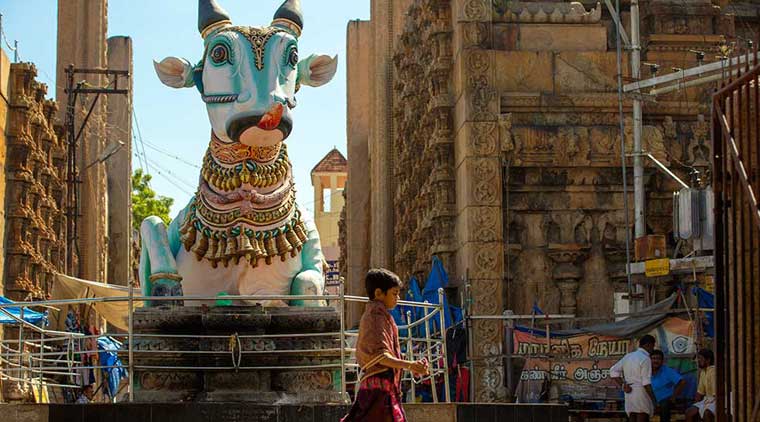 5D / 4N
Madurai Rameshwaram Kanyakumari Tour Package
- Visit Meenakshi Temple
- Visit Alagar Koil Temple
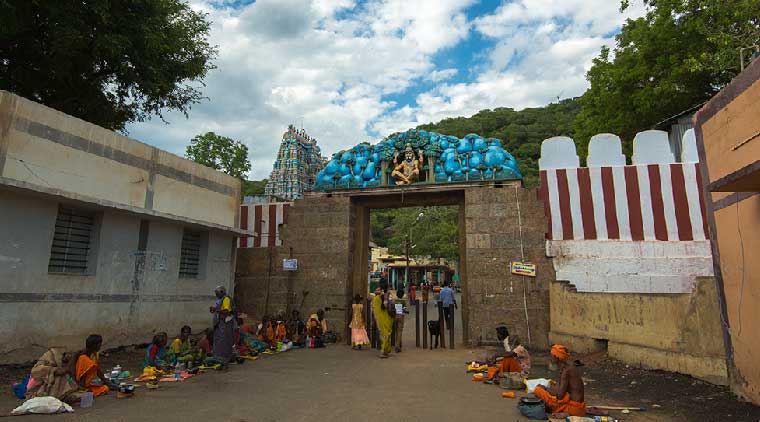 7D / 6N
Tirupati Madurai Rameshwaram Kanyakumari Tour Package
- Tirupati Balaji Temple
- Famous Annamalaiyar Temple
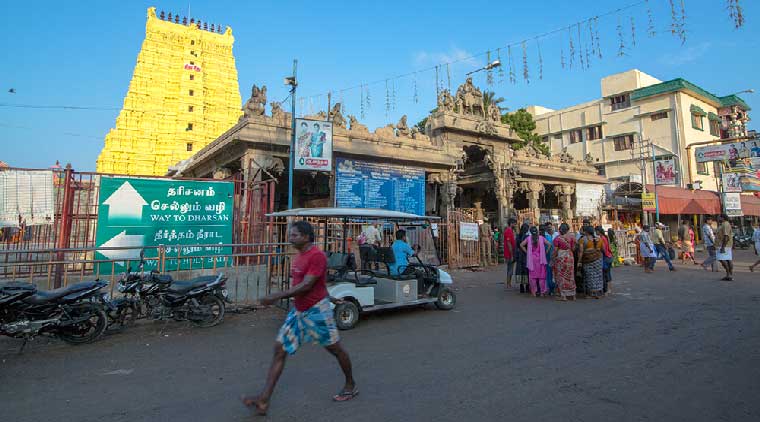 3D / 2N
Rameshwaram Jyotirlinga Tour Package
- Visit Meenakshi Amman Temple
- Visit Ramanathaswamy Temple
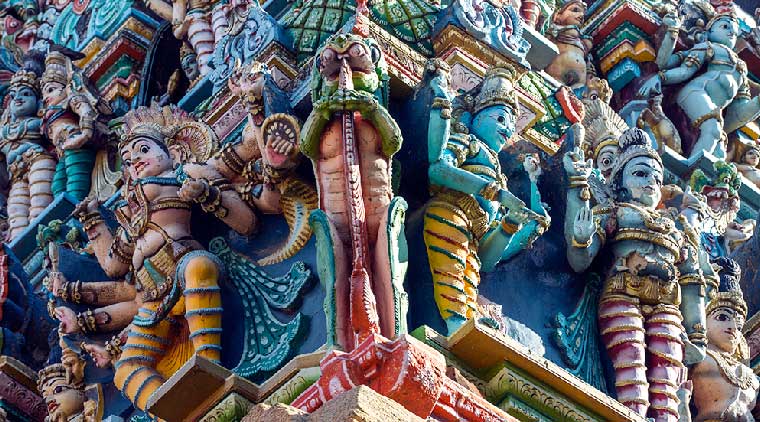 6D / 5N
South India Temple Tour
- Visit Uchchi Pillaiyar Koil
- Visit Siva Temple
 19D / 18N
12 Jyotirlinga Tour Package from Delhi
- All Jyotirlinga darshans
- Ganga Aarti experiences
 18D / 17N
12 Jyotirlinga Tour Package from Mumbai
- Transparent and Customizable Pricing
- Smart, Time-Saving Logistics
 4D / 3N
Rameshwaram Tour Package from Bangalore
- A planned trip from Bangalore, quick by the one-hour flight or easy by the overnight train
- Darshan at the Ramanathaswamy Temple, home of the Rameshwaram Jyotirlinga
 5D / 4N
Rameshwaram Tour Package from Ahmedabad
- A planned trip from Ahmedabad, with the flight to Madurai and all the ground travel arranged
- Darshan at the Ramanathaswamy Temple, home of the Rameshwaram Jyotirlinga