01
Paro
Paro valley
Where you land, with the covered bridge, the dzong and the Tiger's Nest
March to May and September to November
Overview
Bhutan is the kindest first trip abroad an Indian family can take. You fly straight to Paro and you are in the clean mountain air the same morning, with no visa and no long haul. The drives are short, the people are gentle, the food is warm and mild, and the country is Buddhist to its bones, so the temples and customs feel close to home. This 7 day plan gives your family the three valleys, Paro, Thimphu and Punakha, at a pace a five year old and an eighty year old can both enjoy, with every permit, including the child papers, arranged before you leave.
Most families want the same three things from a first trip out of India: it should be safe, it should be simple, and it should not exhaust the children or the grandparents. Bhutan gives you all three. There is no visa for Indian citizens, only a permit that we arrange. Drukair, the national airline of Bhutan, flies straight to Paro from several Indian cities, and the hop is short, so nobody arrives worn out. Once you land, the sights are close together, the roads are quiet, and the driving days are short by Indian standards. The country is calm and clean, crime is very low, and English is widely spoken, so a family finds its feet fast.
There is a cultural comfort too. Bhutan is a Buddhist country with deep Indian roots. Your children will spin prayer wheels, watch butter lamps being lit, and see monks their own age at play between lessons. Grandparents feel at home in the temples. For NRI and OCI families flying into India to meet relatives, Bhutan is an easy add on that gives three generations a shared holiday without anyone feeling rushed or lost.
Indian citizens do not need a visa for Bhutan. You travel on an entry permit. Each adult carries a valid Indian passport with at least six months left on it, or an original Voter Identity Card from the Election Commission with passport size photographs. The part that trips up families is the children. A child below 18 who does not yet hold a passport must carry an original birth certificate. Not a photocopy, the original. We tell you exactly what to bring for each member of the family before you travel, so nobody is turned back at the counter.
When you fly in, the permit is issued at Paro airport on arrival. There is one more point that most family package pages skip. The entry permit covers Thimphu and Paro only. Punakha lies beyond that line, so it needs a separate route permit, which is arranged at the immigration office in Thimphu on a working day, Monday to Friday. We handle the entry permit, the child papers and the Punakha route permit together, so your family does not stand in a queue on its holiday.
Bhutan asks every visitor to pay a fixed daily government charge, the Sustainable Development Fee. Indian travellers pay a lower rate than most other nationalities. The amount is set by the government and can change, so we confirm the current figure with you when we quote, and you can check it yourself on the official portal at immi.gov.bt. Because a family pays this per person per night, it is a real part of the budget, and an honest planner tells you so up front rather than hiding it. Children's rates can be different from adult rates, so we confirm the current child figures for your exact ages at booking, and you see the full family number before you commit.
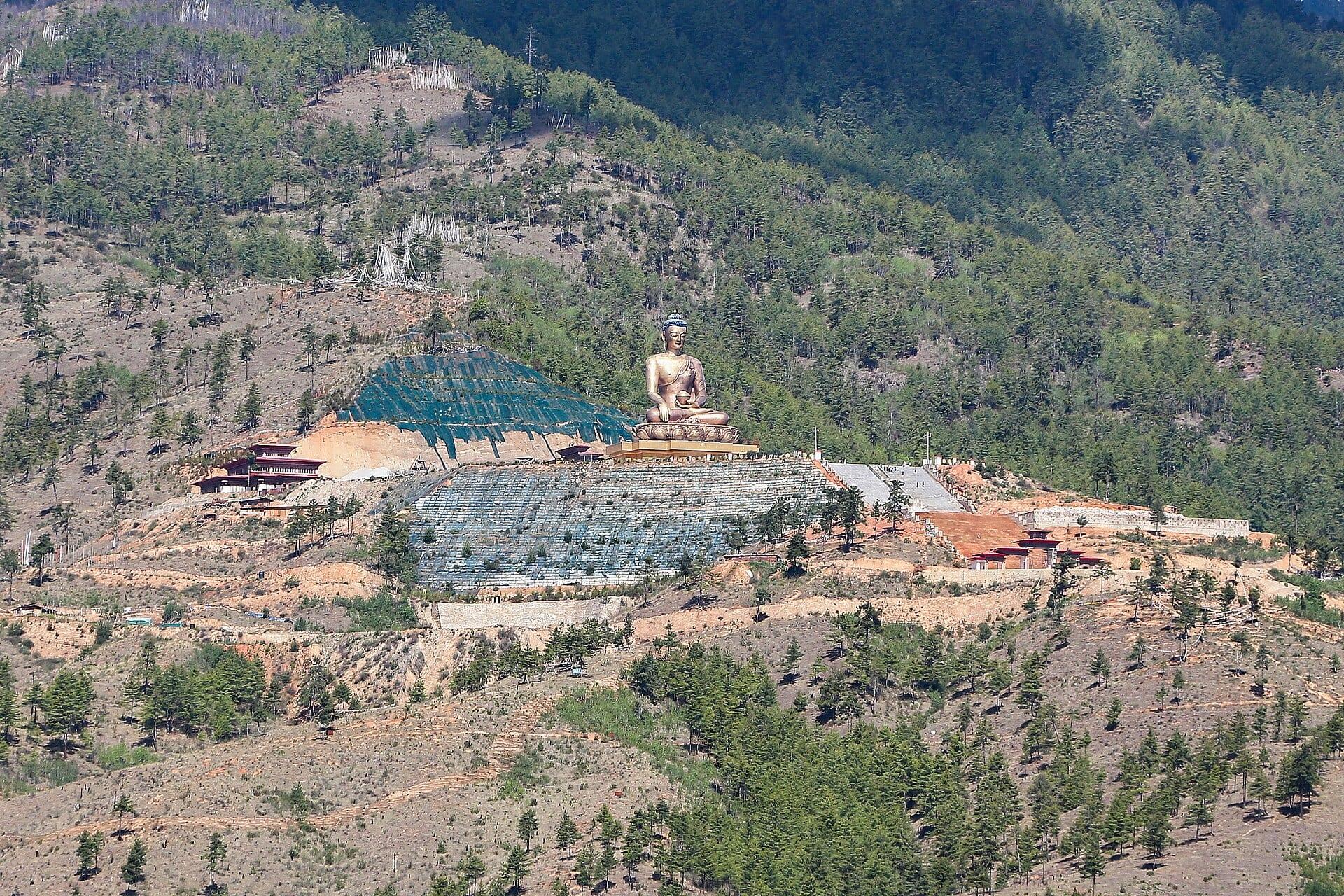
Thimphu, the capital, is where a family day comes alive for children. It is the only capital in the world with no traffic lights, and a policeman still directs the cars by hand, which children find funny to watch. Above the city sits the Great Buddha Dordenma in gold, with a wide plaza where small children can run. At the Motithang Takin Preserve you meet the takin, Bhutan's odd national animal, a creature that looks part goat and part cow, and children never forget it. The best surprise is the Bhutan Postal Museum, where your family can make a real, usable postage stamp carrying your child's own photograph, a keepsake that costs little and delights every age. At Simply Bhutan, a small living museum, children can dress in local clothes and try a few shots with a traditional bow, since archery is the national sport.
Punakha adds a different thrill. The long suspension bridge over the river sways as you walk, which children love and some grandparents watch from the safe bank, and there is no shame in either choice. Along the way the temples give small hands plenty to do, from turning rows of prayer wheels to lighting a butter lamp with the guide's help.
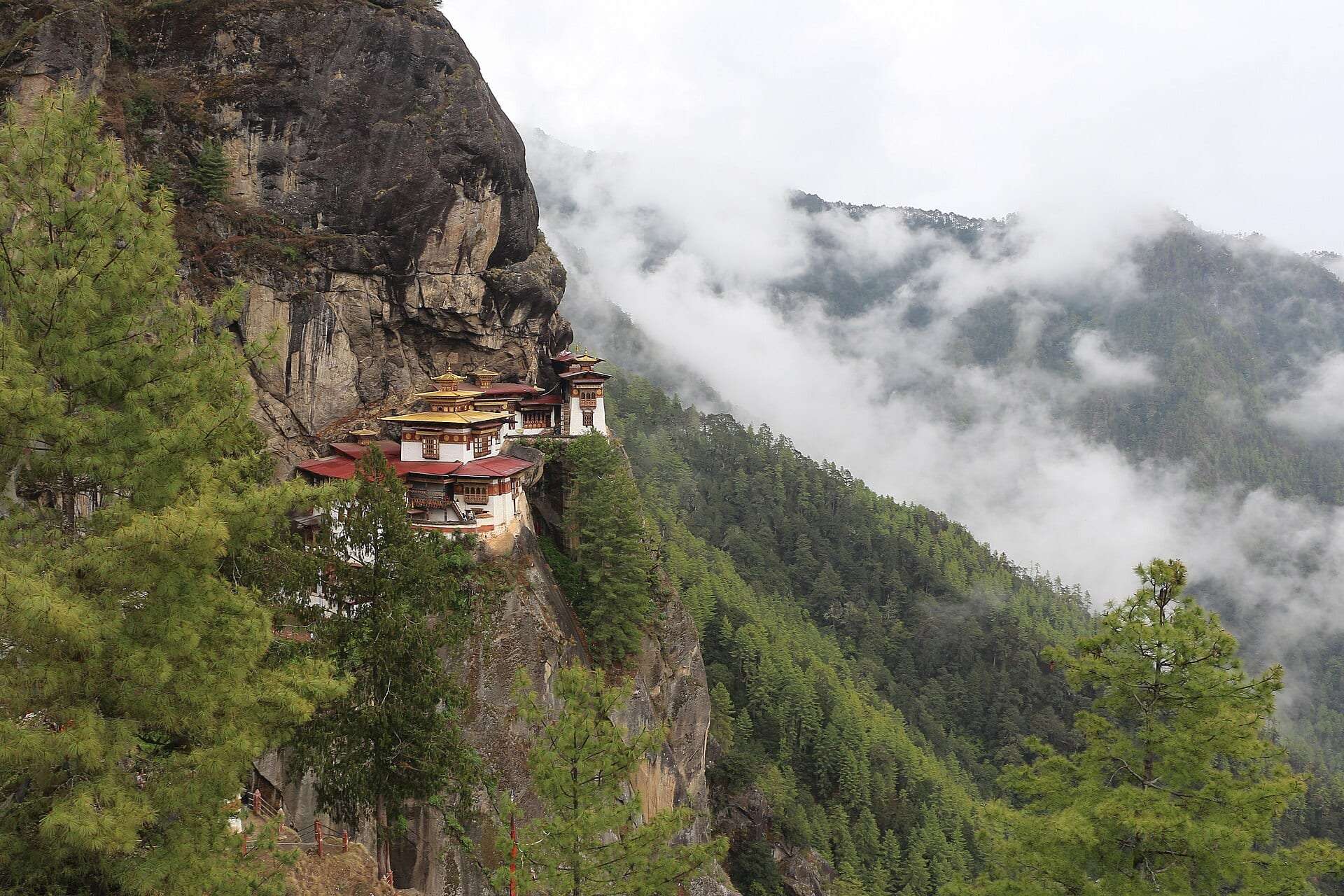
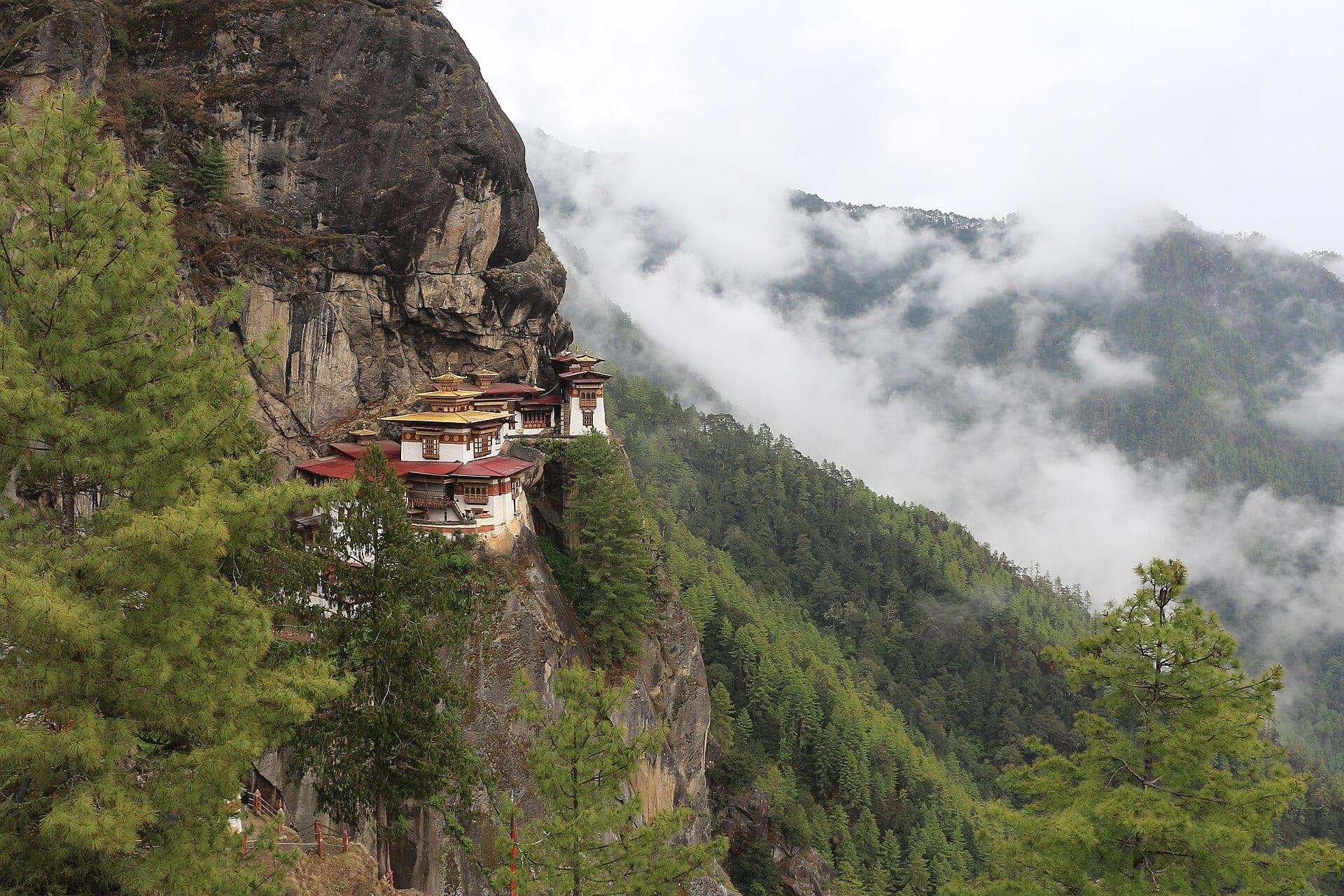
The one famous climb of any Bhutan trip is the walk up to Paro Taktsang, the Tiger's Nest monastery, which clings to a cliff about 900 metres above the valley floor. Families worry about it, so here is the honest picture. The full walk up and down takes about four to five hours at an easy pace. There is a cafeteria at the halfway point with tea and the first full view of the monastery across the gorge. This halfway cafe is the key to doing Tiger's Nest as a family. Children who tire, or a grandparent who would rather not go higher, can ride a pony up the first half to the cafe, enjoy the famous view, and rest there in comfort while the rest of the family climbs on. A pony is hired on the spot for the first half only. Nobody is forced to the top, and the view from the cafe alone is worth the morning. Inside the monastery, cameras and phones go into lockers, and full legs and shoulders must be covered, so pack accordingly.
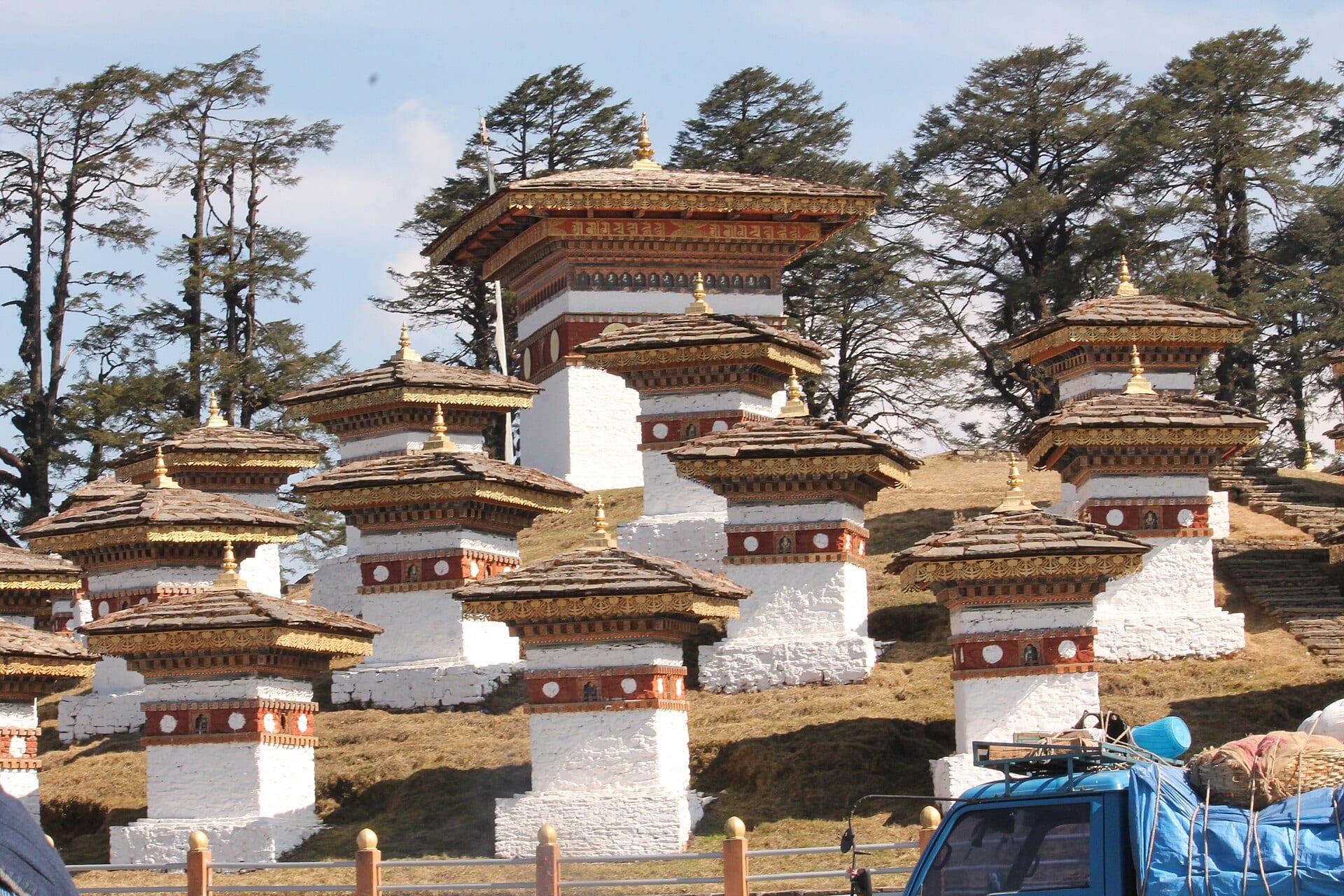
The reason Bhutan suits a family is the short driving. Paro to Thimphu is about 54 km and takes an hour to an hour and a half. Thimphu to Punakha is about 72 to 76 km but takes two and a half to three hours, because the road climbs over Dochula Pass at about 3,100 metres and winds down the far side, where 108 small shrines stand in rows with the high Himalaya behind them on a clear morning. Punakha back to Paro runs about 125 km and takes three and a half to four hours. Sources differ a little on the exact kilometres, so we give the honest range. The bends are many, so carry a strip of anti-nausea tablets in case a child gets car sick. We keep the first day light so young children and elders settle into the mountain air, which is thinner than the plains, before any real activity.
Parents of fussy eaters can relax. Bhutanese food is simple and warm, and much of it is mild. The national dish, ema datshi, is green chillies in cheese and is hot, so for children order its gentle cousins instead, kewa datshi with potato or shamu datshi with mushroom, both cooked in the same soft local cheese and served with mountain red rice. Steamed momos are a safe favourite for every child, and hot milk tea, called ngaja, suits small hands better than the salty butter tea, suja, which is worth one brave sip. Your guide will point the family to an honest local kitchen in each town rather than a hotel buffet, if you ask.
Photos from Wikimedia Commons: Taktsang Monastery, Bhutan 01 by Bernard Gagnon (CC BY-SA 4.0); Punakha Dzong, Bhutan 05 by Bernard Gagnon (CC BY-SA 4.0); Tashichho Dzong, Bhutan 03 by Bernard Gagnon (CC BY-SA 4.0); Druk Wangyal Khang Zhang Chortens at Dochula Pass by Chirag85 (CC BY-SA 4.0); Buddha Dordenma statue, Thimphu 06 by Bernard Gagnon (CC BY-SA 4.0); Rinpung Dzong, Bhutan 01 by Bernard Gagnon (CC BY-SA 4.0).
March to May and September to November
Families with children and grandparents, NRI families
Easy, with one optional climb to Tiger's Nest
Route & distances
Accurate distances and travel times for every leg: 238 km by road. Road times include a traffic buffer; distances marked “aerial” are straight-line for flight, helicopter, ropeway and water legs.
| # | Leg | Mode | Distance | Time |
|---|---|---|---|---|
| 1 | Paro → Thimphu | By road | 50 km | ~1h 6mest. |
| 2 | Thimphu → Punakha | By road | 74 km | ~1h 45mest. |
| 3 | Punakha → Paro | By road | 114 km | ~2h 30mest. |
Day by day
A carefully paced plan, day by day. Tap any day for the stay, meals and altitude detail.
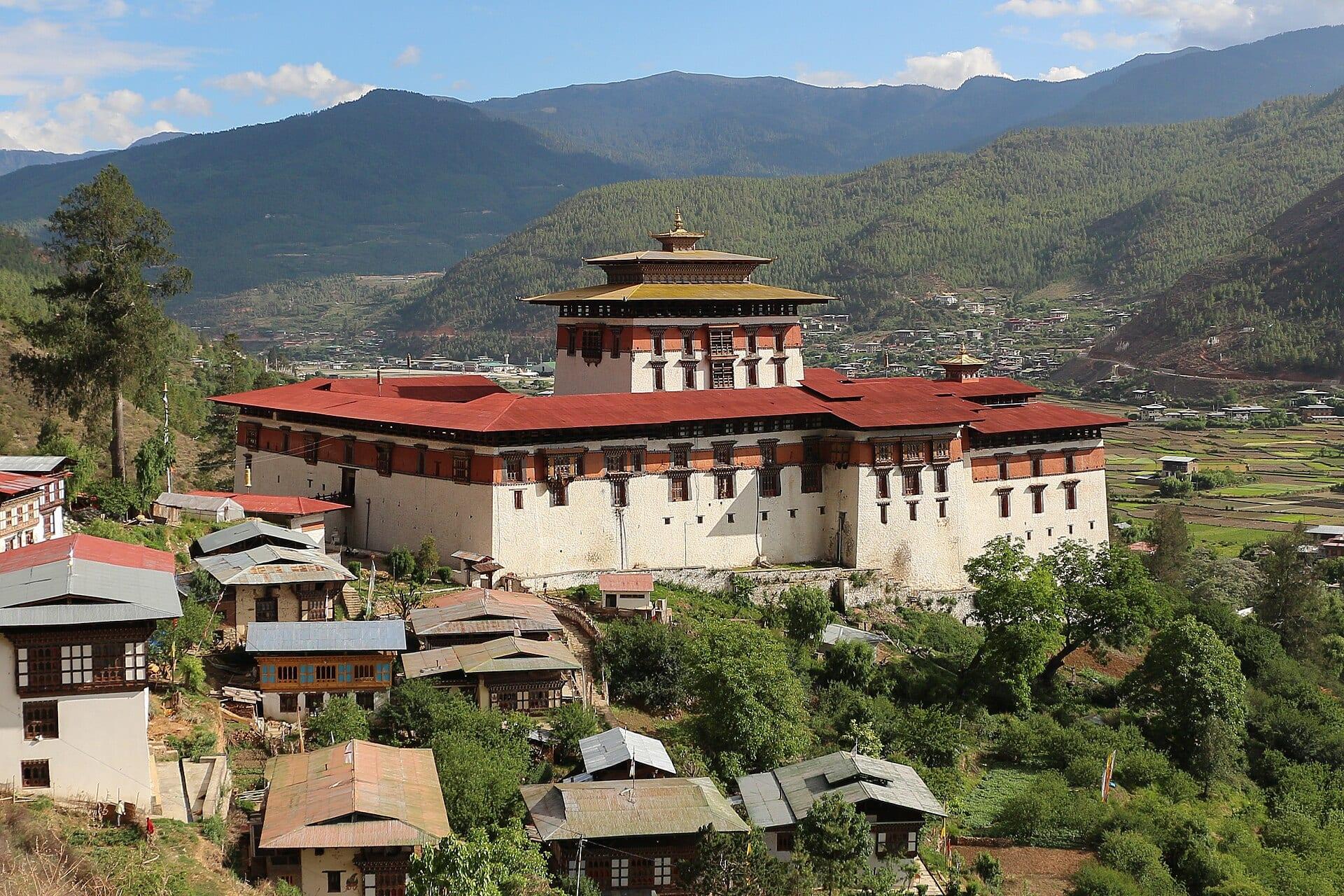
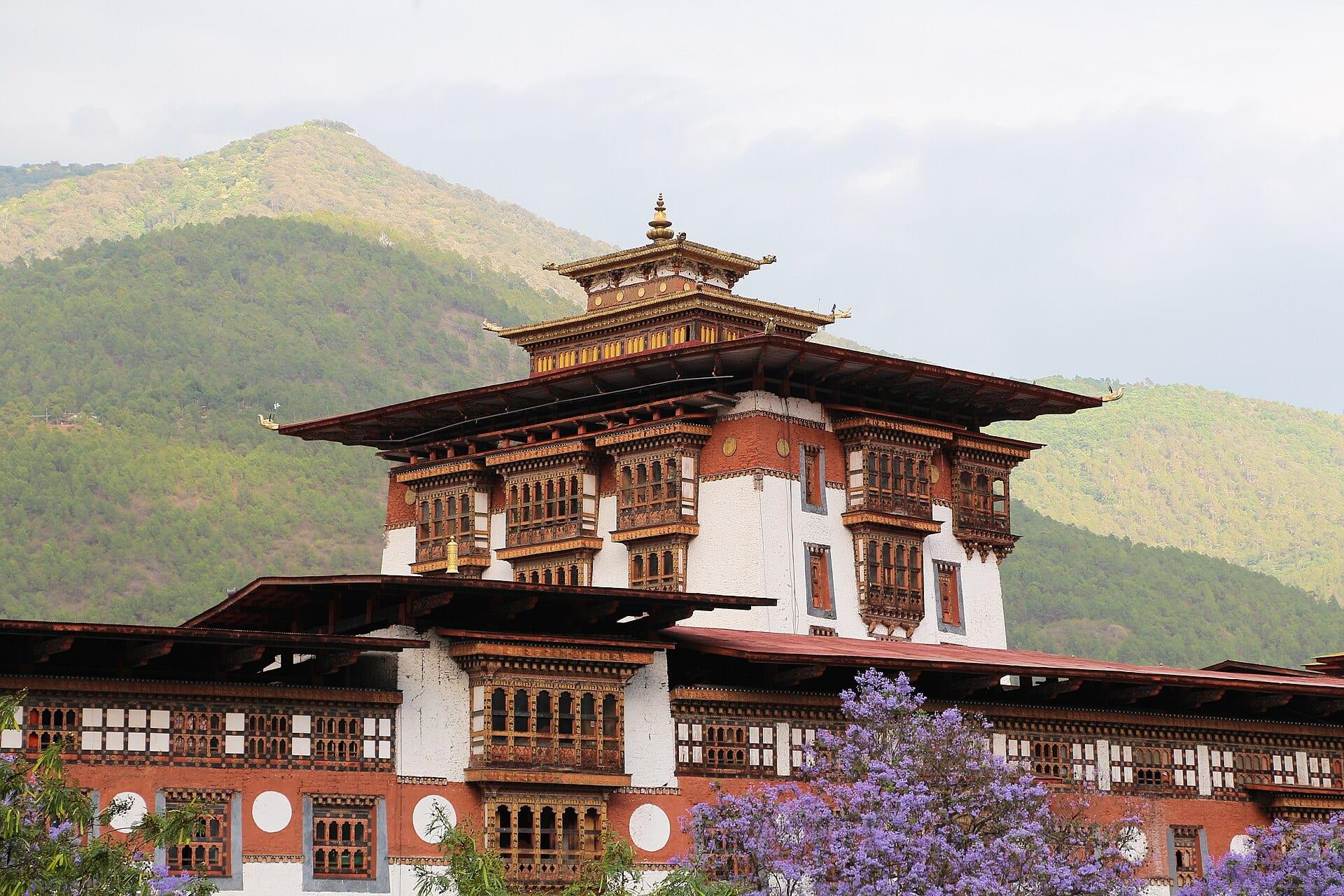
Your Drukair flight reaches Paro in the morning, and the landing is a sight in itself, flown by hand between the hills to a small terminal painted in the red, gold and white of a temple. Ask for a left window seat so the children can watch the mountains on the way in. At Paro your permits are stamped and our car meets you outside. Because the valley sits at about 2,200 metres, the air is thinner than home, so the first afternoon is kept light and slow while everyone settles. Walk across the old covered wooden bridge, the Nyamai Zam, to Rinpung Dzong, the fortress above the river, where children can turn the long rows of prayer wheels. If small legs are still fresh, the round watchtower above the dzong holds the National Museum, a short climb for a big view down the valley. End the day in Paro town, a single street of wooden shopfronts, with a first plate of mild food.
Local dish to try today: kewa datshi, the gentle potato and cheese dish, with red rice, at a simple Paro kitchen such as the long running Sonam Trophel, if it is open.
Special Tips for This Day: Go slow and drink water all day, because the height tires children and elders faster than they expect. Change a little money into Bhutanese ngultrum, though Indian rupee notes of one hundred and below are taken freely. Pack a warm layer in the day bag, since the sun is strong by day but the evening turns cold quickly.
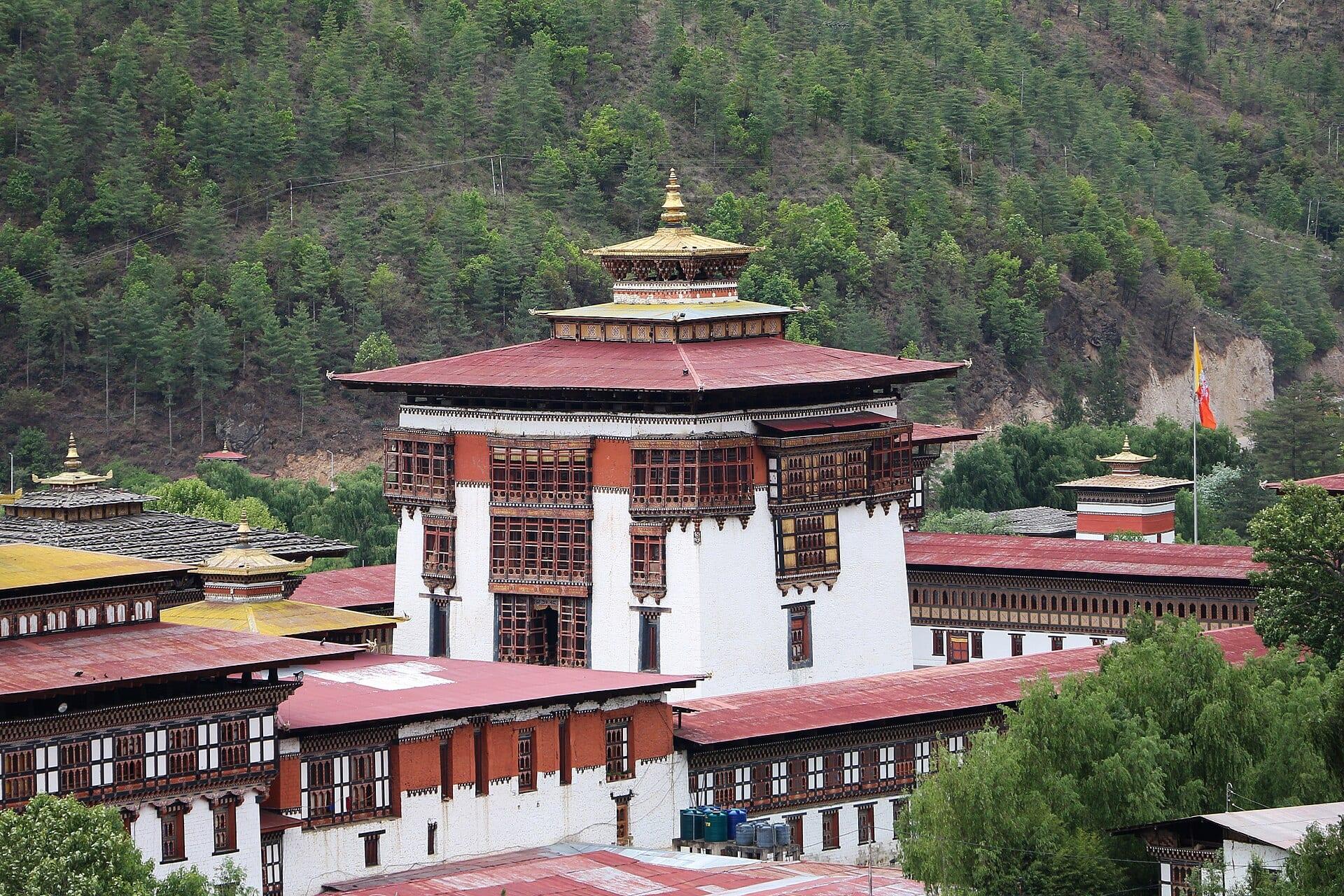
After breakfast you drive to Thimphu, about 54 km and an hour to an hour and a half on a good road along the river. Thimphu is small and easy for a family. Start at the Great Buddha Dordenma, gold on its hill, with a wide plaza where small children can stretch their legs and the whole city below. Meet the takin at the Motithang Takin Preserve, the strange national animal that always makes children laugh. The high point for most families is the Bhutan Postal Museum, where you can make a real postage stamp carrying your own child's photograph, a cheap and happy keepsake. See the Memorial Chorten, white and gold, where older locals turn prayer wheels all day, and if there is time, Simply Bhutan, a small living museum where children dress in local clothes and try a few shots at archery, the national sport. As the offices close in the late afternoon, Tashichho Dzong opens to visitors, and you walk its courtyards in the golden light.
Local dish to try today: steamed momos in the evening at a busy Thimphu kitchen such as the well known Zombala, if it is open, mild enough for children when you ask for less chilli.
Special Tips for This Day: Carry a printed or phone photo of each child for the postage stamp, since that is what makes the museum visit special. Keep your handicraft buying for Thimphu, which has the best shops, and start at the government run Handicrafts Emporium, where the fixed fair price helps you judge the street stalls. Confirm the museum opening hours with your guide in the morning, as small museums keep short days.
Today the family crosses into the old capital. The drive is about 72 to 76 km but takes two and a half to three hours, because the road climbs to Dochula Pass at about 3,100 metres. At the top, 108 small white shrines stand in rows, and on a clear morning the eastern Himalaya rises behind them like a wall, so stop for tea and let the peaks show themselves. As you drop towards Punakha the air warms and turns almost tropical, a pleasant change for the children. Walk the short, flat path through the rice fields to Chimi Lhakhang, an easy stroll even for small legs, then reach Punakha Dzong, the grandest fortress in the country, set where the Pho Chhu and Mo Chhu rivers meet. The treat of the day is the long suspension bridge over the river, which sways as you cross. Children love it, and any grandparent who would rather not can watch happily from the bank.
Local dish to try today: the red rice of the Punakha valley, grown in the fields you walk through, served with a mild kewa datshi.
Special Tips for This Day: This is the day your Punakha route permit is checked, and we keep it ready so you do not wait. Dochula is cold and windy even when Punakha below is warm, so carry a jacket for the pass and shed it as you descend. Let nervous children cross the swaying bridge holding an adult's hand, and there is no shame in watching from the safe bank instead.
Give the family a slow morning by the Mo Chhu river before the drive back. A gentle walk along the water or through a nearby village is enough, and older children who want more can ask about a calm river float, which we arrange only with a proper operator and only within the safe age limits, so please confirm this with us in advance. In the afternoon you drive back towards Paro, about 125 km and three and a half to four hours, crossing Dochula Pass again, which often looks quite different in the new day's light. Break the journey in Thimphu for lunch so nobody sits too long. Reaching Paro by evening gives the family a calm base for the two days ahead and puts you close to the airport for the flight home.
Local dish to try today: a warm bowl of thukpa, the noodle soup, at a lunch stop in Thimphu, easy and filling for tired children.
Special Tips for This Day: Keep the anti-nausea tablets handy, because the return drive has the same long bends. Let the children nap in the car on the way back so they are fresh for the Tiger's Nest walk tomorrow. Confirm your Paro hotel has a family or connecting room ready, which we request in advance.
Today is the walk everyone remembers, and it is done at your family's own pace. Paro Taktsang, the Tiger's Nest, clings to a cliff about 900 metres above the valley floor. Start early, before the sun is high. The path climbs through blue pine and past fluttering prayer flags to a cafeteria at the halfway point, where most families stop for tea and the first full view of the monastery across the gorge. This is the point that makes Tiger's Nest a family walk. A child who tires, or a grandparent who has climbed enough, can take a pony up this first half, enjoy the famous view, and rest at the cafe while the others go on. The full up and down is about four to five hours at an easy pace. Inside the monastery, cameras and phones go into lockers, and you walk through small dark shrines lit by butter lamps. In the afternoon, rest tired legs at Kyichu Lhakhang, one of the oldest and quietest temples in Bhutan.
Local dish to try today: a hot bowl of hoentay, the buckwheat dumplings of the Haa valley, at the halfway cafeteria if they have it, and a filling shakam paa or thukpa back in Paro in the evening.
Special Tips for This Day: Wear proper walking shoes, not sandals, and let the counter at the base lend you a walking stick. Full legs and shoulders must be covered to enter the monastery, so no shorts for anyone. Carry water and a few boiled sweets for the children, and hire the pony at the base if you want the halfway option. Photography is fine on the path but not inside the shrines, so take your family photo before the gate.
Your last full day is gentle by design, so nobody boards the plane tired. Families with young children often simply rest, stroll Paro town for coffee and gifts, and let the little ones play. A lovely family treat is a traditional hot stone bath, which needs booking a few hours ahead. If the children are older and keen, a half day drive up to Chele La, at about 3,988 metres the highest road pass in Bhutan, opens views of Mount Jomolhari and the Haa valley on a clear day, with prayer flags snapping in the wind. Whatever you choose, the pace stays kind, and the evening is for packing and an early night before the morning flight.
Local dish to try today: a warm bowl of thukpa after any cold drive, and a last plate of momos the children have grown fond of.
Special Tips for This Day: Book the hot stone bath in the morning, as it needs a few hours notice. If you drive to Chele La, go early, because the pass clouds over by afternoon and small children feel the cold there. Pack the bags tonight, since Paro flights leave early.
An early breakfast, and our car takes the family to Paro airport for the Drukair flight home, about an hour in the air. Take the window one more time for a last look at the valleys. You are home the same day, with a memory card full of dzongs, prayer flags, a bridge that swayed, and a stamp that carries your child's own face.
Special Tips for This Day: Keep any handicraft receipts handy in case they are asked for at the airport. If you bought a religious statue or an old looking item, carry its shop bill, because Bhutan protects its antiques and the bill shows it is a new piece.
Travel tips
A short flight to Paro, three easy valleys, and every permit including the child papers arranged. This is the safe, slow Himalayan trip that a five year old and an eighty year old can share.
Indian families need no visa, only an entry permit. The part most pages miss is the child papers.
The entry permit covers Thimphu and Paro only. Punakha needs a separate route permit from the immigration office in Thimphu, on a working day. We arrange it with the child papers, so the family never waits in a queue.
Foreign passport holders, including OCI card holders, are not treated as Indian nationals in Bhutan.
A real part of a family budget, and most family pages hide it.
Bhutan charges every visitor a fixed daily Sustainable Development Fee, and Indians pay a lower rate than most nationalities. Children's rates can differ from adults. The amount is set by the government and can change, so we confirm the current adult and child figures for your exact ages when we quote, and you can check them on the official portal immi.gov.bt.
Not a vague promise, but the exact stops that keep small travellers happy.
The halfway cafe is what turns Tiger's Nest into a family walk.
Full legs and shoulders must be covered to enter, so pack covering clothes for everyone, and wear proper walking shoes, not sandals.
Two clear windows, and a bag that covers strong sun and cold passes in one day.
Paro sits at about 2,200 metres, higher than the plains. Keep the first afternoon light and drink water, so young children and grandparents settle into the mountain air.
One short flight, and three generations at ease.
No visa, no long haul, and short gentle days. Seven days is enough for the children to spin the prayer wheels, meet the takin, cross the swaying bridge, and walk as far up to the Tiger's Nest as each of them wants. Then you are all home again, before the week is out, with a stamp that carries your child's own face.
What's included
What travellers say
“Had a wonderful experience with way to india for my badrinath kedarnath yatra.everything was well organized-from travel accommodation to food. A special thanks to Ms. Neha who managed everything so beautifully n was extremely supportive n cooperative throughout the journey. They took great care of us n darshan was done very smoothly.”a month ago · Google
“A big thanks to Way To India for organising such a truly memorable and spiritually fulfilling experience during our 12 Jyotirlinga Darshan pilgrimage from 1st May to 18th May. They organized the entire journey exceptionally well, ensuring that every aspect of the trip was smooth, comfortable, and hassle-free. From transportation and hotel arrangements to darshan planning and coordination, everything was managed professionally. Despite the extensive travel across multiple destinations, the itinerary was well-structured, allowing us to complete all the Jyotirlinga darshans comfortably. Thanks to staff of Way To India, especially, Ms Neha, who was supportive, responsive, and attentive throughout the journey, always ready to assist whenever needed. Her dedication and careful planning made this sacred pilgrimage stress-free and enjoyable. I sincerely appreciate their excellent service, commitment, and hospitality. Highly recommend Way To India to anyone planning a spiritual tour, especially for the 12 Jyotirlinga Yatra. Thank you for making this divine journey so special and memorable.”5 months ago · Google
“We have successfully completed the 12 Jyotirlinga Yatra, with Waytoindia and it was a truly blessed and unforgettable journey. Every aspect of the tour was well planned and professionally organized, from transportation and accommodations to temple visits and sightseeing. Visiting all twelve sacred Jyotirlingas was a deeply spiritual experience. The itinerary was designed efficiently, allowing us to have darshan at each shrine comfortably while enjoying the cultural and religious significance of every destination. We sincerely appreciate the excellent support and coordination throughout the trip. The team was always available to assist, ensuring a smooth and stress-free pilgrimage. Thank you Waytoindia for making our dream of completing the 12 Jyotirlinga Yatra a reality. We highly recommend this tour to anyone seeking a well-organized and spiritually enriching pilgrimage experience. Har Har Mahadev! 🙏🕉️”5 months ago · Google
Travelled with Way to India?
Share your experience on Google — it takes a minute and helps fellow travellers plan with confidence.
FAQ
No. Indian citizens do not need a visa for Bhutan. The family travels on an entry permit. Each adult carries a valid Indian passport with at least six months of validity, or an original Voter Identity Card with passport size photographs. We arrange the permit for the whole family.
A child below 18 who does not hold a passport must carry an original birth certificate, not a photocopy. Children who do have a passport can use it. We give you an exact list for each member of your family before you travel, so nobody is turned back at the counter.
Yes. Bhutan is one of the safest and calmest countries in the region. The driving days are short, the sights are close together and easy to reach from the car and the courtyard, crime is very low, and the people are gentle. Only the Tiger's Nest walk asks for real effort, and even that is optional. It suits three generations travelling together very well.
They can, at their own pace. The full walk is about four to five hours up and down, but there is a cafeteria at the halfway point with the famous view. A child who tires or a grandparent who has climbed enough can ride a pony up the first half to that cafe and rest there while the others continue. Nobody is forced to the top.
Bhutan charges a daily Sustainable Development Fee per traveller, and Indians pay a lower rate than most nationalities. Children's rates can differ from adult rates. The figures are set by the government and can change, so we confirm the current adult and child amounts for your exact ages when we quote, and you can check them on the official portal immi.gov.bt.
Spring, from March to May, and autumn, from September to November, are the best for a family. Both bring mild days, clear skies and the big festivals. Summer, from June to August, is green but wet. Winter, from December to February, is cold and quiet, and suits older children who do not mind the chill more than toddlers.
Yes. Much of the food is mild. The hot national dish, ema datshi, has gentle cousins in kewa datshi with potato and shamu datshi with mushroom, both served with red rice. Steamed momos are a safe favourite for children, and hot milk tea suits them better than the salty butter tea. Your guide will find an honest local kitchen in each town.
They are short by Indian standards. Paro to Thimphu is about an hour to an hour and a half. Thimphu to Punakha is two and a half to three hours over Dochula Pass. Punakha back to Paro is three and a half to four hours. The bends are many, so carry anti-nausea tablets, and we break the longer drives with stops.
Yes. The Bhutan entry permit covers Thimphu and Paro only. Punakha lies beyond that line, so it needs a route permit, which is issued at the immigration office in Thimphu on a working day. We arrange this route permit for the family in advance, so you do not lose holiday time in a queue.
Seven days and six nights is ideal for a family. It covers Paro, Thimphu and Punakha, the Tiger's Nest walk and Dochula Pass, at a gentle pace with few hotel changes. A shorter five or six day trip is possible if your leave is tight, and we can trim the plan while keeping it easy for children and elders.
You may also like
 8D / 7N
 7D / 6N
 7D / 6N
 7D / 6N
 7D / 6N7D / 6N
Tell us your dates and group size. A WayToIndia travel expert replies within a few hours with a plan you can customise freely. Planning India journeys since 2010.
Explore Way to India
© 2026 Way to India. All rights reserved.