1
Thimphu
Western Bhutan
The small capital with the 54 metre Buddha Dordenma and the government dzong
Spring (March to May) and autumn (September to November) are best
Overview
Bhutan is the easiest first trip abroad for an Indian family. You do not need a visa, only a simple permit, and the Indian rupee works at par with the local currency. In seven days you see the three valleys everyone comes for: Thimphu the small capital, Punakha with its river dzong, and Paro with the Tiger's Nest monastery on the cliff. This page gives you the real rules, the real walking effort, and the day by day plan, so you can book with your eyes open.
For an Indian passport holder, Bhutan removes almost every worry that a first foreign trip usually brings. There is no visa to chase. You travel on a permit, and Indian rupees are accepted because the Bhutanese Ngultrum is kept at par with the rupee. The food is familiar, rice and chillies and dal are everywhere, and Hindi is widely understood alongside English. What you gain is a clean Himalayan kingdom with fort monasteries called dzongs, prayer flags on every ridge, and a pace of life that slows you down in a good way. This package covers Thimphu, Punakha and Paro, the three valleys that hold the sights most travellers fly in for.
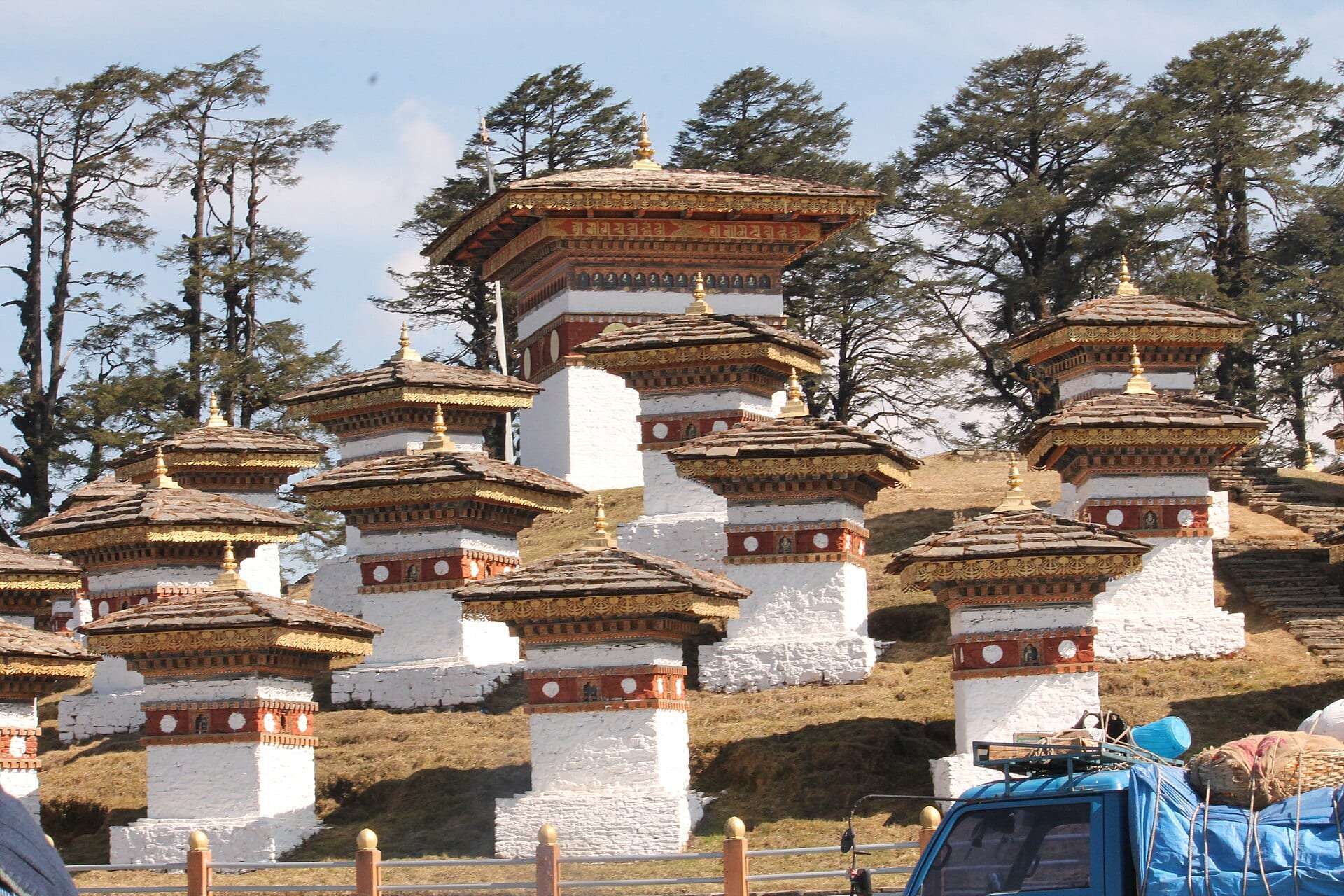
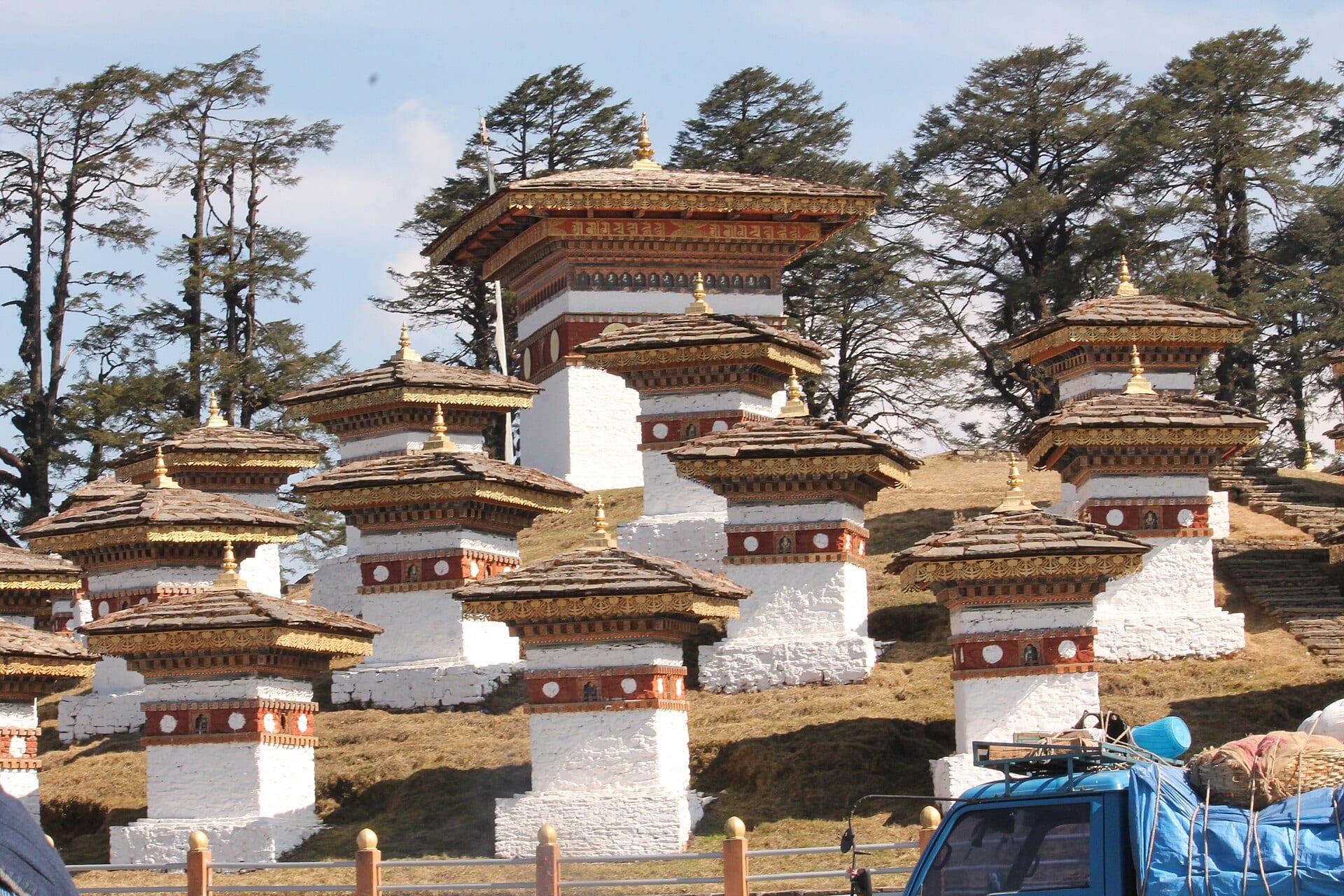
Over seven days you settle into three valleys instead of rushing through ten stops. You spend time in Thimphu, the small capital, where a 54 metre golden Buddha looks down over the town. You cross the Dochula Pass at around 3,100 metres, where 108 small stupas called the Druk Wangyal Chortens stand in rows, and on a clear morning the eastern Himalaya lines up behind them. You reach Punakha, the old capital, where the Punakha Dzong sits at the meeting point of two rivers, the Pho Chhu and the Mo Chhu. You finish in Paro and give a full, unhurried day to the climb up to the Tiger's Nest, the monastery called Paro Taktsang that clings to a cliff about 900 metres above the valley floor.
This is where cheaper pages leave you exposed, so read it carefully. Indian nationals do not need a visa for Bhutan. You need an entry permit. The two documents Bhutan lists as acceptable for adults are a valid Indian passport (with at least six months left on it) or a Voter Identity Card. An Aadhaar card, a PAN card and a driving licence are not on that accepted list, so do not rely on them. Children below 18 should carry a birth certificate, and a passport for a child is also accepted. The permit can be applied for online before you travel, or your operator or hotel can apply for you, or you can apply in person at the point of entry, where there can be a wait in busy months.
Bhutan also charges Indian visitors a Sustainable Development Fee, which goes to the country's own conservation and services. It is currently Nu 1,200 per adult per night, which is the same as 1,200 in Indian rupees since the two currencies are at par. Children aged 6 to 11 pay half, and children under 6 pay nothing. This fee is paid when the permit is applied for. Rates and rules do change, so confirm the current rate on the official Bhutan portal before you travel. In the past a separate route permit was needed to go beyond Thimphu and Paro. Bhutan has relaxed this for tourism, but since rules move, we reconfirm the current position for your dates before departure.
By air, Paro is the airport you fly into. It sits at about 2,235 metres in a narrow valley, and it is famous among pilots because landings are done by sight in daylight only, which is why a spell of bad weather can delay a flight. Two airlines fly the route, Drukair and Bhutan Airlines. On Drukair, Delhi has daily flights to Paro, and there are direct flights from Kolkata, Guwahati and Bagdogra through the week, plus a seasonal winter service from Bodh Gaya. There is no direct Paro flight from Mumbai on Drukair at present, so from western and southern India you usually connect through Delhi or Kolkata. Schedules shift with the season, so we reconfirm your flights close to travel.
By road, the doorway is the border town of Phuentsholing, which sits right against Jaigaon on the Indian side. The nearest Indian airport is Bagdogra and the nearest big railhead is New Jalpaiguri near Siliguri, both roughly a few hours from the border. From Phuentsholing up to Thimphu is a mountain drive of about 170 to 175 km that takes around 5 to 6 hours, so the road option suits travellers coming from West Bengal, Sikkim and the North East, or anyone who prefers not to fly.
Spring, from March to May, brings rhododendron and jacaranda in bloom and comfortable days, and it is a favourite for walking and photography. Autumn, from September to November, gives the clearest air and the best mountain views, and it carries the big Thimphu festival, so it is the most popular and the busiest. Winter, from December to February, is cold but often bright, with sharp Himalayan views from Dochula and far fewer crowds, and the black necked cranes are in the Phobjikha valley. The monsoon months of June to August are lush and green and cheaper, with rain that usually comes in spells rather than all day. Bhutan's two best known festivals are the Paro Tshechu in spring and the Thimphu Tshechu in autumn. Their dates follow the Bhutanese lunar calendar and change every year, so we confirm the exact dates for your travel year and can plan the trip around them if you wish.
Many pages sell the photo and hide the effort. Here is the truth so nobody in your group is caught out. The Tiger's Nest sits high on a cliff, and reaching it is a walk of about 6 to 6.4 km there and back, with a climb of around 520 metres, taking most people 4 to 6 hours including rest and time inside. There is a cafeteria about halfway where you can stop for tea and catch the first full view. Ponies can be hired at the base, but they carry you only as far as that cafeteria, not to the monastery itself, and the final stretch of steps must be done on foot. It is very doable for a reasonably fit person who takes it slowly, and elders often turn back happy from the cafeteria viewpoint. Inside the temple, cameras and bags are not allowed and are left in lockers.
Carry Indian cash in smaller notes, since higher value notes can be awkward to spend and there are limits on how much you may carry across, so check the current Reserve Bank of India limit before you go. Card machines work in bigger hotels and shops, and ATMs are in the main towns, but do not depend on them in villages. For your phone, Indian roaming works but costs a lot, so most travellers buy a local Bhutanese SIM at Paro airport with a passport and a photo. A few local rules matter: dzongs and temples ask for modest dress, which means covered shoulders and knees, no flip flops, and hats off inside; photography is fine in courtyards but not inside the prayer halls; public smoking is banned and tobacco brought in is strictly limited and taxed.
This seven day plan is comfortable for families with grandparents and children, for couples who want calm rather than a checklist, and for first time overseas travellers who want an easy start. It also suits NRI and OCI families who want a short, meaningful Himalayan trip that elders can manage. If you have more days, Punakha can be extended for river rafting, or the Phobjikha valley can be added for the cranes and the wide glacial bowl.
Photos from Wikimedia Commons: Taktsang Monastery, Bhutan 01 by Bernard Gagnon (CC BY-SA 4.0); Punakha Dzong, Bhutan 05 by Bernard Gagnon (CC BY-SA 4.0); Tashichho Dzong, Bhutan 03 by Bernard Gagnon (CC BY-SA 4.0); Druk Wangyal Khang Zhang Chortens at Dochula Pass by Chirag85 (CC BY-SA 4.0); Buddha Dordenma statue, Thimphu 06 by Bernard Gagnon (CC BY-SA 4.0); Rinpung Dzong, Bhutan 01 by Bernard Gagnon (CC BY-SA 4.0).
Spring (March to May) and autumn (September to November) are best
Families with elders and children, couples and honeymooners, culture and photography lovers, first time overseas travellers, and NRI or OCI families
Easy to moderate
Route & distances
Accurate distances and travel times for every leg: 238 km by road. Road times include a traffic buffer; distances marked “aerial” are straight-line for flight, helicopter, ropeway and water legs.
| # | Leg | Mode | Distance | Time |
|---|---|---|---|---|
| 1 | New Delhi → Paro | By flight | 1,205 km (aerial) | — |
| 2 | Paro → Thimphu | By road | 50 km | ~1h 6mest. |
| 3 | Thimphu → Punakha | By road | 74 km | ~1h 45mest. |
| 4 | Punakha → Paro | By road | 114 km | ~2h 30mest. |
| 5 | Paro → New Delhi | By flight | 1,205 km (aerial) | — |
Day by day
A carefully paced plan, day by day. Tap any day for the stay, meals and altitude detail.
Today you enter Bhutan, either by the flight into Paro or across the Phuentsholing border by road, and drive to Thimphu, the capital. If you fly, the drive from Paro to Thimphu is short, about 54 km and roughly 1 to 1.5 hours along the river. After you settle in, spend the evening walking the small, walkable centre, where you can see the daily hand signalled traffic point and the shops around the clock tower square. Keep the first day light so the family adjusts to the mountain air.
Special Tips for This Day: Keep warm layers in your hand baggage, not the check in bag, because evenings turn cold quickly. If you flew in, drink water and avoid a heavy first dinner while your body settles to the altitude.
A full day in Thimphu. You visit the great Buddha Dordenma, a 54 metre gilded statue on a hill with a wide view over the valley. You stop at the National Memorial Chorten, built in 1974 in memory of the Third King, where local elders walk their daily rounds. You see the outside of the Tashichho Dzong, the seat of the government and the throne room, which is best seen in the late afternoon light. Depending on your interest, you can add the folk heritage house, the postal museum where you can make a stamp with your own photo, and the weekend market if your day falls on a Saturday or Sunday.
Special Tips for This Day: The dzong interior opens to visitors only after office hours on weekdays, so plan the dzong for the end of the day. Carry a light scarf or shawl to cover shoulders before you step inside any temple.
You drive from Thimphu to Punakha, about 71 km and roughly 2.5 to 3 hours, climbing to the Dochula Pass at around 3,100 metres. Here 108 small stupas, the Druk Wangyal Chortens, stand together, and on a clear morning the snow peaks of the eastern Himalaya rise behind them. You descend into the warmer Punakha valley and visit the Punakha Dzong at the meeting of the Pho Chhu and Mo Chhu rivers, one of the most graceful buildings in the country and the place where Bhutan's kings have been crowned. If time and energy allow, walk out to the Punakha suspension bridge over the river.
Special Tips for This Day: Reach Dochula early in the day for the mountain view, since cloud usually builds by late morning. Punakha is lower and warmer than Thimphu, so a lighter layer works well here.
Today you cross back over the Dochula Pass and continue to Paro, a drive of about 125 km that usually takes 4 to 5 hours with photo stops, since mountain roads are slow. In Paro you visit the Rinpung Dzong, the fort monastery consecrated in 1646 that hosts the spring Paro festival, and Kyichu Lhakhang, one of the oldest temples in Bhutan with roots in the 7th century. If the timing suits, the National Museum in the old watchtower above the dzong is worth a short visit.
Special Tips for This Day: Break the long drive with a tea stop at Dochula so elders can stretch. Keep the evening free and light, because tomorrow is the big walk.
The day you came for. A short drive takes you to the base of the trail, and from there you walk up to the Tiger's Nest, Paro Taktsang, on its cliff. The round trip is about 6 to 6.4 km with a climb of around 520 metres, and most people take 4 to 6 hours with breaks. There is a cafeteria near the halfway mark with the first clear view, and ponies can be hired from the base up to that cafeteria only. Go at a steady pace, carry water, and enjoy the sight of the white monastery against the rock. In the afternoon, rest tired legs or stroll through Paro town.
Special Tips for This Day: Start early, ideally soon after the trail opens, to beat both the heat and the crowd. Wear broken in shoes, not new ones, and leave cameras and bags in the lockers before entering the monastery, as they are not allowed inside.
A free day to match your group's energy. Fit travellers can take a half day drive up to the Chele La Pass, about 35 km from Paro and one of the highest motorable roads in Bhutan at close to 3,988 metres, where prayer flags stretch along the ridge and the views open towards the Haa valley. Those who prefer rest can shop for hand woven textiles, Buddhist crafts and stamps in Paro town, or sit by the river. This buffer day also protects your trip, since it gives room if weather or tiredness pushes the Tiger's Nest walk to today.
Special Tips for This Day: Chele La is high and cold with thinner air, so go slowly, keep a warm jacket, and skip it if anyone has heart or breathing trouble. Buy textiles from known handloom shops and ask about the weave, since quality and price vary a lot.
After breakfast you transfer to Paro airport for your flight home, or begin the road journey back to the Indian border, carrying prayer flags, a few crafts, and a calmer mind. If your flight is later in the day, a last short walk by the Paro river or a visit to a local cafe rounds off the trip.
Special Tips for This Day: Keep your permit paper and ID handy for the exit formalities. If you are flying, allow extra buffer, because Paro flights can shift with the weather.
Travel tips
No visa, only a permit. The rupee works at par. Here is everything you need to plan Thimphu, Punakha and Paro with confidence, including the parts other pages skip.
Indians travel on a permit, not a visa. Carry the right ID, know the fee, and there are no surprises at entry.
Indian visitors pay a Sustainable Development Fee, currently Nu 1,200 per adult per night, the same as 1,200 in rupees since the currencies are at par. Children 6 to 11 pay half, under 6 pay nothing. It is paid when the permit is applied for. Always confirm the current rate on the official Bhutan portal before you travel.
Foreign passport holders, including OCI card holders, are not treated as Indian nationals in Bhutan.
Fly into Paro, or cross the land border at Phuentsholing. Your home city decides which is easier.
Paro sits in a narrow valley at about 2,235 metres and landings are done by sight in daylight only. This makes it one of the world's most demanding airports, and it is why weather can delay a flight, so keep buffer on your connecting travel.
Every season has a reason. Match the weather and the festivals to what your group wants.
The Paro Tshechu in spring and the Thimphu Tshechu in autumn are the two biggest festivals. Their dates follow the Bhutanese lunar calendar and change each year, so we confirm the exact dates for your travel year and can build the trip around them.
Beautiful and very doable, if you know the effort and start early.
Cameras, phones and bags are not allowed inside the prayer halls and must be left in the lockers. Dress modestly with shoulders and knees covered. Elders who cannot finish the climb enjoy the view from the halfway cafeteria.
Small habits that save trouble on the ground.
Public smoking is banned and tobacco brought in is strictly limited and taxed. Bhutan also discourages single use plastic, so carry a refillable bottle and a cloth bag.
Bhutan is gentle, but the passes are high. A little care keeps everyone comfortable.
Chele La is very high with thin, cold air. Anyone with heart or breathing trouble should treat it with care or skip it, and no one should rush the walk to the ridge.
Prayer flags on the ridge, a river below, and time that slows to a walk.
Most travellers come to Bhutan for the Tiger's Nest photo and leave talking about the calm. Take a set of prayer flags home, learn to say kuzuzangpo la for hello, and keep the permit paper as a small souvenir of the easiest first trip abroad an Indian family can make.
What's included
What travellers say
“Had a wonderful experience with way to india for my badrinath kedarnath yatra.everything was well organized-from travel accommodation to food. A special thanks to Ms. Neha who managed everything so beautifully n was extremely supportive n cooperative throughout the journey. They took great care of us n darshan was done very smoothly.”a month ago · Google
“A big thanks to Way To India for organising such a truly memorable and spiritually fulfilling experience during our 12 Jyotirlinga Darshan pilgrimage from 1st May to 18th May. They organized the entire journey exceptionally well, ensuring that every aspect of the trip was smooth, comfortable, and hassle-free. From transportation and hotel arrangements to darshan planning and coordination, everything was managed professionally. Despite the extensive travel across multiple destinations, the itinerary was well-structured, allowing us to complete all the Jyotirlinga darshans comfortably. Thanks to staff of Way To India, especially, Ms Neha, who was supportive, responsive, and attentive throughout the journey, always ready to assist whenever needed. Her dedication and careful planning made this sacred pilgrimage stress-free and enjoyable. I sincerely appreciate their excellent service, commitment, and hospitality. Highly recommend Way To India to anyone planning a spiritual tour, especially for the 12 Jyotirlinga Yatra. Thank you for making this divine journey so special and memorable.”5 months ago · Google
“We have successfully completed the 12 Jyotirlinga Yatra, with Waytoindia and it was a truly blessed and unforgettable journey. Every aspect of the tour was well planned and professionally organized, from transportation and accommodations to temple visits and sightseeing. Visiting all twelve sacred Jyotirlingas was a deeply spiritual experience. The itinerary was designed efficiently, allowing us to have darshan at each shrine comfortably while enjoying the cultural and religious significance of every destination. We sincerely appreciate the excellent support and coordination throughout the trip. The team was always available to assist, ensuring a smooth and stress-free pilgrimage. Thank you Waytoindia for making our dream of completing the 12 Jyotirlinga Yatra a reality. We highly recommend this tour to anyone seeking a well-organized and spiritually enriching pilgrimage experience. Har Har Mahadev! 🙏🕉️”5 months ago · Google
Travelled with Way to India?
Share your experience on Google — it takes a minute and helps fellow travellers plan with confidence.
FAQ
No. Indian nationals do not need a visa. You travel on an entry permit. For adults, Bhutan accepts a valid Indian passport with at least six months of validity, or a Voter Identity Card. Aadhaar, PAN and driving licences are not on the accepted list. Children under 18 should carry a birth certificate, and a child's passport is also accepted.
It is a fee that Indian visitors pay to Bhutan, currently Nu 1,200 per adult per night, which equals 1,200 in Indian rupees since the currencies are at par. Children aged 6 to 11 pay half and children under 6 pay nothing. It is paid when the permit is applied for. Always confirm the current rate on the official Bhutan portal before you travel.
By air you fly into Paro. Delhi has daily direct flights, and there are direct flights from Kolkata, Guwahati and Bagdogra, with a seasonal winter service from Bodh Gaya. There is no direct Paro flight from Mumbai at present, so western and southern India usually connect through Delhi or Kolkata. By road, you cross at Phuentsholing next to Jaigaon, reached from Bagdogra airport or New Jalpaiguri railhead, and drive about 170 to 175 km and 5 to 6 hours up to Thimphu.
Yes. The Bhutanese Ngultrum is kept at par with the Indian rupee, and Indian rupees are used widely. Carry smaller notes, since higher value notes can be harder to spend, and there are limits on how much cash you may carry across, so check the current Reserve Bank of India rule. Cards work in bigger hotels and shops, and ATMs are in the main towns.
It is moderate. The walk is about 6 to 6.4 km up and down, with a climb of around 520 metres, and takes most people 4 to 6 hours with breaks. There is a cafeteria about halfway with a fine view. Ponies can be hired from the base up to that cafeteria only, and the last part is on foot. Reasonably fit travellers manage it well at a steady pace.
Spring, March to May, is pleasant with flowers in bloom. Autumn, September to November, has the clearest views and the big Thimphu festival, so it is the most popular. Winter, December to February, is cold but bright with fewer people. The monsoon, June to August, is green and quiet with some rain.
Six to seven days is a comfortable first trip covering Thimphu, Punakha and Paro with a full day kept for the Tiger's Nest. With more days you can add river rafting at Punakha or the Phobjikha valley for the black necked cranes in winter.
Yes. Most of the sightseeing is easy and the food is familiar. Elders who cannot do the full Tiger's Nest climb can ride a pony to the halfway cafeteria and enjoy the view from there. Keep the first day light to adjust to the mountain air, and carry warm layers.
In the past a route permit was needed to go beyond Thimphu and Paro. Bhutan has relaxed this for tourism, but rules change, so we confirm the current position for your travel dates and handle any paperwork for you.
Layered clothing all year, with warm jackets for winter and the high passes, rain gear in the monsoon, and comfortable broken in walking shoes for the Tiger's Nest. Carry modest clothing that covers shoulders and knees for temples and dzongs, plus any regular medicines and a basic altitude awareness.
You may also like
Tell us your dates and group size. A WayToIndia travel expert replies within a few hours with a plan you can customise freely. Planning India journeys since 2010.
Explore Way to India
© 2026 Way to India. All rights reserved.