 18D / 17N 5
 All Sacred Circuits
Jyotirlinga · Char Dham · Shiva
Ramanathaswamy Jyotirlinga
Rameswaram is that rare tirtha which belongs to two great circuits at once: it is a Jyotirlinga of Lord Shiva and also one of the four dhams of the Char Dham yatra. Here, the tradition says, Lord Rama himself worshipped Lord Shiva. The bath in the 22 theerthams inside the temple, taken well by well, is an experience no other temple in India offers.
The story of this place
The story of Rameswaram comes from the Ramayana. After the war in Lanka, Lord Rama wished to worship Lord Shiva to be freed from the dosha of killing Ravana, who was a Brahmin. The tradition says that Hanuman was sent to Kailash to bring a Shivalinga, but when he was delayed, Mata Sita shaped a linga from the sand of the seashore so that the auspicious hour would not pass. That sand linga, worshipped by Lord Rama himself, is the Ramalingam you have darshan of today. The linga brought by Hanuman, called the Vishwalingam, is also enshrined here, and by Lord Rama's own word it is worshipped first.
Because Lord Rama, an avatar of Vishnu, worshipped Lord Shiva here, Rameswaram is loved equally by Shaiva and Vaishnava devotees. It is counted among the twelve Jyotirlingas, and it is the southern dham of the Char Dham, together with Badrinath, Dwarka and Puri.
The great temple as you see it grew over centuries, raised mainly by the Pandya rulers and the Sethupathi kings of Ramanathapuram. It spreads over about 15 acres beside the Agni theertham seashore, and the presiding deities are Lord Ramanathaswamy and Goddess Parvathavardhini.
What you will see
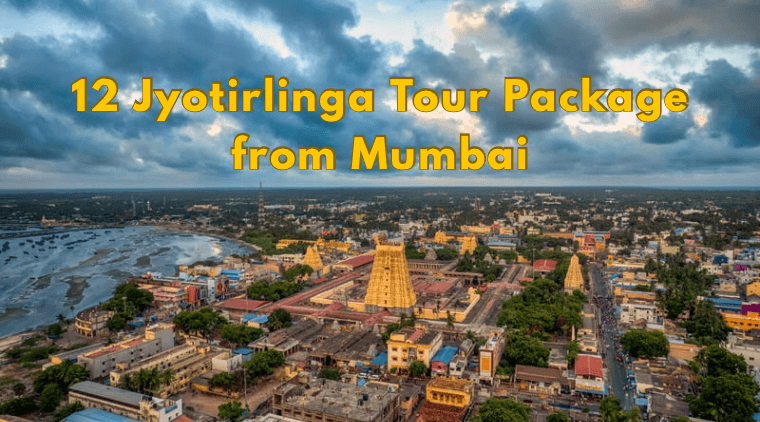
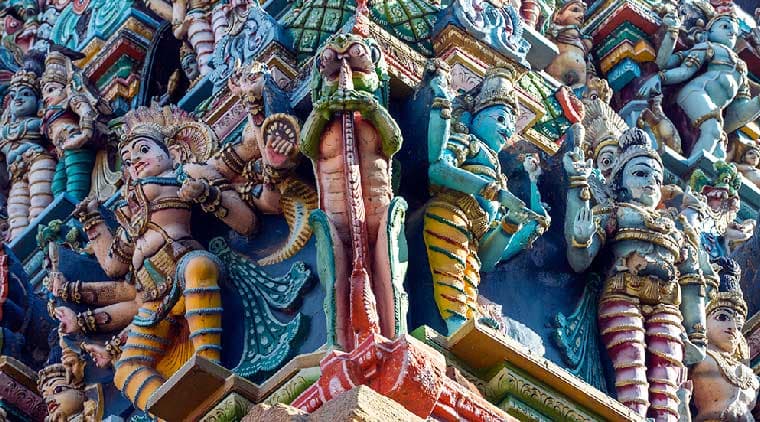
The first thing every visitor remembers is the corridors. The outer corridor, lined with rows of tall sculpted pillars stretching away into the distance, is counted among the longest temple corridors in the world. Walk it slowly; photographs never fully capture it.
Inside are the two lingas, the Ramalingam of sand made by Mata Sita and the Vishwalingam brought by Hanuman. In the early morning, from about 5 to 6 am, a special darshan of the Spatika linga, a crystal linga, is performed, and devotees who wake up early for it say it is the finest moment of the day.
Just outside the eastern gate is Agni theertham, the calm sea where pilgrims take the first holy dip. Inside the temple are the 22 theerthams, wells and tanks, and temple staff pour the water over you at each one, ending near the sanctum. Around the town you can also see Gandhamadhana Parvatham with its imprint of Lord Rama's feet, and the sea where the Pamban bridge crosses to the island.
Darshan, timings and temple etiquette
On normal days the temple opens at 4 am and devotees are allowed for darshan from 5 am. The Spatika linga pooja is held from 5 to 6 am, main darshan continues from about 6:10 am until the temple closes at 1 pm, and it reopens at 3 pm with darshan until 8 pm. The bath in the 22 theerthams is allowed from about 5:30 am to 12:30 pm and again from 3 pm to 7 pm. Festival days change this pattern, so please check the current timings with the temple or your consultant.
Plan the order of your morning: first the dip at Agni theertham in the sea, then the 22 theerthams inside, then dry clothes, then darshan. Carry a full change of clothing and a small towel; wet clothes are not appropriate for the sanctum, so change before darshan.
The temple expects traditional dress. Dhoti or shirt and trousers for men, and saree, half saree or churidar with dupatta for women are the safe choices; shorts, sleeveless tops and similar wear are best avoided. Mobile phones are not allowed inside, so keep them in your vehicle or room. There is a small fee for the theertham bath; please check the current details at the temple counters.
Best time to visit
October to March is the most pleasant season, with cooler air and calm seas, ideal for the theertham bath and unhurried darshan. April to June is hot on the island, though the sea breeze gives some relief in the evenings.
Mahashivratri, in February or March, is celebrated with great devotion here, and the Thai Amavasya and Aadi Amavasya days draw very large crowds of pilgrims who come for ancestral rites, since Rameswaram is one of the most sacred places in India for pitru karma. If your dates fall on an amavasya, reach the temple very early.
Whatever the season, begin your temple day at dawn. The theertham queues are shortest then, and you finish the bath and darshan before the sun climbs.
How to reach
Rameswaram sits on an island joined to the mainland at Mandapam. The road crosses the sea on the Annai Indira Gandhi bridge, running beside the famous Pamban rail bridge, and this crossing, with fishing boats scattered on the blue water below, is one of the most beautiful arrivals in India.
Rameswaram railway station is barely a kilometre from the temple and has direct trains from Chennai, Madurai and other cities. The nearest airport is Madurai, about 170 km away, roughly a 3 to 4 hour drive. Our South India pilgrimage journeys pair Rameswaram with Madurai, so you have darshan of Goddess Meenakshi on the same yatra.
Within the town everything is close. The temple, Agni theertham and most hotels are within walking distance of each other, and autos are easy to find for Dhanushkodi and Gandhamadhana Parvatham.
Tips from our travel experts
Do the theertham snanam properly once, without hurry. Wear clothes that dry fast, keep your dry set and towel in a small bag, and let the temple staff guide you from well to well. Elders who cannot manage all 22 wells can take the Agni theertham dip and a symbolic sprinkling; the devotion matters more than the count.
Keep half a day for Dhanushkodi, the land's end about 20 km away, where the road runs with the sea on both sides. The tradition connects this shore with the Ram Setu, and standing at the tip is deeply moving. Go in the morning or late afternoon; there is no shade on the way.
Stay one full day at minimum. Pilgrims who treat Rameswaram as a lunch halt always regret it. And enjoy the simple South Indian meals near the temple; the island runs on filter coffee, idlis and devotion.
For our NRI and OCI travellers
Many overseas families come to Rameswaram for ancestral ceremonies, as this is one of the holiest places for pitru karma in the Hindu tradition. The rites are performed by hereditary purohits near the sea; tell us in advance and we will arrange a trusted purohit, the samagri and a quiet time slot.
If you are flying in from abroad, the practical route is a flight to Madurai via Chennai, then the drive to the island. Trains from Chennai are an easy overnight option too. Carry light cottons and a change of clothes for the theertham morning. Rameswaram also pairs naturally with Madurai, Thanjavur and Tiruchirappalli, which many of our NRI guests combine into one 5 to 7 day temple journey.
Questions travellers ask us
What are the 22 theerthams?
They are 22 holy wells and tanks inside the temple complex. Pilgrims bathe at each one in order, with temple staff pouring the water, before going for darshan. The tradition holds that this bath purifies the pilgrim. It is allowed from about 5:30 am to 12:30 pm and 3 pm to 7 pm on normal days.
What is Agni theertham?
Agni theertham is the sea itself, at the eastern gate of the temple. Pilgrims take the first holy dip here before the 22 theerthams inside. The water is shallow and calm in the mornings, and it is one of the most sacred bathing spots in India.
What are the temple timings?
On normal days the temple opens at 4 am, darshan runs from 5 am to 1 pm, and again from about 3:15 pm to 8 pm. The special Spatika linga darshan is held from 5 to 6 am. Timings can change on festival days, so check locally before you plan your morning.
Is Rameswaram part of the Char Dham?
Yes. Rameswaram is the southern dham of the all-India Char Dham, along with Badrinath in the north, Dwarka in the west and Puri in the east. It is also one of the twelve Jyotirlingas, so a single darshan here touches two great circuits.
Is there a dress code at the temple?
Traditional dress is expected. Dhoti or shirt and trousers suit men, and saree, half saree or churidar with dupatta suit women. Shorts, sleeveless tops and similar clothing are best avoided. After the theertham bath, change into dry clothes before entering for darshan.
Can I do the theertham bath and darshan in one morning?
Yes, comfortably, if you start at dawn. Take the Agni theertham dip first, then the 22 wells inside, change into dry clothes, and join the darshan queue. The whole circuit takes about 2 to 3 hours on a normal day.
A note on the tours below. These packages travel close to Ramanathaswamy Jyotirlinga, but a package may not include a guided visit to the site itself. If you would like this place added to your journey, please tell your Way to India travel consultant and they will happily build it into your itinerary for you.
Yatras where you stay right by the temple
18D / 17N 5You stay at Rameshwaram
 19D / 18N
12 Jyotirlinga Tour Package from Delhi
● Starts Delhi
From₹85,000* / person
Explore →EMI from ₹4,162/mo
You stay at Rameshwaram
 18D / 17N
12 Jyotirlinga Tour Package from Mumbai
● Starts Mumbai
From₹90,000* / person
Explore →EMI from ₹4,407/mo
You stay at Rameshwaram
You stay at Rameshwaram
 5D / 4N
Madurai Rameshwaram Kanyakumari Tour Package
● Starts Madurai
From₹25,056* / person
Explore →EMI from ₹1,227/mo
You stay at Rameshwaram
 3D / 2N
You stay at Rameshwaram
 6D / 5N
You stay at Rameshwaram
 7D / 6N
Tirupati Madurai Rameshwaram Kanyakumari Tour Package
● Starts Chennai
From₹20,500* / person
Explore →EMI from ₹1,004/mo
You stay at Rameshwaram