 13D / 12N
 All Sacred Circuits
Arupadai Veedu · Murugan
Thiruthani Murugan Temple
Thiruthani is the fifth of the Arupadai Veedu, the six abodes of Lord Murugan, and the closest one to Chennai. The tradition says the Lord came to this hill to cool his anger after the great battle with Surapadman, and so devotees climb its 365 steps to leave their own anger and worries behind, one step for each day of the year.
The story of this place
The Kanda Puranam tells of the war in which Lord Murugan, commander of the devas, destroyed the asura Surapadman at Tiruchendur. The tradition says that after that battle the Lord came to this hill to let his anger subside. Even the name carries the story: Tiruttani comes from the old Tamil Seruttani, where seru means anger and thani means cooling. Devotees therefore believe that prayer at this hill frees a person from anger and restlessness.
The tradition also says that it was here that Lord Murugan married Valli, the daughter of the hills, after winning her heart in the guise of a hunter. And there is a third gift in the story: Indra, the king of the devas, gave his white elephant Airavata to the Lord in gratitude. That is why the Lord's mount at this temple is an elephant, not his usual peacock, and the elephant faces east towards devaloka.
This is an ancient shrine. It is sung in the Tirumurugatruppadai of the Sangam age, and the 14th century saint Arunagirinathar praised it in his Tiruppugazh; a seated image of the saint is inside the temple. One more thing every Indian should know: Dr. Sarvepalli Radhakrishnan, philosopher and second President of India, was born in Tiruttani in 1888. The town of the Lord who calms anger gave India its most famous teacher.
What you will see
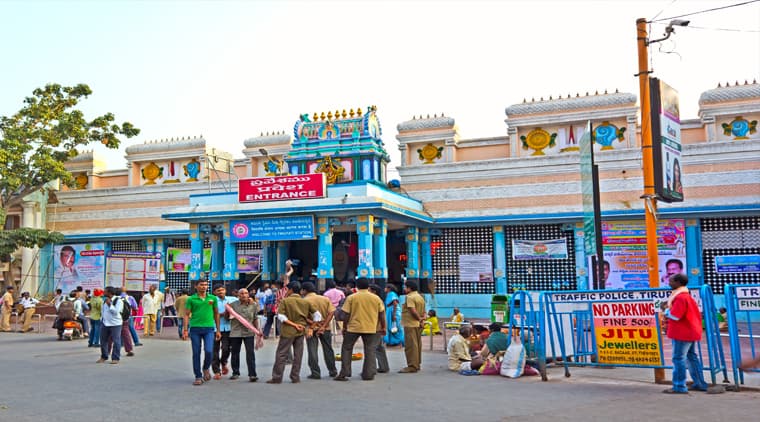
The temple sits on Thanigai hill, and the classic way up is the flight of 365 steps, which devotees count as one step for each day of the year. Climbing them slowly, with the name of the Lord on your lips, is itself the worship here. A motorable road also goes up the hill, so those who cannot climb can reach the temple by vehicle.
At the entrance you are received by Abath Sahaya Vinayaka, the Ganesha who protects from danger. The temple has a nine tiered main gopuram and four prakarams. In the sanctum, Lord Murugan holds the vajra vel, the thunderbolt spear, instead of his usual vel, and he carries a mark on his chest from the great war. There are separate shrines for Goddess Valli and Goddess Deivanai, and shrines for Durga and Bhairava, where Bhairava is shown with four dogs representing the four Vedas.
A sweet detail of this temple is its sandalwood paste. On special days a prepared sandal paste is applied to the deity and later given to devotees as prasadam, and devotees hold it precious.
Darshan, timings and temple etiquette
The temple is administered by the Hindu Religious and Charitable Endowments Department of Tamil Nadu, and it follows the usual rhythm of a large Murugan temple: the doors open early in the morning, around 5:30 to 6, morning pujas and abhishekam come first, darshan continues through the day, and the evening pujas run until about 8:30 or 9 at night. On festival days the temple stays open longer. Exact timings shift, so please check the official HR and CE temple website or ask your consultant for the current schedule.
Common offerings here are milk pots, kavadi and tonsuring, as at other Murugan temples. Dress modestly and keep your climb unhurried. One beautiful practice is unique to this temple: on Surasamharam day, when other Murugan temples enact the destruction of the asura, this temple does not, because the Lord came here to set aside his anger. Instead, he is showered with flowers.
Best time to visit
October to March is the kindest season, and early morning is the best hour to climb the steps in cool air. April to June is hot, so climb at dawn if you come then.
The great festival is Aadi Krittikai, in July or August, a three day celebration in which the Lord is taken in procession from the Saravana pond at the foothills to the temple above, and devotees carry flower decorated kavadis in the way Indra is believed to have worshipped. The other unforgettable occasion is New Year's Eve. The 365 steps are washed and dressed with turmeric, lakhs of devotees climb through the night, and a special puja is performed at midnight so that the year begins at the feet of the Lord. The annual Brahmotsavam and the wedding festival of the Lord with Valli fall in the Tamil month of Masi, and monthly Krittikai days always draw crowds.
How to reach
Thiruthani is about 85 km from Chennai, roughly a two hour drive, which makes it the easiest of the six abodes for most travellers. Tiruttani has its own railway station in the town, with frequent trains on the Chennai to Tirupati route, and suburban trains also serve the line.
Chennai is the nearest airport. Tirupati is only about 70 km further, so many pilgrims join the two: darshan of Lord Murugan at Thiruthani and darshan of Lord Venkateswara at Tirumala in one unhurried circuit. We plan this two dham combination often for our guests.
Tips from our travel experts
Start from Chennai early and reach the foothills by 7 in the morning. The climb of 365 steps takes most people 30 to 45 minutes with rest stops, and the view over the plains keeps improving as you rise. Carry a small water bottle and wear comfortable clothes you can climb in.
If elders are with you, send them up by car on the hill road and let the younger ones climb; both parties meet happily at the top. Avoid New Year's Eve unless you are ready for very large crowds; if you specifically want that midnight blessing, come prepared to queue for hours, and it will still feel worth it.
Buy the sandal prasadam if it is available on your day. And before you leave the town, remember it as the birthplace of Dr. Radhakrishnan; if you are travelling with children, that one line turns the trip into a lesson.
For our NRI and OCI travellers
Thiruthani is the simplest Murugan abode to add to any Chennai visit: one day covers the darshan and returns you to the city by evening. If your family is doing Tirumala, ask us to route you through Thiruthani on the way, since the temple falls close to the Chennai to Tirupati road and rail line.
Weekends and Krittikai days bring big crowds from Chennai, so if your dates are flexible, choose a weekday morning. For parents who cannot climb, the hill road solves everything; the darshan itself needs only a short walk.
Questions travellers ask us
Why does the temple have 365 steps?
The 365 steps are counted as one for each day of the year. Devotees climb them as an act of worship, offering every day of the coming year at the feet of Lord Murugan. On New Year's Eve the steps are washed and dressed with turmeric, and lakhs climb through the night for the midnight puja.
Can elderly people visit without climbing the steps?
Yes. A motorable road goes up the hill, and vehicles drop pilgrims close to the temple. Only a short walk remains, so elders can have a comfortable darshan.
Why does Lord Murugan hold a vajra vel and ride an elephant here?
The tradition says Indra, king of the devas, honoured the Lord after the war with the asuras, and gave him his white elephant Airavata. So at Thiruthani the Lord holds the vajra vel, the thunderbolt spear, and his mount is an elephant facing east, instead of his usual peacock. This iconography is seen only in a couple of Murugan temples.
What are the temple timings?
The temple opens early in the morning, around 5:30 to 6, and darshan continues through the day, with evening pujas running until about 8:30 or 9 at night. Timings extend on festival days and can change, so check the official HR and CE temple website for the current schedule.
How do I reach Thiruthani from Chennai?
By road it is about 85 km, roughly two hours. Tiruttani railway station is in the town itself, on the Chennai to Tirupati line, with frequent trains. Chennai is the nearest airport.
Can I combine Thiruthani with Tirupati?
Yes, and many pilgrims do. Tirupati is only about 70 km further along the same route, so Thiruthani darshan on the way to or from Tirumala works beautifully. We plan this circuit with sensible timings so neither darshan is rushed.
A note on the tours below. These packages travel close to Thiruthani Murugan Temple, but a package may not include a guided visit to the site itself. If you would like this place added to your journey, please tell your Way to India travel consultant and they will happily build it into your itinerary for you.
Yatras with the temple an easy day trip away
13D / 12NAbout 39 km from your stay at Kanchipuram
 2D / 1N
About 39 km from your stay at Kanchipuram
 6D / 5N
About 39 km from your stay at Kanchipuram
 7D / 6N
Tirupati Madurai Rameshwaram Kanyakumari Tour Package
● Starts Chennai
From₹20,500* / person
Explore →EMI from ₹1,004/mo
About 55 km from your stay at Tirupati
 4D / 3N
About 55 km from your stay at Tirupati