 8D / 7N
Pushkar Camel Fair
From₹41,357* / person
Explore →EMI from ₹2,025/mo
UNESCO World Heritage · Cultural · inscribed 1983
The Taj Mahal is the most famous building in India, and when you stand before it in the soft morning light you will understand why. Emperor Shah Jahan raised it in white marble for his beloved wife Mumtaz Mahal, and today the whole world protects it as a World Heritage Site. Every traveller should see it once, and we will help you see it well.
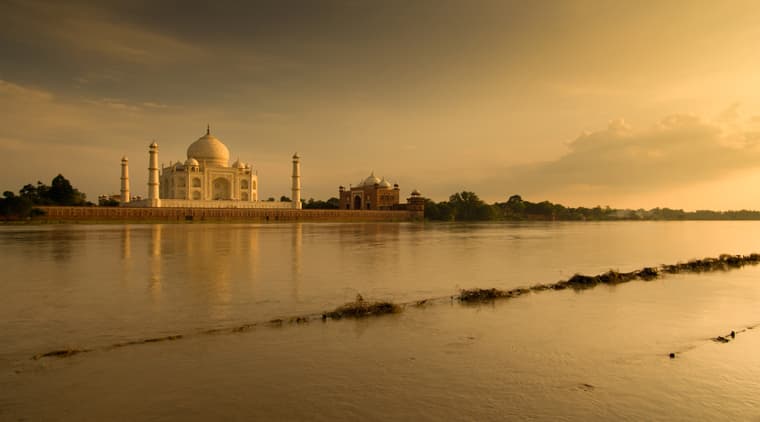
In 1631, Mumtaz Mahal, the favourite wife of the Mughal emperor Shah Jahan, passed away. The emperor decided that her resting place would be unlike anything the world had seen. Work began in 1632 on the right bank of the Yamuna river at Agra. The main tomb was completed in 1648, and the mosque, the guest house, the great gateway and the outer courtyard were finished by 1653.
Masons, stone cutters, inlay workers, carvers, painters, calligraphers and dome builders came from every corner of the empire, and also from Central Asia and Iran. The main architect was Ustad Ahmad Lahori. What they built together is counted as the finest work in the whole range of Indo-Islamic architecture, and UNESCO placed it on the World Heritage List in 1983.
One detail always touches visitors. The cenotaph of Mumtaz Mahal sits at the perfect centre of the tomb chamber. The cenotaph of Shah Jahan was placed beside hers, to the west, more than thirty years later. The real graves lie in a quiet crypt below.
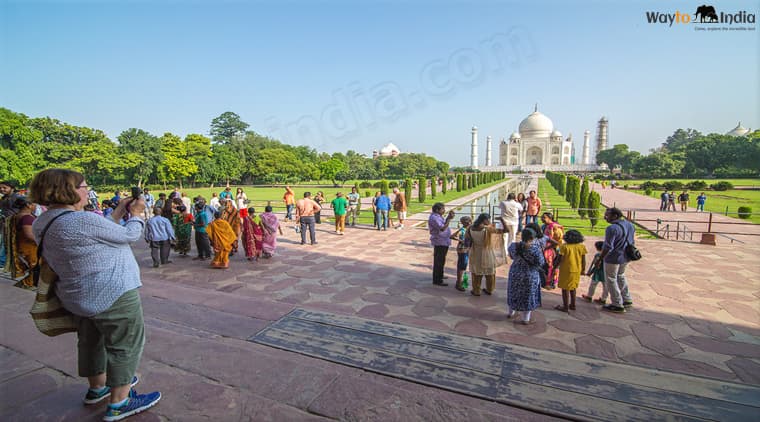
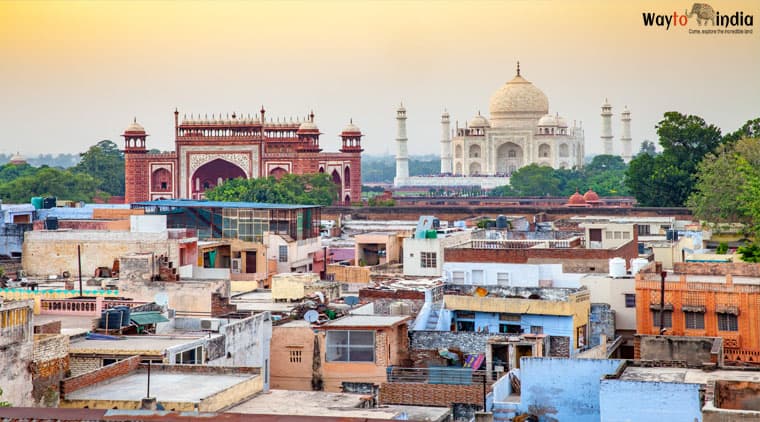
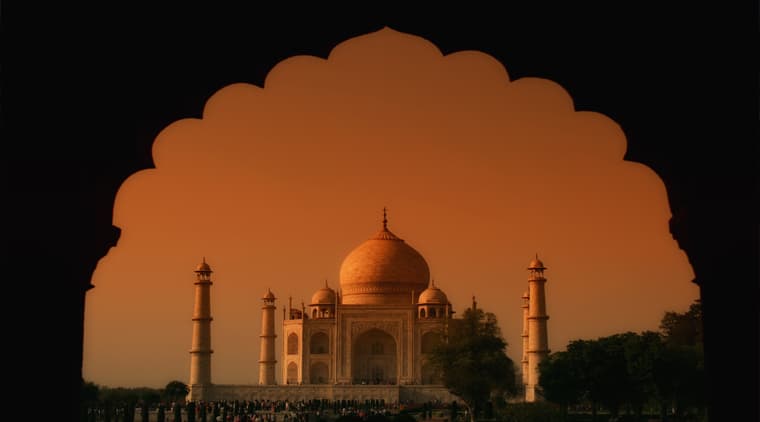
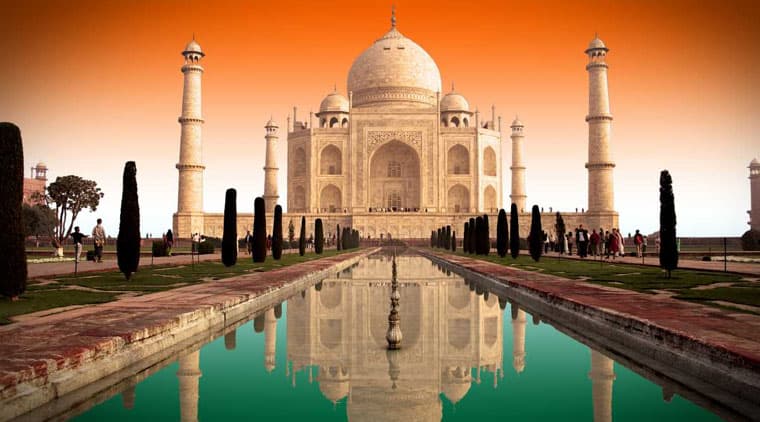
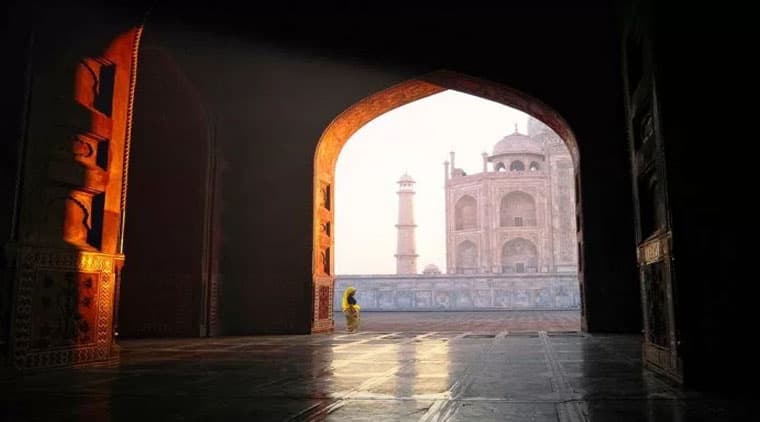
You enter through the great gateway, and the first full view of the Taj through its arch is a moment people remember all their lives. In front of you spreads the charbagh, a Mughal garden of nearly 17 hectares, divided into four quarters by walkways and a long water channel that holds the reflection of the tomb.
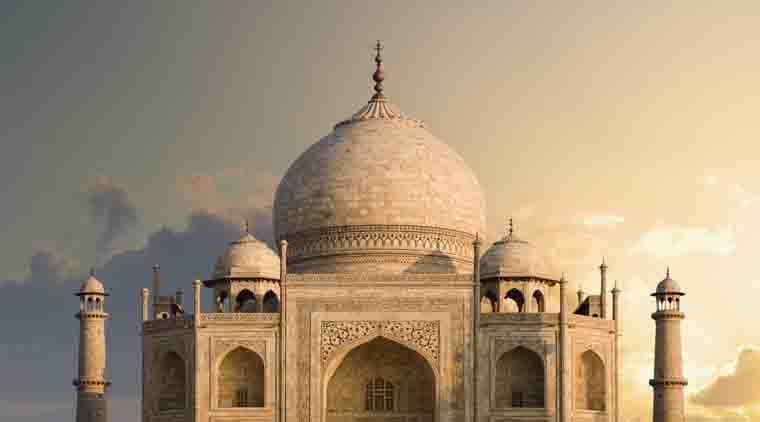
The mausoleum stands on a raised square platform, with four marble minarets at the corners. They lean very slightly outward, so that in an earthquake they would fall away from the tomb, not on it. To the west of the tomb is a mosque of red sandstone, and to the east its mirror image, the guest house. The tomb itself glows in different shades through the day, soft pink at dawn, bright white at noon, and golden at sunset.
Inside, look closely at the pietra dura work, where craftsmen set precious and semi precious stones into the marble to make flowers that look almost real. The carved marble lattice screen around the two cenotaphs is one of the finest pieces of stonework in India. Photography is not allowed inside the main mausoleum, so simply stand quietly and take it in with your eyes.
October to March is the best season, when Agra is cool and the sky is usually clear. April to June is very hot, and July to September brings the monsoon.
Within the day, sunrise is the finest time. The light is gentle, the marble takes on soft colours, and the crowds are much smaller. The monument opens 30 minutes before sunrise, and the ticket counters open even earlier, so reach the gate at opening time.
Remember one important rule: the Taj Mahal is closed to visitors every Friday. Plan your Agra day around this. There is also a special night viewing on a few nights around the full moon each month, in short time slots that must be booked in advance. Please check the official website, tajmahal.gov.in, for the current night viewing rules when you plan.
Agra is one of the easiest places in India to reach. If you are coming from Delhi, the Yamuna Expressway brings you to Agra in about 3 to 4 hours by road, a distance of roughly 230 km. Fast trains also run from Delhi to Agra Cantt, the main railway station of the city, and the Taj Mahal is then a short drive of 20 to 30 minutes.
Agra has a small airport with limited domestic flights, so for most travellers, and especially for our NRI guests flying in from abroad, Delhi airport is the practical gateway. Your Way to India consultant will arrange the car, and most of our Golden Triangle journeys place Agra right after Delhi for exactly this reason.
One more thing to know: cars cannot go right up to the gates. Vehicles stop some distance away, and you cover the last stretch by battery bus, cycle rickshaw or a short walk.
We suggest you carry as little as possible. Large bags, food items, tobacco and tripods are not allowed inside, and the security check is faster when your hands are light. Keep your ticket and an ID with you.
There is an entry fee, and the ticket to go up on the main mausoleum platform is extra. The rates are different for Indian citizens and foreign nationals, and they change from time to time, so please check the current rate on the official website or ask your consultant. Shoe covers are given for the mausoleum platform, so you do not need to remove your shoes.
Enter from the east or west gate, whichever your guide suggests for that day. Give yourself at least two to three hours inside. And if your dates allow, see the Taj at sunrise and Agra Fort in the afternoon, where Shah Jahan spent his last years looking across the river at the tomb of his wife.
If you hold an OCI card, carry it with you at the ticket counter. ASI monuments have had special provisions for OCI card holders on entry rates, and the staff will guide you as per the current rule. Foreign passport holders pay the foreign national rate.
Many of our overseas guests land in Delhi in the morning and want to drive straight to Agra. It works, but after a long flight we suggest one night in Delhi first, so that you meet the Taj fresh, at sunrise, rather than tired in the afternoon heat. If you are bringing your parents, ask us for a wheelchair at the monument; the pathways are long but smooth.
Yes. The Taj Mahal is closed to visitors every Friday. On all other days it opens 30 minutes before sunrise and closes 30 minutes before sunset. Plan your Agra day so that Friday is kept for Agra Fort, Fatehpur Sikri or Mathura instead.
Sunrise, without any doubt. The light is soft, the marble glows in gentle colours, and the crowds are far smaller than later in the day. Reach the gate when it opens, 30 minutes before sunrise.
Keep two to three hours. This gives you time for the security check, the first view through the great gateway, a slow walk through the garden, the mausoleum platform, and photographs at your own pace.
Yes, everywhere in the gardens and on the platform, for personal use. Photography is not allowed inside the main mausoleum where the cenotaphs are. Tripods and large professional gear are not allowed inside the complex.
There is a special night viewing on a few nights around the full moon each month, in short time slots with a separate ticket that must be booked in advance. The rules change from time to time, so please check tajmahal.gov.in or ask your Way to India consultant while planning.
There is an entry fee, with different rates for Indian citizens and foreign nationals, and an extra ticket for the main mausoleum platform. Rates are revised from time to time, so please check the current rate on the official website or with your consultant before you go.
A note on the tours below. These packages travel close to Taj Mahal, but a package may not include a guided visit to the site itself. If you would like this place added to your journey, please tell your Way to India travel consultant and they will happily build it into your itinerary for you.
8D / 7NYou stay at Agra
 4D / 3N
You stay at Agra
 2D / 1N
You stay at Agra
 15D / 14N
You stay at Agra
 8D / 7N
You stay at Agra
 2D / 1N 2
You stay at Agra
 8D / 7N
You stay at Agra
 8D / 7N
You stay at Agra
 2D / 1N
You stay at Agra
 7D / 6N
You stay at Agra
 7D / 6N
You stay at Agra
 7D / 6N
You stay at Agra
 9D / 8N
You stay at Agra
 9D / 8N
You stay at Agra
 6D / 5N
You stay at Agra
 6D / 5N
You stay at Agra
 5D / 4N
You stay at Agra
 4D / 3N
You stay at Agra
 8D / 7N
You stay at Agra
 9D / 8N
You stay at Agra
 9D / 8N
You stay at Agra
 9D / 8N
You stay at Agra
 9D / 8N
You stay at Agra
 10D / 9N
You stay at Agra
 8D / 7N
You stay at Agra
 10D / 9N
You stay at Agra
 7D / 6N
You stay at Agra
 9D / 8N
You stay at Agra
 11D / 10N
You stay at Agra
 7D / 6N
You stay at Agra
 9D / 8N
You stay at Agra
 5D / 4N
You stay at Agra
 14D / 13N
You stay at Agra
 12D / 11N
You stay at Agra
 11D / 10N
You stay at Agra
 8D / 7N
You stay at Agra
 7D / 6N
You stay at Agra
 9D / 8N
You stay at Agra
 9D / 8N
You stay at Agra
 12D / 11N
You stay at Agra
 7D / 6N
You stay at Agra
 3D / 2N
You stay at Agra
 2D / 1N
You stay at Agra
 10D / 9N
You stay at Agra
 10D / 9N
You stay at Agra
 10D / 9N
You stay at Agra
Explore Way to India
© 2026 Way to India. All rights reserved.