1
Taj Mahal
Agra
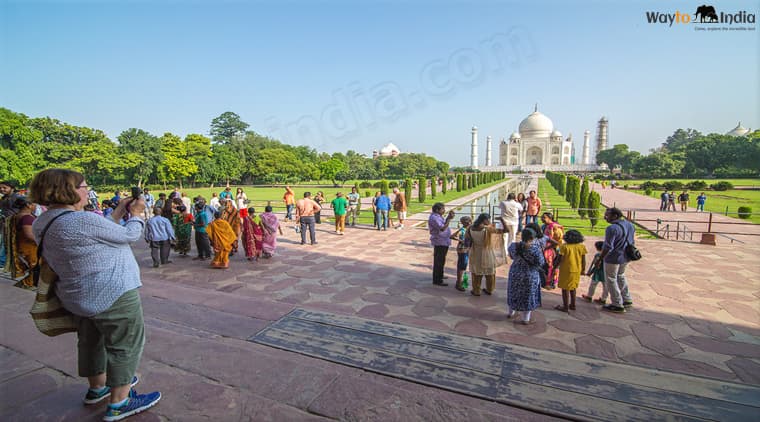
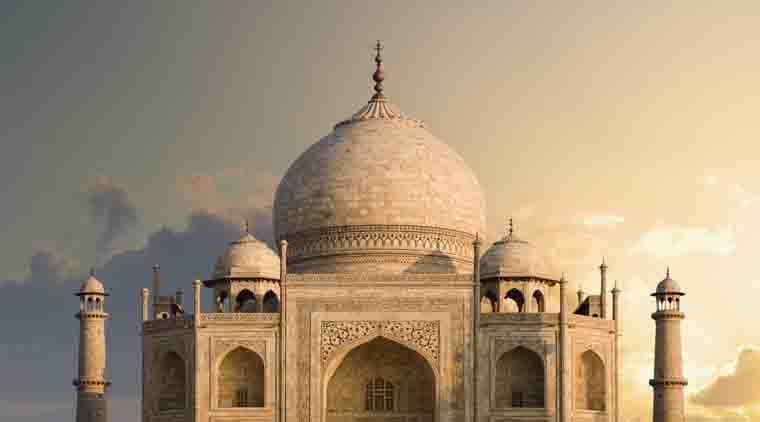
Shah Jahan's marble mausoleum, best at sunrise, closed Fridays
October to March (April and September are warm shoulder months)
Overview
The Golden Triangle is the Delhi to Agra to Jaipur circuit, the three cities sitting roughly 200 to 260 km apart by road. The name comes from the triangular shape the route draws on a map of north India. Delhi brings you Mughal and colonial history, Agra holds the Taj Mahal and the Mughal capital that preceded it, and Jaipur opens the door to Rajput Rajasthan. Because the three cities are close and well connected by good highways, the circuit works as a short five or six day holiday and also as the opening leg of a longer India tour.
Three cities, three distinct moods. Delhi is layered, from the twelfth-century Qutub Minar to the Lutyens-era India Gate. Agra is single-minded about the Taj Mahal, yet rewards anyone who also looks at Agra Fort and the abandoned capital of Fatehpur Sikri. Jaipur is colour and craft, from the honeycomb facade of Hawa Mahal to the mirror halls of Amber Fort. You cover the headline sights, eat extremely well, and still keep drive days short enough to enjoy.
A three day Golden Triangle covers only the essentials and asks a lot of your drive days. Five to six days is the comfortable choice and the version we recommend, because it gives Delhi a proper day, lets you reach Agra for a sunrise Taj Mahal visit, and keeps an unhurried day in Jaipur. Travellers with more time often extend the same route to Varanasi, Ranthambhore for tigers, or Udaipur.
All times are approximate and depend on traffic and the season. Delhi to Agra is about 225 km on the Yamuna Expressway, roughly 4 to 4 hours 30 minutes. Agra to Jaipur via Fatehpur Sikri is about 240 km, roughly 5 to 5 hours 30 minutes including the Fatehpur Sikri stop. Jaipur to Delhi is about 260 km, roughly 5 hours 30 minutes to 6 hours. Confirm current road conditions with your driver, as expressway and city traffic both vary.
October to March is the comfortable season across all three cities, with clear, cool days that suit long sightseeing. April to June is very hot, often above 40 C, so start early and rest at midday if you travel then. The July to September monsoon is greener and quieter, with occasional rain. Whatever the month, plan the Taj Mahal for sunrise for the softest light and the smallest crowds, and remember the Taj Mahal is closed on Fridays.
Delhi: Qutub Minar, Humayun's Tomb, India Gate, Red Fort, Jama Masjid, and the modern Lotus Temple and Akshardham. Agra: the Taj Mahal, Agra Fort, and Fatehpur Sikri on the road to Jaipur, plus quieter corners such as Mehtab Bagh and Itmad-ud-Daulah, the Baby Taj. Jaipur: Amber Fort with its Sheesh Mahal mirror work, City Palace, the Jantar Mantar observatory, Hawa Mahal, and the lake-set Jal Mahal.
Way to India arranges the full circuit end to end: airport assistance, hotels in your chosen category, an air-conditioned car with an English speaking driver for all transfers and sightseeing, and city guides on request. Tours run private or as small groups, and the itinerary can flex to add Varanasi, Ranthambhore or Udaipur.
October to March (April and September are warm shoulder months)
Foreign tourists (US, UK, Canada, Australia), NRI and OCI travellers, first-time India visitors, families, couples, photographers
Day by day
A carefully paced plan, day by day. Tap any day for the stay, meals and altitude detail.
Arrive at Delhi airport, where our representative meets you and transfers you to your hotel. The rest of the day is at leisure to recover from the flight. If you arrive early and feel up to it, an easy first outing is India Gate in the late afternoon, followed by the lit-up Rashtrapati Bhavan view down Rajpath.
What to eat: for a gentle first dinner, the Connaught Place restaurants are central and reliable.
What to buy: nothing yet, save your shopping energy for the bazaars ahead.
Insider fact: Delhi has been built and rebuilt many times. Historians count at least seven cities on this site, from Mehrauli around the Qutub Minar to Shahjahanabad, today's Old Delhi.
Special Tips for This Day: keep your arrival day light. Drink bottled or filtered water from the start, and set an early alarm if your flight allows, because the next day is a full one.
After breakfast, a full day covering both halves of the city. Old Delhi: Jama Masjid, a rickshaw ride through Chandni Chowk, and the Red Fort from outside or inside as time allows. New Delhi: Qutub Minar, Humayun's Tomb, India Gate and the government buildings of Lutyens' Delhi. The modern Lotus Temple and Akshardham can be added if time permits.
What to eat: in Chandni Chowk, try the dahi bhalla at Natraj on the main road near Paranthe Wali Gali, the stuffed parathas of Paranthe Wali Gali itself, and a desi-ghee jalebi near Dariba. Karim's, behind Jama Masjid, is a long-standing name for Mughlai food. Confirm hours before you go.
What to buy: whole spices and dried fruit at Khari Baoli, one of Asia's largest spice markets, and fixed-price handicrafts at Dilli Haat if you prefer no bargaining.
Insider fact: just opposite the Red Fort, the Jain temple runs a charitable birds' hospital that has treated injured birds at no cost since 1956.
Special Tips for This Day: wear slip-on shoes, since you remove footwear at the mosque and temples, and carry a scarf to cover your head where required. Old Delhi is best explored by cycle rickshaw rather than car.
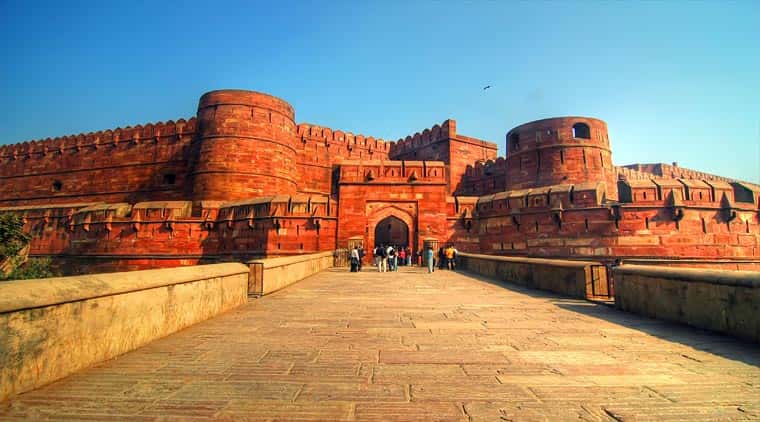
After breakfast, drive to Agra on the Yamuna Expressway. On arrival, check in and have lunch, then visit Agra Fort, the red sandstone Mughal fortress from which Shah Jahan, in his final years, could see the Taj Mahal across the river. If time allows, stop at a marble workshop to see the pietra dura inlay craft that decorates the Taj. Overnight in Agra.
What to eat: Agra's signature sweet is petha, a translucent ash-gourd candy. Panchhi Petha is the best known maker. For a sit-down dinner, Pinch of Spice is a popular Mughlai restaurant. Confirm timings.
What to buy: marble inlay pieces and leather goods, both Agra specialities. Buy marble from a workshop that lets you watch the inlay being done.
Insider fact: from the Musamman Burj inside Agra Fort, the octagonal tower where Shah Jahan spent his last years under his son's watch, the Taj Mahal sits framed across the Yamuna.
Special Tips for This Day: keep tomorrow's sunrise in mind and rest early. Pre-book Taj Mahal tickets online to skip the longest queues.
Begin at sunrise with the Taj Mahal, the best hour for light and crowds (remember it is closed on Fridays). Return for breakfast and check out, then drive towards Jaipur. About 40 km from Agra, stop at Fatehpur Sikri, Akbar's well preserved red sandstone capital, including the Buland Darwaza gateway, Jama Masjid and Panch Mahal. Continue to Jaipur and check in. Overnight in Jaipur.
What to eat: break the drive near Fatehpur Sikri with a simple vegetarian thali, then save your appetite for Jaipur. In Jaipur, Rawat Misthan Bhandar is famous for pyaaz kachori, and Laxmi Misthan Bhandar in Johari Bazaar for Rajasthani sweets and thali. Confirm hours.
What to buy: in Jaipur, block-printed textiles, blue pottery, and gemstones around Johari Bazaar, plus leather juttis in Bapu Bazaar.
Insider fact: Akbar built Fatehpur Sikri as his capital and abandoned it within about fifteen years, with water scarcity widely cited as the reason. That is why it survives so complete.
Special Tips for This Day: an early Taj Mahal start makes the long drive day far easier. Mehtab Bagh, across the river, gives a quieter Taj view at sunrise or sunset if you have an extra slot (entry fee applies, confirm before visiting).
A full day in the Pink City. Morning at Amber Fort in the Aravalli hills, with its courtyards and the mirrored Sheesh Mahal. Then the city: City Palace, the Jantar Mantar observatory, and a photo stop at Hawa Mahal and the lake-set Jal Mahal. An optional evening at the Chokhi Dhani village resort offers Rajasthani food and folk performance (entry and dinner paid directly by travellers).
What to eat: a full Rajasthani thali with dal baati churma is the dish to try. LMB in Johari Bazaar is a classic address for it.
What to buy: this is the best city on the circuit for shopping, blue pottery, hand-block prints, gemstones and juttis. Agree prices before you buy, and prefer government or fixed-price emporiums if you are unsure.
Insider fact: the Samrat Yantra sundial at Jantar Mantar is the world's largest stone sundial and can tell local time to within about two seconds.
Special Tips for This Day: reach Amber Fort soon after it opens to beat both heat and crowds. Hawa Mahal photographs best from the cafe terraces across the street in the morning light.
After breakfast, drive back to Delhi and transfer to the international airport for your onward flight. If your flight is late, a short stop at a craft emporium or a last Delhi sight can be arranged with your driver.
Special Tips for This Day: allow a generous buffer for Delhi traffic on arrival, especially for an evening flight. Keep your passport and tickets in your hand baggage, not the car boot.
UNESCO World Heritage
This tour takes you close to 9 UNESCO World Heritage Sites of India. These are places the world has recognised as our shared treasure. Below you can see each one and how far it is from where you stay, so you can plan your darshan and sightseeing with time to spare.
Cultural · Inscribed 1983 · Uttar Pradesh
While you stay at Agra, you can visit Agra Fort, a UNESCO World Heritage Site.
Cultural · Inscribed 1983 · Uttar Pradesh
While you stay at Agra, you can visit Taj Mahal, a UNESCO World Heritage Site.
Cultural · Inscribed 1993 · Delhi
While you stay at Delhi, you can visit Qutb Minar and its Monuments, Delhi, a UNESCO World Heritage Site.
Cultural · Inscribed 1993 · Delhi
While you stay at Delhi, you can visit Humayun's Tomb, Delhi, a UNESCO World Heritage Site.
Cultural · Inscribed 2007 · Delhi
While you stay at Delhi, you can visit Red Fort Complex, a UNESCO World Heritage Site.
Cultural · Inscribed 2010 · Rajasthan
While you stay at Jaipur, you can visit The Jantar Mantar, Jaipur, a UNESCO World Heritage Site.
Cultural · Inscribed 2019 · Rajasthan
While you stay at Jaipur, you can visit Jaipur City, Rajasthan, a UNESCO World Heritage Site.
Cultural · Inscribed 1986 · Uttar Pradesh
Fatehpur Sikri makes an easy day trip from your stay at Agra (about 36 km).
Natural · Inscribed 1985 · Rajasthan
Keoladeo National Park makes an easy day trip from your stay at Agra (about 52 km).
Want to plan your trip around India’s World Heritage Sites? See all UNESCO World Heritage Sites of India.
Travel tips
The Golden Triangle is the most popular first trip to India for visitors from the US, UK, Canada, Australia and beyond, and for NRI and OCI travellers coming home. This is the practical orientation: visa and the new e-Arrival Card, paying without an Indian bank account, foreigner monument tickets, and the timing tricks that get you the Taj Mahal at its quietest.
October to March gives cool, clear days across all three cities. The single best decision an international visitor makes is to see the Taj Mahal at sunrise.
The Taj Mahal is closed every Friday, so plan your Agra day accordingly. Delhi's air quality is at its worst for a few weeks after Diwali (late October into November), which is worth knowing if you have a respiratory condition.
Most foreign visitors enter India on the e-Tourist Visa, applied for online before travel. NRI and OCI travellers have their own simple rules.
Every foreign passport holder, and OCI cardholders too, must now fill a free online e-Arrival Card within 72 hours of arriving, on the Indian Visa Online (Su-Swagatam) website. It is not a visa, but it is required, and many travellers do not know about it yet.
Direct flights to Delhi operate from New York, Chicago, San Francisco and Washington on Air India and partner carriers. Schedules change, so confirm your days.
Frequent direct flights from London to Delhi on several airlines.
Direct and one-stop flights to Delhi from Toronto and Vancouver.
Direct flights to Delhi from Sydney and Melbourne, plus one-stop options through Asia and the Gulf.
You can run most of the trip on cards, but keep cash for markets, tips and small vendors.
Almost everyone flies into Delhi (airport code DEL). Your Way to India package then handles every kilometre by road.
Foreign visitors pay a higher monument fee than Indian citizens, and the best move everywhere is to buy online and carry your passport. All fees below are indicative, so confirm current rates before you visit.
A little cultural awareness makes every visit smoother and more welcome.
The food is a highlight of this trip. A few simple habits keep first-time visitors comfortable.
Each city has a speciality, and Jaipur is the best of the three for shopping.
If a driver or tout pushes hard for a particular shop, they are usually earning commission that is added to your price. You are always free to say no and shop where you wish.
The Golden Triangle is well travelled and welcoming. A little preparation covers the rest.
Delhi is the natural start and finish, and the circuit slots neatly into a longer India trip.
Delhi teaches, Agra dazzles, Jaipur enchants.
Most international visitors finish the Golden Triangle already planning the next leg. From Jaipur the road runs on to Ranthambhore and Udaipur, and from Agra a short journey reaches Varanasi. Way to India can extend this same route whenever you are ready.
What's included
What travellers say
“A big thanks to Way To India for organising such a truly memorable and spiritually fulfilling experience during our 12 Jyotirlinga Darshan pilgrimage from 1st May to 18th May. They organized the entire journey exceptionally well, ensuring that every aspect of the trip was smooth, comfortable, and hassle-free. From transportation and hotel arrangements to darshan planning and coordination, everything was managed professionally. Despite the extensive travel across multiple destinations, the itinerary was well-structured, allowing us to complete all the Jyotirlinga darshans comfortably. Thanks to staff of Way To India, especially, Ms Neha, who was supportive, responsive, and attentive throughout the journey, always ready to assist whenever needed. Her dedication and careful planning made this sacred pilgrimage stress-free and enjoyable. I sincerely appreciate their excellent service, commitment, and hospitality. Highly recommend Way To India to anyone planning a spiritual tour, especially for the 12 Jyotirlinga Yatra. Thank you for making this divine journey so special and memorable.”3 months ago · Google
“We have successfully completed the 12 Jyotirlinga Yatra, with Waytoindia and it was a truly blessed and unforgettable journey. Every aspect of the tour was well planned and professionally organized, from transportation and accommodations to temple visits and sightseeing. Visiting all twelve sacred Jyotirlingas was a deeply spiritual experience. The itinerary was designed efficiently, allowing us to have darshan at each shrine comfortably while enjoying the cultural and religious significance of every destination. We sincerely appreciate the excellent support and coordination throughout the trip. The team was always available to assist, ensuring a smooth and stress-free pilgrimage. Thank you Waytoindia for making our dream of completing the 12 Jyotirlinga Yatra a reality. We highly recommend this tour to anyone seeking a well-organized and spiritually enriching pilgrimage experience. Har Har Mahadev! 🙏🕉️”4 months ago · Google
“We recently entrusted our honeymoon planning to 'Way to India', and it turned out to be one of the best decisions we made. From itinerary finalization to on-ground execution, everything was handled with remarkable professionalism, warmth, and attention to detail. Every aspect of our trip — flights, hotels, transfers, experiences, and even the small thoughtful touches — was perfectly curated. The itinerary was balanced, well-planned, and tailored exactly to what we wanted. We never had to worry about a single thing; all arrangements were seamless and absolutely hassle-free. What truly stood out was their responsiveness and genuine care. They were always available, always patient, and consistently went the extra mile to ensure our journey was special. Special thanks to Neha Ma'am for planning everything. We are incredibly grateful and wholeheartedly recommend their services to anyone looking for a stress-free, personalised, and delightful travel experience. Thank you for making our honeymoon truly magical!”7 months ago · Google
Travelled with Way to India?
Share your experience on Google — it takes a minute and helps fellow travellers plan with confidence.
FAQ
The Delhi to Agra to Jaipur circuit, three cities about 200 to 260 km apart that form a triangle on the map, covering Mughal, colonial and Rajput India in one trip.
Three days covers only the essentials. Five to six days is comfortable and recommended, leaving room for a sunrise Taj Mahal visit and an unhurried day in Jaipur.
October to March for cool, clear days. April to June is very hot. Plan the Taj Mahal for sunrise, and note it is closed on Fridays.
It depends on hotel category, season, private or group travel, and guides. Way to India quotes to your dates and budget, so request a tailored price.
Delhi to Agra about 4 to 4.5 hours, Agra to Jaipur about 5 to 5.5 hours via Fatehpur Sikri, and Jaipur to Delhi about 5.5 to 6 hours. Times vary with traffic.
Foreign visitors need an Indian visa and should carry passport and visa at all times. No special permits are needed for the standard monuments.
Light breathable clothing, a warm layer for winter evenings, comfortable walking shoes, sun protection, and a scarf for temples and mosques.
The circuit is well travelled and generally safe. Stay alert in crowds, use the arranged car and driver, agree fares for any local transport, and avoid isolated areas at night.
Delhi for street food in Chandni Chowk, Agra for petha sweets, and Jaipur for dal baati churma and a Rajasthani thali.
An air-conditioned car with an English speaking driver is included for all transfers and sightseeing. City guides can be added on request.
Yes. Common extensions are Varanasi, Ranthambhore for tigers, and Udaipur, all of which Way to India can add to the same route.
You may also like
Tell us your dates and group size. A WayToIndia travel expert replies within a few hours with a plan you can customise freely. Planning India journeys since 2010.
Explore Way to India
© 2026 Way to India. All rights reserved.