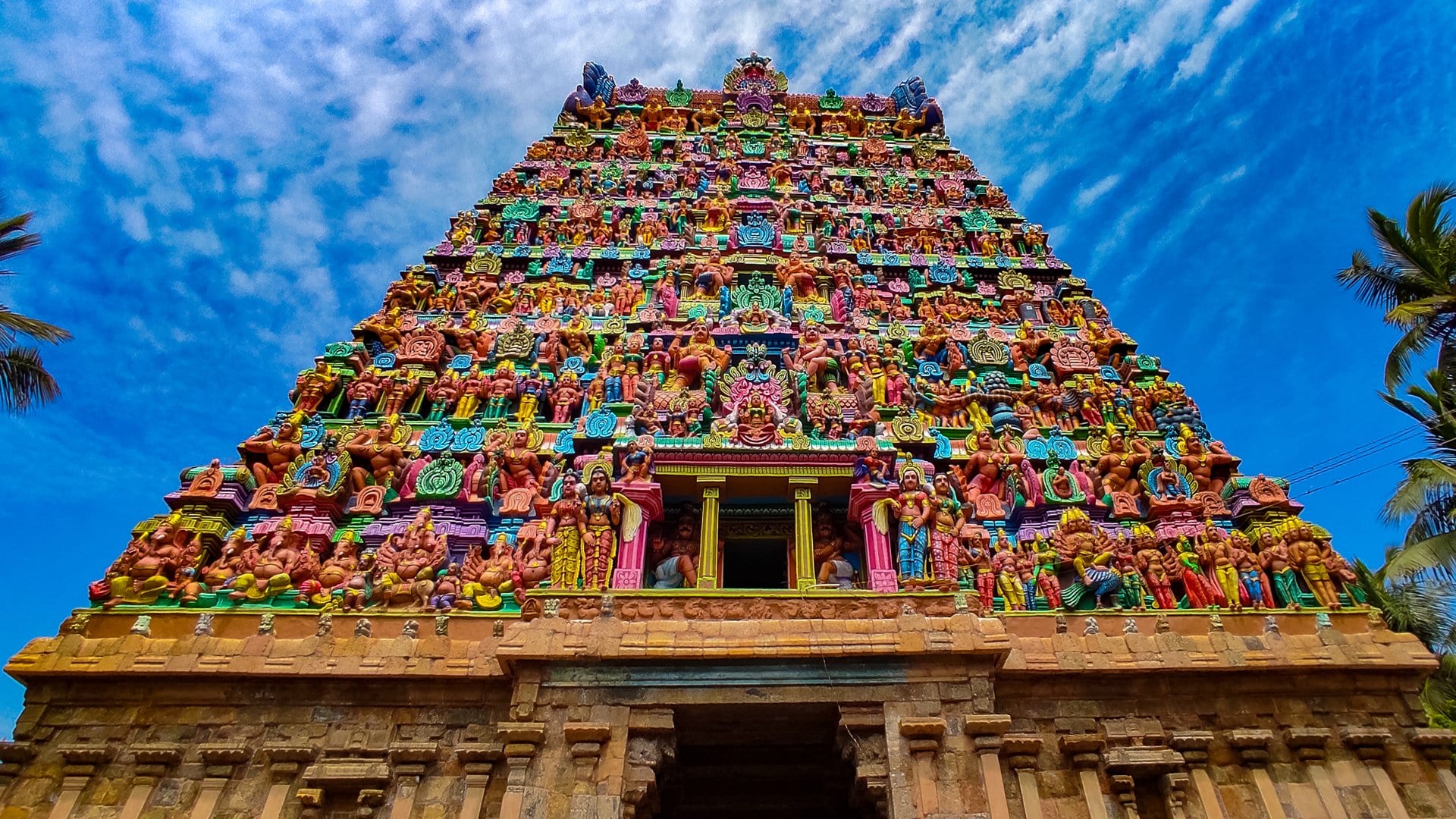
Chidambaram Travel Guide
The best months are October to March , pleasant for the temple and the Pichavaram boat. The one thing to plan around is the timing: the temple opens in two sessions, morning and...
When to visit Chidambaram, and the two temple sessions
The best months are October to March, pleasant for the temple and the Pichavaram boat. The one thing to plan around is the timing: the temple opens in two sessions, morning and evening, with a long closed gap in between.
- October to March: comfortableThe pleasant season for the temple and the mangrove boat, with cool mornings ideal for darshan. This is the peak for visitors, and both the Natyanjali dance festival and Arudra Darshan fall in this window, so the town is at its liveliest.
- April to June: hot and humidHigh summer on the Coromandel coast is hot and sticky, and the open granite temple floor can be punishing underfoot at midday. If you come then, do the temple in the cool early morning and keep the long midday gap for a meal and a rest indoors.
- Plan around the two sessionsThe temple is open about 6 am to 12 noon and again about 5 pm to 10 pm, so plan a morning or evening darshan and fill the long midday and late-afternoon gap with a meal, a rest, or the Pichavaram boat. Arriving in the early afternoon means a shut gate.
- Time the festivals if you canThe Natyanjali Dance Festival begins on Maha Shivaratri, about 15 February in 2026, and Arudra Darshan falls in Margazhi, around late December or early January. Both are beautiful but busy, so book rooms well ahead and expect crowds at darshan.
Unlike many temples, Chidambaram runs in two clear sessions, about 6 am to 12 noon and about 5 pm to 10 pm, with a long closed gap through the afternoon. Plan your darshan for one of these, ideally early morning for the cool and quiet or the evening for the lamp-lit poojas, and use the gap for Pichavaram or a rest. The signature section explains why this temple is worth the planning.
How to reach Chidambaram and get around
Chidambaram sits on the coastal route between Pondicherry and the temple delta, with its own railway station. Most visitors arrive by train or by road from Chennai, Pondicherry or the delta.
- By air, then roadThere is no airport at Chidambaram. The nearest is Pondicherry at about 66 km, with limited flights, then Trichy at about 170 km and Chennai at about 240 km, both with wide connections. Most overseas visitors fly into Chennai and drive down the coast.
- By trainChidambaram has its own railway station on the coastal line, with daily express trains to Chennai, Rameswaram, Tirupati and the south. Book on IRCTC a little ahead in season; the station is a short auto ride from the temple.
- By road, on the coastal routeChidambaram is about 65 km from Pondicherry and on the road to the Kumbakonam temple delta, so it slots neatly into a coastal temple loop. We arrange a car and driver for the temple, Pichavaram and the onward delta.
- Getting around townThe temple, the lodges and the eateries sit close together in a compact town centre that is walkable, with autos for the station and for the 15 km hop out to the Pichavaram boat house. A hired car is easiest if you are also doing the delta or Pondicherry.
Fly into Chennai, then drive down the coast via Pondicherry (about 65 km from Chidambaram), or arrive up from the Kumbakonam delta. Chidambaram is the space element of the Pancha Bhoota temples and the home of Nataraja.
Fly into Chennai or Trichy and continue by road or rail. Chidambaram pairs naturally with Pondicherry and the Kumbakonam delta for a temple-and-coast trip.
Take a train to Chidambaram itself on the coastal line, or drive from Chennai, Pondicherry or the delta. The town is a natural stop on the coastal temple route, easy to reach by rail or road.
Nataraja, the space element and the secret of Chidambaram
Chidambaram is the most philosophical of the great temples: the home of the cosmic dance, the element of space, and the famous Chidambara Rahasyam, the secret of the formless divine behind the curtain.
- The element of spaceOf the five Pancha Bhoota temples, Chidambaram is Akasha, space or ether, the subtlest element. Where the others enshrine the divine as water at Tiruvanaikaval, fire at Tiruvannamalai, earth at Kanchipuram and air at Sri Kalahasti, here the divine is the formless space itself, which makes Chidambaram the crown of that five-temple journey.
- The Chidambara RahasyamBehind a curtain in the sanctum there is no idol, only an empty, garlanded space hung with golden bilva leaves, the secret of Chidambaram. It teaches that the divine is everywhere, even in apparent emptiness, and the curtain is drawn during the poojas, the moment most pilgrims wait for.
- Nataraja and the Ananda TandavaThe presiding form is Nataraja, Shiva as the cosmic dancer performing the Ananda Tandava, the dance of bliss that creates and dissolves the universe, the very image cast in the famous Chola bronzes that now stand in museums around the world.
- Be there for a poojaTry to be present for one of the six daily poojas, when the Dikshitar priests perform the spatika linga abhishekam and the curtain of the Rahasyam is drawn. The evening pooja, traditionally around 7 pm, is the one many time their visit for. It is the heart of a Chidambaram darshan.
Many visitors walk through Chidambaram without realising they are standing in the home of the space element and looking at the formless divine when the curtain is drawn. A few minutes understanding the Rahasyam, the Ananda Tandava and the Pancha Bhoota set turns a quick temple stop into the most meaningful darshan in the south. The sights and experiences sections below show you what to look for in the stone.
The Nataraja temple, the golden hall, and Pichavaram
Chidambaram's heart is the great Thillai Nataraja temple with its golden hall and its carved dance towers, and just down the road lies one of the largest mangrove forests on earth.
- The Thillai Nataraja templeThe home of the cosmic dancer and the space element of the Pancha Bhoota temples, with its four towering gopurams, the 1000-pillar mandapam and the Chidambara Rahasyam. Open about 6 am to 12 noon and about 5 pm to 10 pm, general darshan free, run by the hereditary Dikshitar priests.
- The golden hall and the danceNataraja dances in the Chit Sabha, the golden hall, in the form known the world over from Chola bronze. Its gold roof is traditionally said to carry about 21,600 tiles for the breaths in a day and about 72,000 nails for the body's nadis, the temple's own symbolism rather than an audited count.
- The 108 karanas in the gopuramsThe inner passage walls of the great gopurams, each rising roughly 45 metres, are carved with the 108 karanas, the fundamental movements of the Natya Shastra. The east gopuram is the most complete, which makes this temple a stone encyclopaedia of classical Indian dance and a pilgrimage for dancers.
- Pichavaram mangrovesAbout 15 km away, roughly a 30 to 40 minute drive, one of the largest mangrove forests in the world, where a boat ride threads the green water channels and the birdlife. The boat house is run by TTDC and is lovely in the cool morning.
At the inner Kanaka Sabha and sanctum, men are traditionally required to remove their shirt and upper garment, entering with a dhoti or veshti and the chest bare; women wear a saree or salwar kameez. Shorts and sleeveless tops are not appropriate anywhere in the temple. Footwear is left outside, silence is kept in the shrine, and this is a living, self-governed temple, so dress and behave accordingly and you will be welcome.
The dance festival, the mangrove boat and the delta circuit
Around the temple, Chidambaram offers a world-famous dance festival, a vast mangrove forest with a TTDC boat, and the gateway to the Kumbakonam temple delta and Pondicherry.
- The Natyanjali Dance FestivalBeginning on Maha Shivaratri, about 15 February in 2026, the Natyanjali festival fills the temple precinct with classical dancers from across India and the world, offering their art to Nataraja over roughly five to ten days. A magical convergence of the temple and the dance it gave the world.
- Boat the Pichavaram mangrovesTake a boat through the green channels of one of the largest mangrove forests on earth, gliding under the arching roots with the birds overhead. Boating runs about 9 am to 4 pm, so do it in the cool morning, and choose a rowboat for the quiet narrow channels over the faster motorboat.
- On to the deltaChidambaram is the gateway to the temple delta: Vaitheeswaran Koil, a Navagraha temple, Sirkazhi, and on to Kumbakonam and Swamimalai lie beyond, while Pondicherry is an easy run up the coast for a complete temple-and-coast loop.
- Eat simple and freshThe town has good vegetarian meals halls and excellent filter coffee, the classic banana-leaf thali among them. Eat at busy, clean places and drink bottled or filtered water in the heat, as our tour travel tips advise across Tamil Nadu.
The Pichavaram boat is a Tamil Nadu Tourism Development Corporation operation with set fares paid at the counter, roughly about 450 rupees for a four-seater rowboat and about 650 rupees for a six-seater, and motorboats from about 800 rupees up to about 1,800 rupees for a longer ride, sometimes with a small per-person charge. The rowboat is slower but reaches the quiet narrow channels the motorboat cannot; rates and hours change, so reconfirm at the TTDC counter on the day.
Where to stay in Chidambaram, and how many nights
Chidambaram is a small town, so most visitors stay one night near the temple, or base in Pondicherry and visit on a day trip. Here is how to choose.
- Near the temple, in townMost lodges and hotels cluster within walking distance of the temple, which is ideal if you want to catch both the early-morning and the evening session and wander out for filter coffee in between. Rooms are simple and the area is busy but convenient for darshan.
- Pondicherry as a comfortable baseMany travellers prefer to sleep in Pondicherry, about 65 km up the coast, with its cafes, seafront and wider choice of hotels, and visit Chidambaram and Pichavaram on a day trip. Good if you want more comfort and a coastal evening, at the cost of an early start.
- How many nightsOne night is enough for most: an evening or early-morning darshan, the Pichavaram boat, and the second temple session. Add a night only if you are timing a festival, completing the delta temples, or want an unhurried pace. The temple itself takes about one to two hours.
- Room budgetsBasic budget lodges near the temple start around 800 rupees, while the better mid-range hotels run roughly 2,000 to 5,000 rupees a night. Rates rise around Natyanjali in February and Arudra Darshan in Margazhi, so book ahead for the festivals.
During Natyanjali, which begins on Maha Shivaratri around 15 February, and Arudra Darshan in Margazhi, the limited hotels in this small town fill fast and rates climb. If your dates fall on a festival, book well ahead, or base yourself in Pondicherry and drive in for the day.
Chidambaram costs and a realistic budget
Chidambaram is gentle on the wallet. General temple darshan is free, the main paid item is the Pichavaram boat, and food and lodging are inexpensive. Here is what to plan for.
- The temple is freeGeneral darshan at the Nataraja temple is free, with no online booking; there is no entry ticket. Special abhishekams and sevas are arranged at the temple counter for a fee, paid offline. You do not need to pay anyone for ordinary darshan.
- The Pichavaram boatThe main paid attraction. Entry to Pichavaram is free, and the TTDC boat is roughly about 450 rupees for a four-seater rowboat, about 650 rupees for a six-seater, and from about 800 rupees up to about 1,800 rupees for a motorboat, paid at the counter.
- Food and stayVegetarian meals halls serve a full banana-leaf thali for a modest sum, and filter coffee is cheap and excellent. Budget rooms start around 800 rupees and better mid-range hotels run roughly 2,000 to 5,000 rupees, so a comfortable day here costs far less than a city.
- Cash and cardsCarry cash for the boat counter, autos, small eateries and any temple seva, as not everyone takes cards or UPI. There are bank ATMs in the town centre near the temple, so draw enough for the day before heading out to Pichavaram.
The single paid item that catches people out is the Pichavaram boat, so go knowing it is a TTDC operation at a set counter price, roughly about 450 to 650 rupees for a rowboat and more for a motorboat, rather than something to negotiate with a tout. Everything else, including general darshan, is either free or cheap, which makes Chidambaram one of the most affordable great-temple stops in Tamil Nadu.
Practical logistics: dress, darshan, food and getting around
The small things that make a Chidambaram day smooth, from the temple dress rule and the offline-only seva counter to food, ATMs and walking the compact town.
- Dress for a living templeMen should plan to remove their shirt and upper cloth at the inner sanctum, wearing a dhoti or veshti, and women wear a saree or salwar kameez. Shorts and sleeveless tops are not appropriate, footwear is left outside, and silence is kept in the shrine. Walk the pradakshina clockwise, as our temple tour tips advise.
- Darshan and sevas are offlineThere is no online booking for Chidambaram. General darshan is free; if you want a special abhishekam or seva, arrange it at the temple counter on the spot, and do not feel pressured into a large donation by anyone outside the official counter.
- Food, water and coffeeStick to busy, clean vegetarian meals halls for the banana-leaf thali and the famous filter coffee, and drink bottled or filtered water, especially in the warmer months. The compact town centre has everything within a short walk of the temple.
- Money, SIM and languageThere are ATMs in the town centre; carry cash for the boat, autos and small shops. Mobile coverage is fine for calls and maps. Tamil is the local language and Hindi is spoken much less here, so a few words of Tamil or an English-speaking driver helps, a point our tour tips flag for Tamil Nadu.
Safety, etiquette and staying well in Chidambaram
Chidambaram is a calm, welcoming temple town with little of the hard-sell pressure of bigger sites. A little etiquette and some care with the heat and the water is all it takes.
- Donations and the seva counterArrange any abhishekam or seva at the official temple counter, and agree it in advance. The drawing of the Rahasyam curtain is a sacred moment, not a paid transaction, so do not feel pushed into a large donation on the spot by anyone outside the counter.
- Heat, granite and waterThe open granite temple floor can be scaldingly hot underfoot at midday in summer, which is another reason to do darshan early. Carry water, drink bottled or filtered only, take the usual care with street food, and use sun protection on the open Pichavaram water.
- Photography and respectPhotography is not allowed inside the sanctum or during the rituals; the outer corridors, gopurams and tank are generally fine. Ask before photographing priests or people at prayer, and keep silence in the inner shrine. It is a self-governed Dikshitar temple, so follow their guidance.
- Solo and senior travellersChidambaram is generally relaxed and safe, with far less tout pressure than the big tourist temples. Standard precautions are enough; the main practical challenge is the heat and the two-session timing rather than any safety worry.
Travellers consistently report Chidambaram as calm and welcoming, with little of the aggressive selling found at busier sites. The things to manage are practical, not safety: the midday closing, the heat on the stone, the dress and shirt rule, and drinking only bottled or filtered water. Handle those and the visit is smooth and deeply rewarding.
Chidambaram for every kind of traveller, and on access
Chidambaram draws very different visitors. Here is what it offers you, and the one tip that matters for each, including how a senior pilgrim visits comfortably.
- Shaivite devotees and pilgrimsThe space element of the Pancha Bhoota temples and the home of Nataraja. Time a darshan for one of the six poojas and the drawing of the Rahasyam curtain, and consider completing the five-element journey across Tamil Nadu and Andhra Pradesh.
- Dancers and culture loversThis is the spiritual home of Bharatanatyam. Look for the 108 karanas carved in the gopuram passages, come for the Natyanjali festival on Maha Shivaratri, and feel the connection between the cosmic dance and the classical art it inspired.
- Senior travellers and on accessibilityVery doable with a little planning. The temple is largely flat but the floor is uneven and there are steps; plan a single comfortable darshan in the cool morning rather than fighting the two sessions, do Pichavaram early, and use a car throughout. The granite is hot at midday, so avoid that window.
- Families with childrenThe golden hall, the carved towers and the Pichavaram boat among the mangroves are an adventure for children. Plan around the two temple sessions and the heat, and the rowboat through the green channels is usually the highlight of the day.
- Budget and solo travellersOne of the most affordable great-temple stops: free darshan, cheap thalis and filter coffee, simple lodges from around 800 rupees, and a calm, low-pressure town that is easy to do alone with standard precautions.
- Nature loversPichavaram, among the largest mangrove forests in the world, is a quiet wonder of green channels and birds. A dawn rowboat is the highlight for naturalists, threading the narrow roots the motorboats cannot reach.
A suggested one-day Chidambaram itinerary
How to shape a single well-paced day so you catch a full temple session, the Pichavaram boat in the cool morning, and the evening poojas, without standing at a shut gate.
- Early morning: the templeStart at the Nataraja temple soon after it opens, about 6 am to 9 am, for the cool, the quiet and the late-morning Kalasandhi pooja around 10 am to 11 am. Take in the golden hall, the karana carvings in the gopurams and the Rahasyam curtain when it is drawn.
- Late morning: PichavaramDrive the 15 km out to Pichavaram and take the TTDC boat through the mangroves, ideally a rowboat for the quiet channels, before the midday heat builds. Boating runs about 9 am to 4 pm, so a late-morning ride works well after the temple.
- Afternoon: rest through the gapThe temple is closed through the afternoon, so use the gap for a banana-leaf thali, a filter coffee and a rest indoors out of the heat. This is the natural pause the two-session timing builds into the day.
- Evening: the poojasReturn to the temple after it reopens about 5 pm for the lamp-lit evening, the Rahasyam pooja traditionally around 7 pm, and the unhurried atmosphere. If you are continuing, drive on to Pondicherry or into the delta the next morning.
The single thing that breaks a Chidambaram plan is arriving at the temple in the closed afternoon gap, between about 12 noon and 5 pm. Build the day so the temple falls in the morning or the evening, slot Pichavaram into the late morning while the boat runs, and keep the hot middle of the day for a meal and a rest. Get the timing right and the whole day flows.
The real questions travellers ask about Chidambaram
Straight answers to the questions that come up again and again on traveller forums, so you arrive already knowing the score.
- Is it worth visiting and how long do I need?Yes; this is one of the great temples of the south and the most philosophical of them. The temple takes about one to two hours, and one day covers it plus Pichavaram comfortably. Add a night only for a festival or the wider delta.
- Why is the temple closed in the afternoon?Chidambaram runs in two sessions, about 6 am to 12 noon and about 5 pm to 10 pm, by tradition, with a long closed afternoon gap. Plan a morning or evening darshan and use the gap for Pichavaram or a rest.
- Do men really have to remove their shirt?Yes, at the inner Kanaka Sabha and sanctum men traditionally enter bare-chested in a dhoti or veshti, with the upper cloth removed. It surprises many first-timers, so wear or carry something you can change into easily.
- Can foreigners and non-Hindus enter?Foreign and non-Hindu visitors are generally welcome in the Chidambaram temple, including the main precinct, provided you dress and behave respectfully and follow the dress rules. Photography inside the sanctum is not allowed.
- How much is the Pichavaram boat and when does it run?It is a TTDC operation running about 9 am to 4 pm, roughly about 450 rupees for a four-seater rowboat and about 650 rupees for a six-seater, with motorboats from about 800 rupees up to about 1,800 rupees, paid at the counter. Go in the cool morning.
- Should I base in Pondicherry?Both work. Sleep in Chidambaram to do both temple sessions easily, or base in Pondicherry about 65 km away for more comfort and a coastal evening and visit on a day trip with an early start.
Planning Chidambaram from abroad
Chidambaram is the home of the cosmic dance and the space element of the Pancha Bhoota temples, a profound and rewarding stop for overseas and NRI travellers on the coastal temple route, once you know the temple's rules.
- Come via Chennai or PondicherryFly into Chennai, then drive down the coast through Pondicherry, about 65 km from Chidambaram, or arrive up from the Kumbakonam delta. Chidambaram is an easy, meaningful stop on the coastal temple route and pairs naturally with both.
- Understand the temple before you goIt is the space element, the home of Nataraja, with the formless Chidambara Rahasyam behind the curtain and the hereditary Dikshitar priests. Time your darshan for one of the six poojas, when the curtain is drawn, and dress modestly throughout.
- Be ready for the dress and shirt ruleMen are traditionally required to remove their shirt and upper cloth at the inner sanctum, entering in a dhoti or veshti; women wear a saree or salwar kameez. Shorts and sleeveless tops are not appropriate. Foreign and non-Hindu visitors are generally welcome if you follow this.
- Add the mangroves, and go gentlyPichavaram, among the largest mangrove forests on earth, is about 15 km away, a lovely cool-morning TTDC boat ride to pair with the temple. The town is small, flat and walkable with short drives, so it suits parents and grandparents who do darshan early and rest through the midday gap.
Money, connectivity and timing for foreign visitors
The practical basics an overseas traveller needs for a small temple town: cash, cards, a SIM, language, and how many days to give Chidambaram on a wider south India trip.
- Carry cash, and a change of clothesCards and UPI work in some hotels, but the boat counter, autos and small eateries are cash places, so draw cash at the town-centre ATMs. Carry an easily changed shirt or upper cloth for the men's sanctum rule, and modest cover for everyone.
- Get a SIM at the airportPick up an Indian tourist SIM or an eSIM when you land in Chennai rather than hunting for one in a small town. Coverage in Chidambaram is fine for maps and calls. Tamil is the local language, so an English-speaking driver smooths the day.
- How long to give it on a bigger tripOn a south India temple-and-coast trip, one night in Chidambaram is the right weight: enough for a full temple session, the Pichavaram boat and the evening poojas, slotted between Pondicherry and the Kumbakonam delta without slowing the itinerary.
- Time your visit to your comfortOctober to March is the comfortable window. For the dance, plan around Natyanjali, which begins on Maha Shivaratri about 15 February in 2026, and book ahead. For calm, come on a normal winter day and you will have the cool early morning almost to yourself.
Chidambaram is an unusually meaningful introduction to the great Tamil temples: small, walkable, deeply atmospheric, and built on the most philosophical idea of them all, the formless divine in space. Slot it after Pondicherry, give it a night, time a pooja for the drawing of the Rahasyam curtain, and let it be the still, thoughtful chapter of a southern journey. Many overseas visitors say it is the temple they think about long after the trip.
The temple where the deity is empty space
Chidambaram keeps the most daring idea in the great temples of the south. Behind the curtain in the inner sanctum there is no carved deity at all, only an empty, garlanded space hung with golden bilva leaves. This is the Chidambara Rahasyam, the secret of Chidambaram: that the divine is not a form to be contained but the formless space, the Akasha, present everywhere, even in apparent emptiness. It is why this temple is the space element of the five Pancha Bhoota Sthalams, the subtlest of them all, and why pilgrims wait for the moment when the Dikshitar priests draw the curtain at the pooja. Above it, in the golden Chit Sabha, Shiva dances the Ananda Tandava as Nataraja, the cosmic dance that creates and dissolves the worlds, while the passages of the great gopurams carry the 108 karanas of the Natya Shastra carved in stone. The legend of the formless divine is held in the temple's own tradition; the philosophical reading is well attested in Tamil Saiva texts, though no single scriptural verse should be quoted as its sole source.
Planning a Chidambaram trip?
Our Tamil Nadu travel experts plan your full journey for you: route, hotels, darshan timings and transport. You get a free day-by-day plan and an exact quote on WhatsApp, usually within a few hours. No payment is needed to get your plan.
Tour packages that visit Chidambaram
Every journey below is private, hand-crafted and fully customizable. Tell us your dates and we tailor the itinerary, the pace and the priests or guides around you.