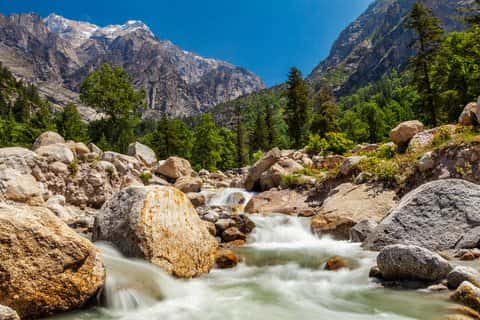
Sangla Travel Guide
The valley opens up from April to June and is at its loveliest from September to October . The monsoon and deep winter both bring real risk, so decide your window before you book.
When to visit Sangla and Chitkul, and the months to avoid
The valley opens up from April to June and is at its loveliest from September to October. The monsoon and deep winter both bring real risk, so decide your window before you book.
- April to June: the easy openerRoads are open, the snow is receding, and the apple orchards and meadows green up. Days are pleasant and nights still cold at Sangla and much colder at Chitkul, so carry warm layers even in early summer. This is the simplest window for a first visit and the busiest around late May and June.
- September to October: the most balanced timeThe monsoon has cleared, skies are sharp, the orchards turn gold, the air is cool and the crowds thin. For most travellers this is the sweet spot for photography and calm. By late October nights turn hard-cold and the first snows can arrive high up, so keep an eye on the forecast.
- July to August: monsoon, and the risky monthsThis is when NH-5, the road in, is most prone to landslides and shooting stones, with hours-long or even day-long blocks common on the Shimla to Kinnaur stretch. If you must come then, build slack into your plan and check road status daily, because a shut highway can strand you.
- November to March: winter and snowSangla can be beautiful under snow but temperatures fall well below freezing, and the road up to Chitkul can close under snow in January and February, sometimes December, when the village itself largely empties as families move lower. Come for winter only with flexible dates and a willingness to turn back at Sangla.
Do not lock a confirmed Chitkul night into a January or February itinerary. The road above Sangla can shut under snow, sometimes as early as December, and Chitkul largely empties in deep winter. The sensible winter plan is to base at Sangla, watch the conditions, and only push up to Chitkul if you are already there and the road is open on the day. Anyone selling a guaranteed peak-winter Chitkul stay is overpromising, so keep your dates flexible and your expectations honest.
How to reach Sangla and Chitkul
There is no airport or railway in the valley. Almost everyone drives the long mountain road up NH-5 from Shimla, turning off at Karcham for the Baspa side valley.
- The road from ShimlaShimla to Sangla is about 220 to 235 km, but this is a slow, winding mountain road along NH-5, the Hindustan-Tibet highway, and realistically a full 8 to 10 hour day of driving. Most people break the journey rather than push it in one exhausting go, and we can arrange a car with a driver used to these roads.
- The Karcham turnYou follow NH-5 up the Sutlej, and at Karcham a side road branches off into the Baspa valley. Sangla is about 16 to 18 km up from Karcham, Rakcham and Batseri lie beyond, and Chitkul is about 22 to 28 km past Sangla at the head of the valley where the road ends.
- From DelhiDelhi to Sangla or Chitkul is about 569 km and realistically two days on the road, usually with a night around Shimla, Narkanda, Sarahan or Sangla. Almost no one drives it in a single push, and the last stretches are narrow and slow, so plan a two-day approach and a two-day return.
- Nearest airport and railheadShimla has a small airport with limited flights and a narrow-gauge toy train, but Chandigarh, about 345 km from Chitkul, is the practical air and rail gateway for most travellers. From there it is a long road journey up, so budget the driving days into your plan. There are no flights or trains into the valley itself.
Fly into Delhi, then travel up via Shimla by road (or the Kalka to Shimla toy train to Shimla, then a hired car). Give yourself two unhurried days each way for the mountain drive to Sangla. There are no international flights anywhere near the valley.
Fly into Delhi or Chandigarh, then drive up through Shimla and along NH-5 to Karcham and Sangla. Chandigarh is the closest practical airport, but it is still a long two-day road approach.
Drive or take an HRTC bus from Shimla, breaking the journey, or self-drive from Delhi or Chandigarh over two days. The Kalka to Shimla toy train makes a scenic first leg before you pick up the mountain road.
Do you need a permit for Sangla and Chitkul?
The short answer for the Sangla valley is no. The permit rule matters only if you carry on toward Spiti, and it is the one thing foreign travellers most often get wrong.
- No permit for the Sangla valleySangla, Rakcham and Chitkul sit in lower Kinnaur, below the Inner Line, so neither Indian nor foreign visitors need an Inner Line Permit to visit them. You can drive straight up the Baspa valley to Chitkul, the last village, without any paperwork. This surprises many travellers who assume a border-area village must need a permit.
- Where the permit does kick inThe Inner Line Permit becomes mandatory once you cross Jangi, about 35 km beyond Reckong Peo, heading toward Spiti and the higher border areas. If your trip continues from Kinnaur into Spiti, that is where you arrange it. The Kinnaur district administration lists the ILP fee at about 200 rupees per person at an e-Governance centre, plus any agency service charge; reconfirm the current fee and process before you travel.
- The border limit at ChitkulChitkul is the last point you can reach as a traveller. The Nagasthi ITBP post is about 4 km further on, and all civilian movement beyond the village toward the Tibet border is prohibited. Do not try to push past the village, and do not photograph military or ITBP installations anywhere in Kinnaur.
- Carry ID and reconfirmEven where no permit is needed, carry a valid photo ID, and foreign travellers should keep passport and visa handy for any checkpost. Rules in border districts can change, so treat this section as a guide and reconfirm the current position with the Kinnaur district administration before a long trip.
Sangla, Kamru Fort, Chitkul and the Baspa valley
The valley itself is the sight, but a few places anchor a visit: Kamru Fort above Sangla, the Kath Kuni temples, and Chitkul at the road's end. A couple of entry rules are worth knowing first.
- Kamru Fort above SanglaA tall Kath Kuni timber-and-stone tower that was the old seat of the Bushahr rulers, with a Kamakhya Devi temple and a Badrinath shrine inside. It is open in daylight hours, roughly 8 am to 6 pm. You must remove shoes and all leather items, belts, wallets and bags, at the gate, and dress modestly, and inner access follows the priest's ritual timings rather than fixed tourist hours.
- Chitkul, the last villageAt about 3,450 m, Chitkul is the last village on the old Hindustan-Tibet trade route and the highest point most travellers reach. Wander the wooden houses, the Baspa riverside, the meadows and the famous last dhaba, but remember the road ends here for civilians. Read the altitude section before planning a night at the top.
- The Kath Kuni templesThe Mathi Mata temple at Chitkul, held locally to be around 500 years old, and the Bering Nag temple at Sangla are living village shrines built in the alternating stone-and-deodar Kath Kuni style. They are places of worship, not tourist monuments, so ask before photographing any ritual and follow local custom.
- Rakcham, Batseri and the orchardsThe stretch between Sangla and Chitkul, through Rakcham and Batseri, is the most beautiful part of the valley: snow-clad peaks on one bank of the Baspa and apple orchards and wooden houses on the other. Many travellers now base a night in a quieter Rakcham homestay rather than rushing straight to Chitkul.
Sangla, Rakcham and Chitkul are working Kinnauri villages, not resorts. Ask before photographing people and rituals, dress modestly at the temples, take your rubbish out with you, and go gently at Chitkul, where the cleanest air in India and a fragile alpine setting deserve respect. The village earns its living slowly, so buy local, tip fairly, and leave it as you found it.
Signature experiences in the Sangla valley
Beyond the drive-up-and-photograph version, these are the experiences people remember, and how to do them at a pace that suits the altitude.
- Walk the Baspa riverside at ChitkulThe finest free experience in the valley is a slow walk along the Baspa at Chitkul, out toward the meadows below the ITBP limit, with snow peaks all around and some of the cleanest air anywhere in India. Go gently at about 3,450 m, especially on your first day up, and turn back well before the prohibited zone.
- Climb to Kamru FortA short, steep walk up from Sangla village to the old fort tower and its temples, with valley views along the way. Remember to leave shoes and all leather at the gate. It is the best half-day cultural outing in the valley and pairs naturally with a wander through Sangla's lanes.
- Trout and the orchards at RakchamThe Baspa is known for trout, and some riverside camps and homestays around Sangla and Rakcham arrange angling in season. Even without a rod, an afternoon among the apple orchards and wooden houses of Rakcham and Batseri is the gentle heart of a valley visit.
- Serious treks from ChitkulChitkul is a trailhead for demanding high routes, the Lamkhaga and Borasu passes over to Uttarakhand and the Kinner Kailash parikrama further down the valley. These are multi-day, high-altitude expeditions needing guides, permits where applicable and proper acclimatisation, not casual day walks.
- Sunrise and sunset over the peaksThe light on the snow at either end of the day is what people remember. Base yourself where you can step out to a viewpoint or a riverside without a drive, give yourself an unhurried morning and evening, and let the valley reveal itself slowly rather than through a car window.
- A slow homestay eveningThe quiet Kinnauri homestays of Sangla, Rakcham and Chitkul, with local food and a wood fire, are an experience in themselves. Chatting with hosts about the orchards, the winters and the old trade route tells you more about the valley than any monument.
Do not treat Chitkul as a drive-up photo stop and turn straight around. The valley rewards slowness: a night at Sangla or Rakcham to acclimatise, a morning walk by the Baspa at Chitkul, and time in the orchards. Rushing up to 3,450 m and back in a day is both the least rewarding way to see the valley and the way most likely to leave you with an altitude headache.
Where to stay in the Sangla valley, and how many nights
Base in Sangla for services and access, in quieter Rakcham for calm, or at Chitkul itself for the road's-end night. Two to three nights in the valley is the sweet spot.
- Sangla: services and a good baseSangla town has the widest choice of homestays, guesthouses and camps, an ATM and shops, and is the natural base for Kamru Fort and day trips up to Chitkul. It is the most convenient place to spend your first night and let your body settle before going higher.
- Rakcham and Batseri: quieter and prettierThe villages between Sangla and Chitkul are calmer, greener and closer to the best of the valley. A riverside homestay here is many travellers' favourite base, splitting the difference between Sangla's services and Chitkul's remoteness, and a gentle acclimatisation stop before the top.
- Chitkul: the road's-end nightStaying at Chitkul, at about 3,450 m, is memorable but basic and cold, and worth doing only after a night lower down so the altitude does not catch you. Rooms are simple, power and signal are patchy, and options are few, so book ahead in peak season.
- How many nightsTwo nights in the valley is the comfortable minimum, one lower at Sangla or Rakcham to acclimatise and one for Chitkul, with a third night if you add Kalpa or slow down. A single rushed night up and down from Shimla is possible but tiring and misses the point of coming so far.
Beds in the valley are limited, and in the May to June and September to October peaks the good homestays and riverside camps fill early. Chitkul in particular has few rooms. Book ahead for those windows, and if you cannot secure Chitkul, base in Rakcham or Sangla and visit Chitkul on a day trip. In deep winter, confirm the property is actually open before you travel, as many close.
Sangla and Chitkul costs and a realistic budget
The valley is gentle on the wallet once you are there, though the long transport in is the real cost. Here is what the main things run to, so you can plan and carry enough cash.
- Rooms and homestaysHomestays around Sangla and Rakcham typically run about 800 to 2,500 rupees a night, and riverside camps and better rooms from about 1,500 to 3,600 rupees, rising in the May to June and September to October peaks. Chitkul rooms are simple and few, so book those early.
- A realistic daily budgetOn the ground, excluding your transport in and out, plan on about 1,500 to 4,000 rupees per person a day depending on style, covering a homestay bed, simple meals and local travel. It is an easy place to keep costs modest, since there is little to buy beyond food, stay and the odd shared taxi.
- Buses and taxisThe Shimla to Sangla HRTC ordinary bus is about 300 rupees, a Sangla to Chitkul shared taxi about 50 to 60 rupees a seat, and the Chitkul to Reckong Peo afternoon bus about 120 rupees. A private taxi for the Sangla-Chitkul day is far dearer and negotiated, so agree it in advance.
- Carry cashThere are ATMs at Sangla and reliable ones at Reckong Peo, but none at Chitkul, and card and UPI acceptance is patchy in the small homestays and dhabas. Draw enough cash before you go up the valley so you are not caught short at the top.
Once you are in Sangla, daily costs are low. The expensive and demanding part is getting there: the long drive or the chain of buses, the fuel or the car hire, and the two travel days each way from Delhi. Budget the transport honestly and the valley itself will feel cheap, and remember to carry all the cash you will need above Reckong Peo, since Chitkul has no ATM.
Practical logistics: buses, cash, signal and fuel
The small things that make a Sangla trip smooth, from the HRTC bus chain and shared taxis to cash, mobile signal and where to fill the tank.
- The HRTC bus chainA daily morning HRTC ordinary bus leaves Shimla toward Sangla around 7:30 am for about 300 rupees. From Reckong Peo, buses to Chitkul via Sangla run at roughly 9:30 am and 12 noon, and from Chitkul back down at about 6:30 am, 1:30 pm and 4 pm. Timings shift with the season, so reconfirm at the bus stand or with HRTC.
- Shared taxis and private carsBetween Sangla and Chitkul, shared local taxis run at about 50 to 60 rupees a seat when full, the cheap and social way up. A private taxi for the day gives you flexibility but costs a lot more and is negotiated, so settle the fare before you set off.
- Cash, signal and internetCarry cash: ATMs are at Sangla and Reckong Peo but not Chitkul. Mobile coverage thins as you climb, with BSNL and Airtel working best in the valley and data at Chitkul minimal, so download maps and info before you lose signal and do not count on the internet at the top.
- Fuel and suppliesFuel up at Reckong Peo or Karcham, as there is no reliable petrol pump in the upper valley. Stock any medicines, snacks and warm gear before you go up, since Chitkul's shops are few and basic. A power bank is worth carrying for the patchy electricity higher up.
Altitude, the road, and staying well in Sangla and Chitkul
The two real risks here are altitude and the mountain road, not crime. A little planning on both keeps a high-Himalayan trip safe and happy.
- Altitude and AMSChitkul at about 3,450 m is high enough that some travellers get acute mountain sickness, headache, nausea and breathlessness, if they sleep there on their first night up. Acclimatise by spending a night lower at Sangla, Rakcham or Kalpa first, climb gradually, drink plenty of water, go easy on alcohol, and if symptoms worsen, descend. Talk to a doctor before travel if you have heart or lung conditions.
- The NH-5 landslide realityNH-5, the road in, is landslide-prone and has been kept shut overnight, roughly 8 pm to 5 am, at Nigulsari, with blocks at Nigulsari and near Nathpa especially in the monsoon. Avoid night driving on this stretch, keep buffer days in the plan, and check current road status before you set out. July and August carry the highest risk of delays.
- The mountain roads themselvesThe Baspa valley roads are narrow, unfenced in places and slow, and the Sangla-Chitkul stretch can be rough. Use a driver experienced on these roads, avoid driving after dark, and do not rush. If you are prone to motion sickness, the winding climb is a long one, so come prepared.
- Cold, sun and healthNights are cold even in summer and bitter in the shoulder seasons, so carry proper layers. The high sun is strong, so use sun protection. Drink bottled or boiled water, take the usual care with food, and remember the nearest real medical facility is at Sangla or Reckong Peo, not Chitkul, so carry a basic kit and any personal medicines.
Kinnaur is one of the safer, gentler corners of the Indian Himalaya, and solo and independent travellers, including women, generally find the valley calm and welcoming with standard precautions. The real hazards are the altitude and the road, not people. Tell someone your plan, keep some cash and a charged phone with offline maps, and do not push into bad weather or fading light on the mountain roads.
Sangla and Chitkul for every kind of traveller
The valley suits very different visitors in different ways, but altitude and the long drive shape the honest advice for each, especially for seniors and families.
- CouplesQuiet, remote and beautiful: riverside homestays, orchard walks and snow-peak sunsets. An overnight in Rakcham or Chitkul rather than a day trip lets you catch the light at both ends of the day, and the slowness is the whole appeal.
- Families with childrenRewarding but demanding: the long winding drive is tiring for small children, and the altitude at Chitkul can affect them, so acclimatise at Sangla first, watch for headaches and lethargy, and do not rush straight to 3,450 m. Families often enjoy Sangla and Rakcham most and treat Chitkul as a gentle day trip.
- Senior travellers and on altitudeVery doable with care, but weigh two things honestly: the long, winding road and the height. Break the drive over two days, spend a night at Sangla before going higher, keep the Chitkul visit to daytime hours, and anyone with heart or lung conditions should take medical advice first. The valley is gentle once you are settled; it is the getting there and the altitude that need respect.
- Backpackers and budget travellersA classic slow-travel valley reachable entirely by HRTC bus and shared taxi, with cheap homestays and simple dhabas. The bus chain from Shimla via Reckong Peo takes patience but costs little, and Sangla and Rakcham are fine places to settle for a few unhurried days.
- Solo travellersCalm and welcoming, one of the easier Himalayan valleys to travel alone with standard precautions. The homestays are sociable, the buses reliable enough, and the main things to manage are the altitude and not being caught out by weather or fading light on the roads.
- PhotographersThe Baspa, the Kath Kuni villages, the orchards and the peaks are the draw, best in the September to October light. Ask before photographing people and rituals, respect the ITBP limit beyond Chitkul, and never photograph military installations anywhere in Kinnaur.
A suggested Sangla, Kalpa and Chitkul itinerary
How to shape three to five days so the drive is manageable, the altitude is respected, and you catch the valley at its best rather than rushing Chitkul.
- Day one: Shimla toward the valleyFrom Shimla, drive up NH-5, breaking the long day with a night around Narkanda, Sarahan or as far as Sangla if you start early. The road is slow and scenic, so do not try to reach Chitkul in one go from Shimla. Avoid driving the landslide-prone stretches after dark.
- Day two: settle at Sangla or RakchamReach Sangla, walk up to Kamru Fort, wander the village and orchards, and spend the night at Sangla or quieter Rakcham. This lower night is your acclimatisation before Chitkul, so take it easy and hydrate.
- Day three: ChitkulDrive or take a shared taxi up to Chitkul at about 3,450 m, walk the Baspa riverside and the meadows below the ITBP limit, and either return to Rakcham or stay the night at Chitkul if you feel well at altitude. Keep the afternoon gentle.
- Add Kalpa, then returnWith a day or two more, drop back to Karcham and head up to Kalpa and Reckong Peo for the classic Kinner Kailash views across the valley, then begin the two-day return. This makes a comfortable four to five day Kinnaur circuit rather than a rushed dash.
The single thing that saves a Kinnaur trip is a spare day. NH-5 can block for hours or longer, and a night closure or a landslide can throw your schedule out. Plan so a lost half-day does not mean a missed flight home, keep the return relaxed, and never gamble a tight connection on a mountain road that the weather controls. A buffer day turns the valley's biggest risk into a non-event.
The real questions travellers ask about Sangla and Chitkul
Straight answers to the questions that come up again and again on TripAdvisor, IndiaMike and Team-BHP, so you arrive already knowing the score.
- Do foreigners need a permit for Chitkul?No. Sangla, Rakcham and Chitkul are in lower Kinnaur below the Inner Line, so neither Indians nor foreigners need an Inner Line Permit for them. The permit is needed only from Jangi onward toward Spiti. Carry ID, and passport and visa if you are a foreign visitor, for any checkpost.
- Will I get altitude sickness?You might if you sleep at Chitkul, about 3,450 m, on your first night up. Spend a night lower at Sangla, Rakcham or Kalpa first, climb gradually, hydrate and go easy, and most people are fine. If symptoms worsen, descend, and take medical advice first if you have heart or lung conditions.
- Is one night in the valley enough?Two nights is the comfortable minimum, one lower to acclimatise and one for Chitkul. A single rushed night up and down from Shimla is possible but tiring and misses the calm that is the whole point. Add a third night for Kalpa or a slower pace.
- Is Chitkul worth the long, rough drive?If you like remote, quiet, high-Himalayan scenery and slow village days, yes. If you want lively markets and quick sightseeing, the long drive may disappoint. Go for the walks by the Baspa, the orchards and the sense of the road's end, not for a checklist of sights.
- Is the road to Chitkul open in winter?Not reliably. The road above Sangla can close under snow in January and February, sometimes December, and Chitkul largely empties in deep winter. Come in winter only with flexible dates, base at Sangla, and push up only if the road is open on the day.
- Are there ATMs and mobile signal?There are ATMs at Sangla and Reckong Peo but none at Chitkul, so carry cash. Mobile coverage thins as you climb, with BSNL and Airtel best in the valley and data at Chitkul minimal, so download what you need before you lose signal.
Planning Sangla and Chitkul from abroad
The Sangla valley is a rare high-Himalayan trip that is still permit-free and welcoming, but the altitude, the long drive and the remoteness need a little preparation from overseas.
- Understand the permit lineYou do not need any permit for Sangla, Rakcham or Chitkul, which is what most people miss. The Inner Line Permit and the Protected Area rules only apply if you carry on toward Spiti, from Jangi onward. Carry your passport and visa for checkposts, and reconfirm the current position, since border-district rules can change.
- Respect the altitudeChitkul is about 3,450 m, high enough to cause altitude sickness if you go up too fast. Build in a night lower at Sangla or Kalpa to acclimatise, climb gradually, and take medical advice before travel if you have heart or lung issues. This is a genuine high-mountain trip, not a hill-station outing.
- Give it the driving daysFrom Delhi it is about 569 km and two days of mountain driving each way, usually via Shimla. Do not underestimate the time; the roads are slow and can block. Plan a two-day approach, at least two nights in the valley, and a two-day return, with a buffer day for road delays.
- Cash, signal and the basicsCarry cash, since there is no ATM at Chitkul and card acceptance is patchy, and expect thin mobile signal and little internet high up. Get an Indian SIM (BSNL or Airtel work best in the valley) in Delhi or Shimla, download offline maps, and pack proper warm and sun protection for the altitude.
Fitting Sangla into a wider India or Himalaya trip
How an overseas traveller slots the Sangla valley into a bigger itinerary, how many days to give it, and whether it suits a first trip to India.
- Pair it with Shimla and KinnaurThe natural loop is Delhi to Shimla, then up NH-5 through Kinnaur to Sangla, Chitkul and Kalpa, and back. Adventurous travellers continue from Kinnaur into Spiti (with the permit from Jangi), making a longer Himalayan circuit, but that adds serious driving days and altitude.
- How many days to give itGive the Sangla valley at least three to four days including the drive up and back, and more if you add Kalpa or continue to Spiti. It does not slot into a rushed India tour; it is a destination in its own right that needs the road days budgeted honestly.
- Is it right for a first trip to India?It is a wonderful but demanding choice for a first visit: remote, high and reached by long mountain roads. If your first trip is short, the golden-triangle cities may suit better and Sangla can wait for a return. If you want raw Himalayan scenery and are comfortable with rough travel, it rewards you richly.
- Best months for overseas visitorsAim for April to June or September to October, when the roads are open and the weather kindest. Avoid the July to August monsoon, when NH-5 landslides can wreck a tight schedule, and deep winter, when the Chitkul road may be shut. Book valley beds ahead for the peaks.
Sangla and Chitkul reward travellers who already have a feel for India and want something raw, remote and high. It is not a convenient add-on to a first, short tour: the driving days, the altitude and the road risk all ask for time and flexibility. Give it its own space in a longer trip, come in the right months, and the last village of India becomes one of the Himalayan memories you keep.
Mathi Devi, the goddess who chose the last village
Chitkul's guardian is Mathi Mata, worshipped in a Kath Kuni temple the villagers hold to be some five hundred years old. In local oral tradition she is a form of the goddess Parvati, consort of Badrinath, who is said to have travelled from Vrindavan across the high Himalayan passes into the Baspa valley, appointing family members as guardians over the valley's divisions before choosing Chitkul as her final abode; her arrival is credited with bringing the village prosperity and protection from calamity. In the wider Kinner Kailash tradition she is the one non-Buddhist deity the parikrama pilgrims must honour, and older villagers recall the goddess once being carried on foot over the passes to Gangotri. It is living folklore passed down in the village, not a single fixed scripture, so we tell it as the tradition of Chitkul rather than as documented history.
Planning a Sangla trip?
Our Himachal Pradesh travel experts plan your full journey for you: route, hotels, darshan timings and transport. You get a free day-by-day plan and an exact quote on WhatsApp, usually within a few hours. No payment is needed to get your plan.