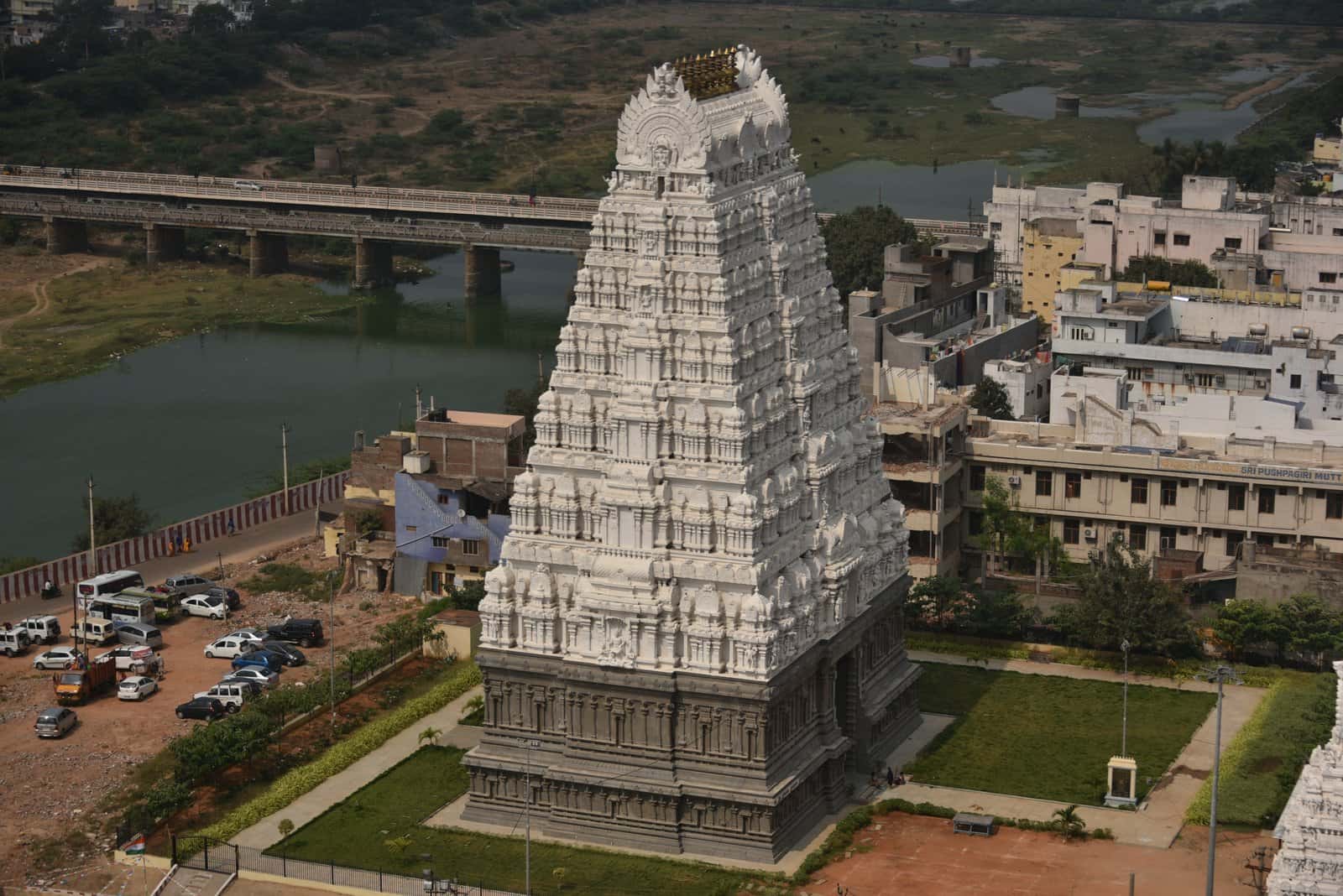
Srikalahasti Travel Guide
The comfortable window is the winter of about October to March . The temple's biggest day, Maha Shivaratri around February or March, is spectacular but very crowded.
When to visit Srikalahasti, and the Maha Shivaratri crowds
The comfortable window is the winter of about October to March. The temple's biggest day, Maha Shivaratri around February or March, is spectacular but very crowded.
- October to March: the pleasant seasonThis is the season to come. The weather is comfortable for the queues, the walk to the temple and any time spent in the town, which matters because much of a Srikalahasti visit is spent standing and waiting. Pair it with a Tirupati trip in the same cool months for an easy South India pilgrimage run.
- Maha Shivaratri: the great festivalThe Maha Shivaratri Brahmotsavam around February or March is the temple's biggest celebration and a powerful time to be there, with long night-time worship and huge crowds. If the festival is your reason to come, plan and book well ahead and expect very long queues; if it is not, the days around it are best avoided for a calm darshan.
- April to June: hot and demandingCoastal-plain Andhra heat builds through the summer, and the queues and the open temple precinct become hard going by midday. If you can only come then, go for the early-morning or evening darshan, carry water, and avoid the hottest middle hours, especially with seniors or children.
- July to September: monsoonThe monsoon brings heavy rain to the region, and while the Swarnamukhi and the surrounds turn green, the wet makes the queues and the town less pleasant. It is doable for a determined pilgrim, but most visitors are better served by the winter window.
For many visitors the deciding factor is not the season but the Rahu-Ketu pooja. The pooja runs in batches through the day, so a weekday outside the festival peaks gives you the calmest darshan and the shortest wait for the pooja. If you are combining Srikalahasti with a Tirumala Balaji darshan, plan the two around each temple's timings and crowd days rather than just the month, and keep a buffer in case a queue runs long.
How to reach Srikalahasti
Most people reach Srikalahasti through Tirupati, about 36 to 37 km away, or from Chennai. Tirupati airport at Renigunta is the nearest airport.
- By air, via Tirupati or ChennaiTirupati airport at Renigunta is the nearest airport, roughly 30 km from Srikalahasti, with domestic flights to Hyderabad, Bengaluru, Chennai and other cities. Chennai is the larger air gateway, at about 112 to 116 km and roughly a 3 hour drive, useful for international and long-haul connections. From either, continue by road or rail.
- By rail, via Renigunta and Srikalahasti stationSrikalahasti has its own railway station on the line towards Renigunta junction, the major railhead near Tirupati. Many pilgrims travel Tirupati to Srikalahasti by train in well under an hour, or come directly from Chennai via Renigunta. Book ahead on IRCTC (irctc.co.in), especially around festivals.
- By road, from TirupatiThe drive from Tirupati to Srikalahasti is about 36 to 37 km and roughly an hour, an easy run that most pilgrims fold into their Tirumala trip. Buses and shared taxis are frequent on this leg, and we can arrange a car with a driver who knows the temple and the Tirupati circuit.
- From Chennai and BengaluruFrom Chennai it is about 112 to 116 km and roughly 3 hours by road, or a train via Renigunta. From Bengaluru it is a longer drive, usually done via Tirupati. Many visitors base in Tirupati for the Balaji darshan and make Srikalahasti a half-day side trip from there.
Fly into Chennai (the nearest international gateway) or via Hyderabad or Bengaluru, then continue to Tirupati by a short flight or train and on to Srikalahasti by road. Pairing it with a Tirumala darshan makes one neat pilgrimage.
Fly into Chennai, Hyderabad or Bengaluru, connect to Tirupati, and reach Srikalahasti by road in about an hour. The Vayu-lingam and the Rahu-Ketu pooja slot naturally into a Balaji trip.
Reach Tirupati or Renigunta by train or flight, then continue by road or rail the short hop to Srikalahasti, or come directly from Chennai. It is one of the easiest temple side trips in the south.
The Vayu-lingam temple, the Rajagopuram and Kannappa hill
The Srikalahasteeswara temple and its great gopuram are the heart of the town, with the Kannappa shrine on the hill above and the Swarnamukhi river alongside.
- The Srikalahasteeswara temple and the Vayu lingamThe main temple, built into the hillside on the Swarnamukhi, enshrines Shiva as the Vayu Lingam, the air element of the five Pancha Bhoota Sthalams. The lingam is not touched or bathed directly by the priests, and the air element is shown by the lamp flames near the inner shrine that flicker as if in a draught even when the chamber is still. This is the darshan everyone comes for.
- The RajagopuramThe towering entrance gopuram is the town's landmark. The earlier tower of about 136 feet developed cracks and collapsed on 26 May 2010, and was dismantled and rebuilt taller, to about 144 feet, following Agama Shastra building tradition with private and corporate support. So the grand tower you photograph today is a recent, faithful reconstruction rather than the original structure.
- Bhakta Kannappa temple on the hillOn a hill above the main temple stands the shrine to Kannappa Nayanar, the hunter-saint Thinnan who, by legend, offered his own eyes to the Lord here. The climb gives both the devotional story and a wide view over the temple town and the Swarnamukhi, and is a meaningful add-on for those who can manage the steps.
- The Swarnamukhi river and the townThe Swarnamukhi river runs alongside the temple and is part of the sacred setting, with bathing ghats used by pilgrims. The compact old town around the temple holds the Kalamkari workshops, pooja-goods stalls and simple eateries, all within a short walk of the main gopuram.
The single most useful thing to know before darshan is what makes this lingam different: as the air element of the Pancha Bhoota Sthalams, it is left untouched, and its identity is read in the flickering lamps rather than in elaborate bathing rituals. Knowing that, and the spider-serpent-elephant legend behind the name, turns a quick darshan into something you actually understand. A temple guide or a few minutes of reading beforehand pays off here more than at most temples.
Signature experiences in Srikalahasti
Beyond the darshan, this is the Rahu-Ketu pooja, the Kannappa story, the Kalamkari art and the easy pairing with Tirumala.
- Do the Vayu-lingam darshan attentivelyGive the main darshan more than a rushed pass. Watch the lamps near the shrine for the flicker that marks the air element, take in the hillside setting, and if you can, time it for a quieter weekday hour rather than the festival crush. This is the heart of a Srikalahasti visit and rewards a little patience in the queue.
- Perform the Rahu-Ketu pooja, step by stepThis is the experience many come specifically for. The Rahu-Ketu Dosha Nivarana pooja runs in batches through the day, generally from about 6:30 AM to 8:30 PM with a midday break, in several price tiers from roughly 150 rupees upward. Allow time for the booking, the batch and the ritual, and reconfirm the current timings and tariffs at the temple, as both change.
- Climb to the Kannappa shrineIf you can manage the steps, the hilltop Bhakta Kannappa temple adds the story of the hunter-saint who offered his eyes, and a fine view over the town and the Swarnamukhi. Go early or late to avoid the heat, carry water, and treat it as a short, meaningful pilgrimage rather than a quick photo stop.
- See genuine Kalamkari artSrikalahasti is a real home of pen-Kalamkari, the freehand vegetable-dye cloth painting with temple and mythological themes. Visit a working artisan or a reputable outlet in the town to see the craft and buy a genuine piece, which makes a far more meaningful keepsake than a mass-printed copy. Ask locally for established Kalamkari names.
- Pair it with a Tirumala darshanMost visitors combine Srikalahasti with the Tirumala Balaji darshan about 36 to 37 km away. Do the Vayu-lingam and the Rahu-Ketu pooja here, and the Venkateswara darshan at Tirumala, for a complete South India pilgrimage. Plan the two around their separate timings and crowd days so neither feels rushed.
- Bathe at the Swarnamukhi ghatsMany pilgrims take a ritual dip in the Swarnamukhi before darshan, as the river is part of the sacred setting. If you join them, go where locals bathe, mind your footing and belongings, and treat it as the quiet, devotional start to the day that it is for the regulars.
If you come for the Rahu-Ketu pooja, do not squeeze it into a tight slot between a Tirupati darshan and a departure. Give the pooja its own unhurried half-day: the booking, the wait for your batch and the ritual itself all take time, and rushing it defeats the purpose of coming. Build the day so the pooja and the Vayu-lingam darshan have room, and let Tirumala be the separate half of the trip rather than a clash on the same clock.
Where to stay in Srikalahasti, and how many nights
Stay near the temple for an early darshan and the pooja, or base in Tirupati and visit as a side trip. A half-day to one night suits most pilgrims.
- Near the temple, for the early darshanStaying in Srikalahasti town, within a short walk of the main gopuram, is best if you want a calm early darshan and an unhurried Rahu-Ketu pooja without a morning commute. The town has simple hotels and lodges close to the temple, plus Devasthanam and state tourism rooms, that suit a pilgrimage stay.
- Devasthanam and tourism roomsTemple Devasthanam accommodation and Andhra state tourism rooms offer plain, affordable, well-located options for pilgrims, and book up around festivals. They are practical rather than fancy, and put you close to the early-morning rituals. Reserve ahead in season and around Maha Shivaratri.
- Base in Tirupati insteadMany visitors sleep in Tirupati, which has a far wider choice of hotels, and make Srikalahasti a half-day side trip about 36 to 37 km away. This suits travellers whose main goal is the Balaji darshan, with Srikalahasti added on, and keeps you in the bigger town with more dining and transport.
- How many nightsSrikalahasti itself is a half-day to one-night stop: enough for the darshan, the Rahu-Ketu pooja and the Kannappa shrine. Give it an overnight if you want a relaxed early darshan and time for the Kalamkari, or fit it into a two to three day Tirupati pilgrimage covering both temples without rushing.
Around Maha Shivaratri and on busy weekends, both Srikalahasti's limited rooms and the Devasthanam accommodation fill well ahead, and the queues swell. If your dates fall on those peaks, book early, or base in Tirupati where there is more supply and come over for the darshan and pooja on a planned slot. Outside the peaks, a room near the temple is easy to arrange.
Srikalahasti costs and a realistic budget
Srikalahasti is an affordable pilgrimage stop. The main variable is which Rahu-Ketu pooja tier you choose. Here is where the money actually goes.
- The Rahu-Ketu pooja tiersThe pooja is the main planned cost, offered in several tiers from roughly 150 rupees up to about 2500 rupees and more for quicker or special arrangements; the higher tiers generally mean a shorter wait or a more personal ritual. Tariffs change, so treat these as a guide and reconfirm the current rates with the temple before you fix your plan.
- Darshan and special-entryGeneral darshan is inexpensive, and there are paid special-entry or quicker-darshan options that save time on busy days. Decide in advance whether the time saving is worth it for your dates, as the free queue can be long around festivals and weekends and short on a quiet weekday.
- Rooms, the other main lineAccommodation is gentle on the wallet: simple lodges and Devasthanam rooms near the temple are cheap, and even a comfortable Tirupati base is moderate. Rooms cost more and fill faster around Maha Shivaratri and weekends, so book early on the peaks and reconfirm current tariffs.
- Cash, cards and the local extrasCarry cash for pooja-goods stalls, offerings, autos and small eateries, even though bigger hotels take cards and UPI. Budget a little for a temple guide, for Kalamkari if you buy a piece, and for the short transfers to and from Tirupati. ATMs are available but can be busy on festival days.
The cleanest way to budget Srikalahasti is to settle the Rahu-Ketu pooja question before anything else: which tier you want, and whether a higher tier's shorter wait is worth it for your dates. Everything else, the darshan, a simple room and the transfers from Tirupati, is modest by comparison. Decide the pooja, book it and your room for any festival or weekend dates, and the rest of the trip stays genuinely affordable.
Practical logistics: dress code, queues, footwear and language
The small things that make a temple day smooth, from the dress code and the shoe-deposit to the queues, ATMs and the local language.
- Dress code and what to wearDress modestly and traditionally for the temple, as you would for Tirumala: many pilgrims wear traditional dress, and covered, respectful clothing is expected. Wear easy footwear you can leave at the shoe-deposit, as you walk barefoot inside, and carry minimal valuables to speed the security checks.
- Queues and timing your darshanMuch of a Srikalahasti visit is the queue, so time it well: a weekday and an early-morning or evening slot are calmest, while festivals and weekends mean long waits. Check the day's darshan and pooja timings on arrival, as they shift with crowds, and allow a buffer if you are connecting to a Tirupati darshan.
- Footwear, phones and belongingsYou go barefoot in the temple, so use the shoe-deposit and consider socks if the stone is hot. Phone and camera rules apply inside the shrine, so follow the posted notices and the staff. Keep your group together and your valuables minimal in the crowds, especially on busy days.
- Money, ATMs and languageCarry cash for offerings, stalls and autos; ATMs exist but can be busy on festival days. Telugu is the main language, with Tamil widely understood given the Tevaram tradition and the Chennai link, and basic Hindi and English get by in the tourist and pooja trade. A local guide helps with both the ritual and the language.
Safety, the crowds, and staying well
Srikalahasti is a calm, welcoming pilgrimage town. The real things to manage are the crowds, the heat and the steps, rather than crime.
- Crowds and the festival crushThe main thing to manage is the crowd, especially around Maha Shivaratri and on weekends, when the queues are long and dense. Keep your group together, hold children's hands, mind your belongings in the press, and if you are uneasy in big crowds, choose a quiet weekday and an off-peak slot.
- Heat, water and the barefoot stoneAndhra heat is real from spring onward, and you walk barefoot inside, so the stone can get hot by midday. Carry water, do the darshan in the cooler hours when you can, and consider socks for the hot stone. Pace yourself in the queue, particularly with seniors and children.
- The steps to the Kannappa shrineThe hilltop Kannappa temple involves a climb, which is fine for the able but tiring in the heat and not ideal for those with mobility or heart concerns. Judge it honestly, go early or late, take it slowly with water in hand, and skip it without regret if the day is hot or the steps look too much.
- A low-pressure pilgrimage townSrikalahasti is a quiet temple town with little serious crime, though as at any busy pilgrimage site you will meet stalls and helpers offering services. Agree any guide or pooja-assistance terms in advance, use the official temple counters for the pooja booking, and use normal travel sense with valuables in the crowds.
Srikalahasti is manageable for older travellers and families if you plan around the queue and the heat: come on a quiet weekday, take an early-morning or evening darshan, consider a paid quicker-darshan slot to cut the standing time, and skip the Kannappa-hill steps if they are too much. Carry water, keep the group together in the crowd, and let the Rahu-Ketu pooja, done in a calmer batch, be the unhurried centre of the day. On those terms it is a comfortable pilgrimage for all ages.
Srikalahasti for every kind of traveller, and on access
Srikalahasti suits different visitors in different ways. Here is what it offers you, and the one tip that matters for each, including how a senior does it comfortably.
- Devotees and dosha-nivarana seekersThis is your place: the Vayu-lingam darshan and one of South India's most important Rahu-Ketu kshetras for the dosha-nivarana pooja. Book the pooja tier that suits you, allow an unhurried half-day, and reconfirm the current timings, so the ritual you came for is done calmly rather than against the clock.
- Pilgrims pairing it with TirupatiFor most visitors Srikalahasti is the Shiva half of a Tirumala trip. Do the Venkateswara darshan at Tirupati and the Vayu-lingam and Rahu-Ketu pooja here, about 36 to 37 km apart, for a complete pilgrimage. Plan the two around their separate timings so neither is rushed.
- Families with childrenThe temple, the legends of the spider, serpent and elephant and of Kannappa, and the Kalamkari workshops give children stories and colour. Keep little ones close in the queues, do the darshan in the cooler hours, and use the legends to make the visit memorable rather than just a long wait.
- Senior travellers and on accessDoable and rewarding with planning: come on a quiet weekday, take an early or evening darshan, consider a quicker-darshan slot to reduce standing, do the Rahu-Ketu pooja in a calm batch, and skip the Kannappa-hill steps if they are too much. Stay near the temple to limit walking, and carry water for the heat.
- Art and heritage loversSrikalahasti is a genuine home of pen-Kalamkari, so build in time to see artisans at work and buy a real piece, and read the temple's place in the Pancha Bhoota Sthalams and the Tevaram tradition. The 2010 Rajagopuram rebuild is itself a story of living temple craft worth knowing as you stand under the tower.
- Budget travellers and photographersBudget pilgrims sleep cheaply in lodges or Devasthanam rooms, do the general darshan and a modest pooja tier, and reach the town easily from Tirupati. Photographers get the great Rajagopuram, the hillside setting and the Swarnamukhi, best in soft morning or evening light, while respecting the no-photography rules inside the shrine.
A suggested Srikalahasti itinerary
How to shape a focused half-day or a comfortable overnight so you catch the darshan, the Rahu-Ketu pooja and the Kannappa shrine, and chain it with Tirupati.
- The focused half-dayArrive early, take the Vayu-lingam darshan while it is calm, then do the Rahu-Ketu pooja in a morning batch, allowing time for the booking and the wait. Add a quick look at the Rajagopuram and the Swarnamukhi, and you have covered the essentials of Srikalahasti in a morning.
- The comfortable overnightStay near the temple, do an unhurried early darshan and the pooja, then spend the rest of the day on the Kannappa-hill shrine if the climb suits you and on the Kalamkari workshops in the town. An overnight turns a rushed stop into a calm, complete visit, which suits those who have come specifically for the pooja.
- The Tirupati two-day planBase around Tirupati and split the temples across two days: the Tirumala Balaji darshan on one, and Srikalahasti, about 36 to 37 km away, on the other for the Vayu-lingam and the Rahu-Ketu pooja. This is the classic pairing, and giving each temple its own day keeps both calm rather than crammed.
- Plan around the timings and crowdsWhatever shape you choose, build it around the darshan and pooja timings and the crowd days rather than just the dates. Weekdays and off-peak slots are calmest; festivals and weekends need buffers. Reconfirm the day's schedule on arrival, as both temples adjust timings on busy days.
The single thing that breaks a Srikalahasti plan is trying to fit the Rahu-Ketu pooja and a Tirumala darshan into the same tight window. Both involve queues that can run long, and a delay in one strands the other. Give the pooja and the Srikalahasti darshan their own unhurried block, keep Tirumala on a separate half-day or day, and leave a buffer so a slow queue never forces you to cut short the ritual you came for.
The real questions travellers ask about Srikalahasti
Straight answers to the questions that come up again and again on temple and travel forums, so you arrive already knowing the score.
- What is the Vayu Lingam, and why is it special?It is Shiva worshipped as the air element, one of the five Pancha Bhoota Sthalams that each stand for one element. The lingam is left untouched by the priests, and the air element is shown by the lamp flames near the shrine that flicker as if in a draught even when the air is still. That, with the spider-serpent-elephant legend behind the name, is what sets it apart.
- How does the Rahu-Ketu pooja work and what does it cost?The Rahu-Ketu Dosha Nivarana pooja runs in batches through the day, generally from about 6:30 AM to 8:30 PM with a midday break, in several tiers from roughly 150 rupees upward, with higher tiers usually meaning a shorter wait. Allow time for the booking, the batch and the ritual, and reconfirm the current timings and tariffs at the temple before you travel.
- Can I do the pooja and darshan the same day?Yes, most pilgrims do both in one visit: the Vayu-lingam darshan and the Rahu-Ketu pooja. Allow an unhurried half-day so neither is rushed, come early to beat the queues, and check the day's timings on arrival, as the schedule shifts on busy and festival days.
- Can I combine Srikalahasti with Tirupati?Yes, and most people do. Srikalahasti is about 36 to 37 km from Tirupati, roughly an hour by road, so the Vayu-lingam temple pairs naturally with a Tirumala Balaji darshan. Give each temple its own half-day or day, as both have queues, rather than squeezing them into one tight window.
- What is the dress code?Dress modestly and traditionally, as you would for Tirumala: covered, respectful clothing, and easy footwear you can leave at the shoe-deposit, since you go barefoot inside. Carry minimal valuables to speed the security checks, and follow the posted phone and camera rules in the shrine.
- When is the best time, and how crowded is Maha Shivaratri?The winter window of about October to March is most comfortable. Maha Shivaratri around February or March is the great festival and is spectacular but very crowded, so come then only if the festival is your reason, and otherwise choose a quiet weekday for a calm darshan and a shorter pooja wait.
Planning Srikalahasti from abroad
Srikalahasti is the Vayu-lingam and Rahu-Ketu pooja stop paired naturally with Tirumala. A little planning of the gateways, the booking and the dress code makes it smooth.
- Come in through Chennai or TirupatiFly into Chennai, the nearest international gateway at about 112 to 116 km, or connect via Hyderabad or Bengaluru to Tirupati airport at Renigunta, about 30 km from Srikalahasti. From either, continue by road or rail. Most NRI devotees fold Srikalahasti into a Tirumala Balaji trip.
- Book the pooja and plan the dress codeIf the Rahu-Ketu pooja is your purpose, plan it as the centre of the visit: reconfirm the current timings and tiers, allow an unhurried half-day, and dress traditionally and modestly as for any major South Indian temple. Carry minimal valuables, and be ready to go barefoot inside and follow the shrine's phone and camera rules.
- Pair it with TirumalaSrikalahasti works best as the Shiva and Rahu-Ketu half of a Tirupati pilgrimage, about 36 to 37 km from Tirumala. Do the Venkateswara darshan at Tirupati and the Vayu-lingam and pooja here, giving each temple its own day, for a complete and unrushed South India pilgrimage.
- Use a guide and a planned slotFor a first-time overseas visitor, a local guide and a pre-planned darshan and pooja slot turn long, confusing queues into a smooth visit, and help with the Telugu and the ritual. They are a small cost that makes the difference between a rushed stop and a meaningful one, especially on busier days.
Fly to Chennai, or via Hyderabad or Bengaluru to Tirupati, then reach Srikalahasti by road. Combine with a Tirumala darshan for one complete pilgrimage.
Fly to Chennai, Hyderabad or Bengaluru, connect to Tirupati, and continue the short hop by road to Srikalahasti for the Vayu-lingam and the Rahu-Ketu pooja.
Reach Tirupati or Renigunta by train or flight, then take the short road or rail hop to Srikalahasti, or come directly from Chennai. It is one of the easiest temple add-ons in the south.
Money, connectivity and timing for foreign visitors
The practical basics an overseas devotee needs for a South Indian temple town: cash, a SIM, the dress code, and how to time the pooja and the Tirupati pairing.
- Carry cash from the cityCards and UPI work at bigger hotels, but offerings, pooja-goods stalls, autos and small eateries run on cash, and ATMs can be busy on festival days. Draw enough rupees in Chennai or Tirupati before you arrive, and keep small notes for the temple, the guide and local rides.
- Get a SIM in the city, not the townPick up an Indian tourist SIM or an eSIM when you land in Chennai, Hyderabad or Bengaluru, rather than hunting for one in Srikalahasti. Coverage in the town is generally fine for maps, calls and messaging on the main networks, which helps with transfers and bookings.
- Dress for the templePlan traditional, modest, covered clothing, as for Tirumala, and easy footwear for the shoe-deposit since you go barefoot inside. Many pilgrims wear traditional dress for the pooja. Dressing right avoids any friction at the entrance and fits the devotional setting.
- Time the pooja and the Tirupati pairingPlan the Rahu-Ketu pooja as an unhurried half-day, reconfirm the current timings and tiers, and keep the Tirumala darshan on a separate day. On a wider South India trip, one half-day to one night in Srikalahasti is the right weight, timed to the about October to March cool season for comfort in the queues.
Srikalahasti is an unusually meaningful stop on a southern pilgrimage: a Pancha Bhoota Sthalam air-element temple, one of the great Rahu-Ketu kshetras, and an easy pairing with the Tirumala Balaji darshan that most visitors already plan. Slot it as the Shiva and dosha-nivarana half of a Tirupati trip, give the pooja and darshan their own unhurried time, lean on a good local guide, and let it be the chapter that completes a Balaji pilgrimage rather than a rushed add-on.
The spider, the serpent and the elephant, and the lamp that will not stand still
Srikalahasti carries its legend in its very name. By tradition, three creatures worshipped Shiva at this spot on the Swarnamukhi: Sri the spider, who spun a web to shelter the lingam; Kala the serpent, who adorned it with a gem; and Hasti the elephant, who bathed it with river water and bilva leaves. Their devotions clashed, and the three died in the struggle, but the Lord, moved by their pure hearts, drew their souls into himself, and so the place became Sri-Kala-Hasti. To this temple, too, belongs Kannappa, the hunter-saint Thinnan who, seeing blood flow from the lingam, plucked out his own eye to staunch it and reached for the second before Shiva stayed his hand and granted him liberation. The Lord here is the Vayu Lingam, the air element of the five Pancha Bhoota Sthalams, and his nature is shown not in elaborate bathing but in the lamps near the shrine that flicker as if a breeze moved through the still inner chamber. The great Rajagopuram that frames the town is itself a story of devotion renewed: the old tower fell in 2010 and was raised again, taller and faithful to the old building lore. Come knowing these stories, told as the living temple tradition they are, and the darshan becomes something you feel rather than merely see.
Planning a Srikalahasti trip?
Our Andhra Pradesh travel experts plan your full journey for you: route, hotels, darshan timings and transport. You get a free day-by-day plan and an exact quote on WhatsApp, usually within a few hours. No payment is needed to get your plan.