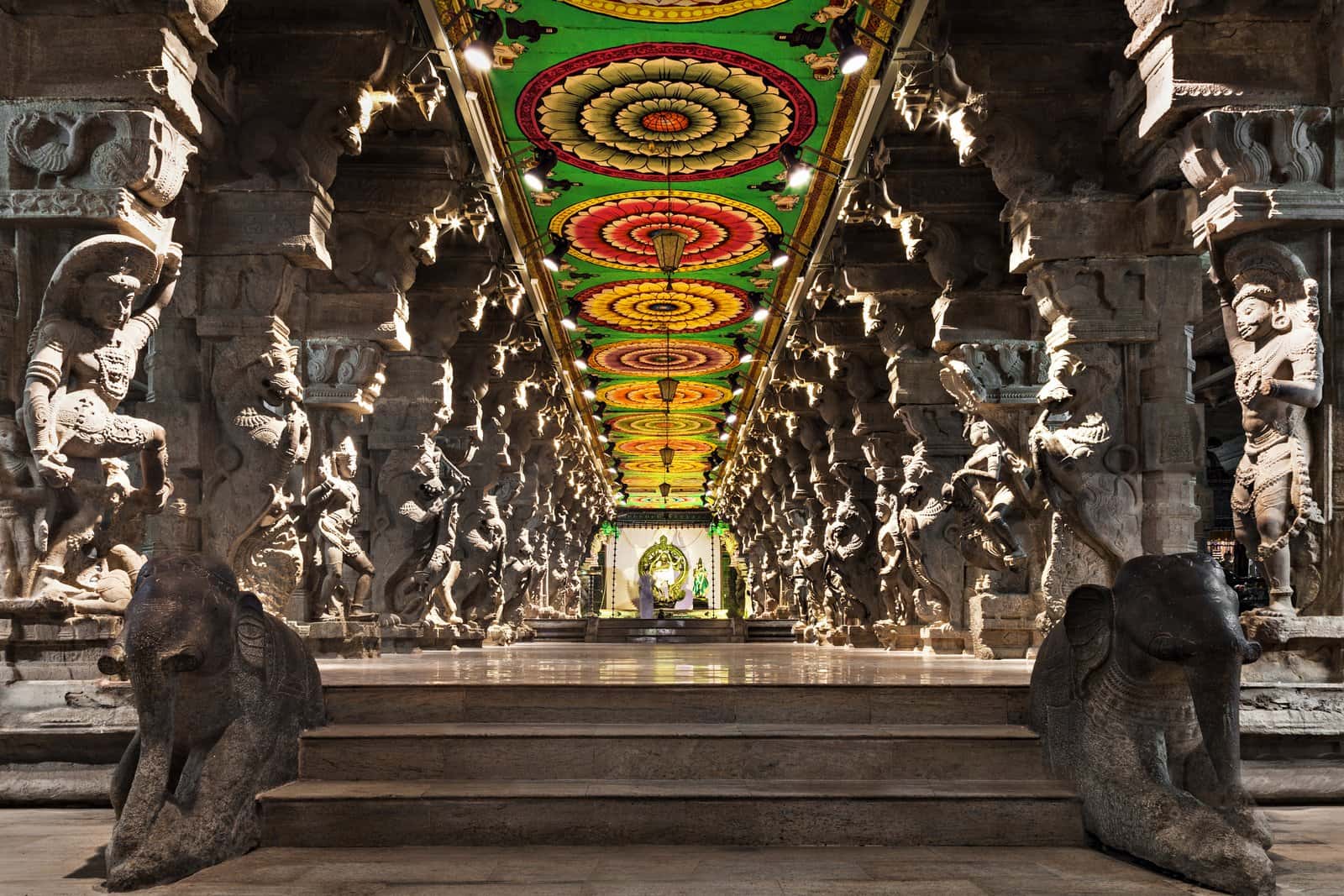
Madurai Travel Guide
The best months are October to March , and the best hours of any day are early morning and evening . One thing to plan around: the Meenakshi temple closes its inner shrines...
When to visit Madurai, and the midday rule
The best months are October to March, and the best hours of any day are early morning and evening. One thing to plan around: the Meenakshi temple closes its inner shrines through the long midday break.
- October to March: cool and pleasantThe comfortable season, warm by day and mild in the mornings and evenings. This is the easiest time for the temple, the palace and the day trips onward to Rameshwaram and Kanyakumari, and the best window for older travellers who feel the heat.
- Go early or in the eveningThe Meenakshi temple opens about 5 am and the morning is calm and cool, with the stone gentle underfoot before the sun is high. The evening, around the lamp-lit rituals and the night ceremony, is the other lovely window. The early afternoon is hot and the inner shrines are shut for the midday break, so do not plan darshan then.
- April to June is hot and humidMadurai gets genuinely hot in summer, often into the high 30s and past 40 degrees Celsius. The temple's stone floors, which you walk barefoot, get fierce by midday, so this is the season to stick firmly to the early and late hours and carry water and sun cover.
- July to October: monsoon and shoulderThe southwest and then the northeast monsoon bring some relief and lower temperatures, though the humidity stays. Showers are usually short, the city is greener and quieter, and rooms are easier to find, which makes the shoulder months a fair trade for travellers who do not mind a little rain.
Madurai's great Chithirai festival fills the city for about two weeks in April and May. In 2026 it ran about 19 April to 5 May, with the Meenakshi Thirukalyanam celestial wedding about 28 April, the temple-car (chariot) procession soon after, and the Kallazhagar Vaigai river entry about 1 May. It is one of South India's most spectacular festivals, but it draws well over a million pilgrims, so accommodation and darshan are stretched and the streets are packed. The dates shift each year with the Tamil month of Chithirai, so reconfirm the official dates before you book. If you want to see it, plan and book early; if you want a calm darshan, plan around it.
How to reach Madurai, and getting around
Madurai has its own airport and a central railway junction, so it is easy to reach by air from across India and by fast train from Chennai. In town, autos and a short walk cover most of what you need.
- By airMadurai airport (IXM) is about 10 to 12 km from the city, with frequent flights from Chennai (about one hour), Bengaluru, Hyderabad, Mumbai and Delhi. It has a long-running direct international service to Colombo (SriLankan Airlines), with a Dubai service launching, and it was granted full international-airport status in March 2026, so more overseas connections should grow as customs and immigration facilities are completed; confirm the exact route before booking. A taxi into town takes about 20 to 30 minutes.
- By fast train from ChennaiTrains such as the Tejas, Vaigai and Pandian reach Madurai Junction in about 6.5 to 8 hours. The junction sits right in the heart of the old city, a short ride from the temple, which makes the train a comfortable and scenic way to arrive. Book on IRCTC a little ahead in season.
- By roadFrom Chennai it is about 460 to 500 km and 8 to 10 hours via NH38 and NH44 through Tiruchirappalli (Trichy). Most visitors fly or take the train and use a car locally; we arrange a car with an experienced driver for the temple loop onward to Rameshwaram and Kanyakumari.
- Getting around townThe temple, the bazaars, Puthu Mandapam and the junction are close together and walkable. Auto-rickshaws handle the slightly longer hops to the palace, the Gandhi museum and the airport; agree the fare first or insist on the meter, and app cabs work in the city too.
Fly into Chennai, the main South India gateway, then take a one-hour flight or a fast train down to Madurai. There are no direct long-haul flights to Madurai itself, so route through Chennai or another Indian metro.
Madurai has a long-running direct service from Colombo and a launching Dubai route, with more overseas connections expected now that it is a designated international airport; these mainly serve the Tamil diaspora and can save the Chennai change. Otherwise route through Chennai and continue by air or rail. Confirm the exact route before booking.
Madurai is well linked by air from the big metros and by train from across Tamil Nadu and the south. It is the natural base for the Madurai, Rameshwaram and Kanyakumari temple loop.
The temple, the palace, the museum and what you pay
Madurai is the great Meenakshi Amman Temple first, then the Nayak palace, the Gandhi museum and the old bazaars. Most of it is free or costs very little, so the planning is about timings, not tickets.
- Meenakshi Amman TempleThe soaring, painted-tower temple at the heart of the city, free to enter and open about 5 am to 12:30 pm and 4 pm to 9:30 pm. A special darshan ticket of about 50 to 100 rupees skips the long general queue. See the next section for the temple in full, including the no-phone cloakroom rule, the dress code and the free night ceremony.
- Thirumalai Nayakkar MahalThe grand 17th-century Nayak palace, open about 9 am to 5 pm; entry is a few rupees for Indians and about 50 for foreign nationals. In the evening it hosts a separately-ticketed sound-and-light show (about 50 rupees for adults, about 25 for children) telling Madurai's story, in English about 6:45 pm and Tamil about 8 pm.
- Gandhi Memorial MuseumA moving, free museum in a 17th-century palace, best known for displaying a piece of the bloodstained dhoti Mahatma Gandhi was wearing when he was assassinated in 1948. It is open about 10 am to 1 pm and 2 pm to 5:45 pm and is closed on Fridays, so plan around that.
- The old bazaars and Puthu MandapamThe pillared Puthu Mandapam hall just outside the temple's east tower is full of tailors, cloth and craft stalls, and the lanes around the temple are the place for Madurai cotton, brass and a cool glass of jigarthanda. Browse gently and there is no pressure to buy.
The Meenakshi temple and the Gandhi museum are free, the thousand-pillar art museum and the palace cost only a few rupees, and the palace light show is about 50 rupees. The real planning is around timings, the temple's midday break, the museum's Friday closing and the evening shows, rather than ticket prices. For the full-on festival experience, see the Chithirai note in the season section.
The Meenakshi Amman Temple, and how to visit it well
This is one of India's greatest living temples, a city within a city of soaring gopuram towers and a famous thousand-pillar hall. It is free, but it is a working temple with real rules, and most websites get the details wrong. Here is how to do it properly.
- Timings and the midday breakThe temple is open about 5 am to 12:30 pm and again about 4 pm to 9:30 pm (some days to about 10 pm), with the inner shrines closed through the long midday break. Come in the morning for calm and cool, or the evening for the lamp-lit rituals and the night ceremony. Avoid arriving in the early afternoon to a shut sanctum.
- Free entry, special darshan and VIPGeneral darshan is free but can mean a one to three hour wait on a busy day. A special darshan ticket is about 50 rupees for one deity and about 100 rupees for both, and a higher VIP or quick-darshan tier runs roughly 200 to 300 rupees; these cut the wait to roughly fifteen to thirty minutes and are well worth it on a crowded day or for a senior.
- No phones or cameras, and the cloakroomCameras, mobile phones, smartwatches and power banks are not allowed inside. Deposit them at the cloakroom and locker near the entrance, where a token system keeps it orderly, then go in carrying only your money and ticket. If you can, leave the phone at the hotel and save yourself the queue.
- Dress code, bare feet and the heatThe dress code is enforced: shoulders and knees covered, no shorts or sleeveless tops, and footwear removed before you enter. Carry a small cloth bag for your shoes and socks, and remember the stone gets very hot by midday, which is another reason to come in the cool of morning or evening.
- Can non-Hindus enter?Non-Hindus and foreign visitors are welcome in most of the complex, with its towers, halls and sculpture, and foreign visitors are commonly asked for an entry ticket of about 50 rupees. The two innermost sanctums, where the Meenakshi and Sundareswarar idols reside, are reserved for Hindus, but there is an abundance of art and atmosphere open to everyone.
- What to see insideThe fourteen towering gopurams covered in thousands of painted figures, the golden Potramarai (Golden Lotus) tank, the Meenakshi and Sundareswarar shrines, and the Aayiram Kaal Mandapam, the thousand-pillar hall that has been an art museum since 1966 (about 5 rupees for Indians, about 50 for foreign visitors, roughly 9 am to 6 pm).
Each night, about 9 pm to 9:30 pm, the free Palliyarai (bedchamber) ceremony carries Lord Sundareswarar in a silver palanquin to Goddess Meenakshi's chamber, with nadaswaram music, drums and chant. Be inside by about 8:45 pm and simply follow the procession, with no phone in hand. Between the midday break and the no-phone rule, an unplanned drop-in often disappoints, so go in the morning or evening, leave your phone at the cloakroom, dress modestly, and stay for the night ceremony. That is the difference between a quick look and a real visit.
Signature experiences and the Madurai food trail
Beyond the darshan, these are the experiences people remember, from the free night ceremony to a late-evening food walk, and how to arrange them.
- The free night ceremony at the templeThe Palliyarai procession, about 9 pm, is the single most atmospheric thing to do in Madurai and it costs nothing. Leave your camera at the hotel or the cloakroom, be inside by about 8:45 pm, and let the music and lamplight carry the evening.
- A Madurai night-food walkMadurai is a famous late-eating city. Try jigarthanda, a cool drink of milk, almond gum, sarsaparilla syrup and ice cream, then the local kari dosa (a dosa layered with egg and spiced minced mutton), bun parotta and Madurai-style non-vegetarian fare in the evening lanes, many of which stay busy long after other cities sleep. A guided evening food walk near the temple is a tasty couple of hours.
- The palace sound-and-light showAfter dark, the Thirumalai Nayakkar Mahal lights up for a sound-and-light show on Madurai's history (about 50 rupees adult, about 25 child; English about 6:45 pm, Tamil about 8 pm). It pairs neatly with an early dinner before the temple night ceremony.
- Samanar Hills and the Jain cavesAbout 10 to 15 km out, the Samanar Hills hold 2,000-year-old Jain rock-cut carvings and inscriptions, with quiet countryside views from the top. A good, uncrowded half-morning for anyone who likes history and a gentle climb.
- Azhagar Kovil and the temple loopThe Azhagar Kovil Vishnu temple at the foot of the hills (the home of the Kallazhagar deity that descends to the Vaigai during Chithirai), and the older Koodal Azhagar temple in town, round out the temple day. With more time, Madurai is the launch point for Rameshwaram and Kanyakumari.
If you do only one thing slowly, make it an evening at the temple: arrive for the lamp-lit rituals, leave your phone at the cloakroom, and stay for the Palliyarai night ceremony at about 9 pm. Pair it with a jigarthanda and a late food walk through the lanes and you have the truest taste of Madurai, the living temple and the night-eating city, both free or nearly so, and both impossible to copy from a guidebook.
Where to stay in Madurai, and how many nights
Stay near the temple to walk to everything and catch the night ceremony, or a little out for quiet and comfort. One to two nights covers the city, with more if you add the loop.
- Temple-side and West Masi streets: in the thick of itThe lanes and hotels ringing the Meenakshi temple put you within a short walk of the gopurams, the night ceremony, Puthu Mandapam and the food streets. Atmospheric and convenient, but busier and noisier, and rooms can be plain. Best for pilgrims and first-timers who want to step straight into the scene.
- Around the junction and the bypass: comfort and quietA short ride from the temple, the bigger hotels near the railway junction and along the ring road and Alagar Koil road offer more space, pools and calm, which suits families, couples and older travellers. You trade a walk to the temple for a quieter night and a better room.
- Room budgetsSimple rooms near the temple run from roughly 800 to 2,000 rupees, comfortable mid-range hotels about 2,500 to 5,000 rupees, and the better business and heritage hotels about 6,000 to 12,000 rupees and up. All of these rise sharply during the Chithirai festival, so book well ahead for those dates.
- How many nightsOne full day and night covers the temple morning and evening, the night ceremony, the palace show and a food walk. A second night adds the Gandhi museum, the Samanar Hills and a slower pace, or sets you up to begin the Rameshwaram and Kanyakumari loop. Half a day in transit only lets you glimpse the temple.
During the Chithirai festival in April and May, hotels across Madurai are booked out months in advance at several times the normal rate, and the temple-side lanes are the first to fill. If your dates fall on the festival, reserve very early, or stay a little out of the centre and travel in for the processions.
Madurai costs and a realistic daily budget
Madurai is gentle on the wallet because the headline sight is free. Here is what the paid extras cost and a rough daily budget, so you can plan without surprises.
- The fixed-price thingsThe Meenakshi temple and the Gandhi museum are free. Special darshan is about 50 rupees for one deity, about 100 for both, and a VIP or quick-darshan tier about 200 to 300; the thousand-pillar art museum is about 5 rupees for Indians and about 50 for foreigners; the palace is a few rupees (about 50 for foreigners) and its light show about 50 rupees adult and about 25 child. Foreign visitors are commonly asked about 50 rupees to enter the temple complex.
- A rough daily budgetExcluding your room and long-distance transport, plan on roughly 800 to 1,500 rupees a day as a budget traveller, about 2,000 to 3,500 rupees mid-range, and about 4,000 rupees and up for a comfortable day with a car, a guide and good meals. Madurai's free temple keeps sightseeing costs low whatever your style.
- Guides and carsA licensed local guide for the temple is a worthwhile spend and steers you past the commission shops; agree the fee in advance. A car with driver for the day, or for the onward loop to Rameshwaram and Kanyakumari, is the comfortable way to do the wider pilgrimage, and we can arrange both.
- Cash and cardsCards and UPI work in hotels and bigger restaurants, and ATMs are easy in the city, but the bazaar stalls, the autos, the temple offerings and the food carts run on cash, so carry small notes. English is widely understood in the tourist and hotel trade.
Because the temple is free, the only real choices in Madurai are whether to buy a special darshan to skip the queue (about 50 to 100 rupees, or 200 to 300 for the VIP tier), a guide to read the temple for you, and a car for the wider loop. Decide those three in advance and the rest of the city costs very little, which makes Madurai one of the better-value temple stops in the south.
Practical logistics: food, water, money, SIM and language
The small things that make a Madurai day smooth, from the cloakroom routine at the temple to water, ATMs, the late-night food and getting around.
- The temple cloakroom routinePlan your temple visit knowing your phone, camera, smartwatch and power bank go into the cloakroom under a token. Carry a small bag for your shoes, a little cash and your darshan ticket, and you will move through quickly. Doing the deposit calmly at the start saves a scramble at the gate.
- Food, water and late-night eatingMadurai eats late, so dinner in the temple lanes is easy even after the night ceremony. Stick to fresh, hot, busy stalls and restaurants, drink bottled or filtered water, and ease into the spicier non-vegetarian fare if you are not used to it. Jigarthanda is the cool antidote to a hot day.
- Money, ATMs and SIMATMs are plentiful and cards work in hotels and larger places, but keep cash for autos, offerings, stalls and the food carts. Get an Indian SIM or eSIM at the airport on arrival; coverage in the city is good for maps, calls and cabs.
- Language and getting aroundTamil is the local language and English is widely understood in the tourist and hotel trade, so communicating is easy. The temple core is walkable; use autos or app cabs for the palace, the museum and the airport, and agree the fare first with autos.
Safety, the commission-shop touts, and staying well
Madurai is warm and welcoming, but a working temple city has its traps and its heat. A little awareness keeps the day happy and comfortable.
- The commission shops and self-appointed guidesAround the temple and the palace, self-appointed guides and shopkeepers earn commission by steering you to overpriced emporiums, sometimes selling ordinary craft as antique or rooftop access for a temple view at an inflated price. Buy only if you want to, from a shop you chose, and use a licensed guide arranged in advance.
- Heat, bare feet and waterThe biggest health issue in Madurai is simply the heat. Walk the temple barefoot in the cool of morning or evening, not the midday, carry water and sun cover in the warm months, and pace the day. Drink bottled or filtered water and take the usual care with new street food.
- Crowds and the festival crushMadurai is generally a safe, easygoing city, and the main risk is the crush during big darshan times and the Chithirai festival. Keep valuables close in dense crowds, keep children in hand, and use the special darshan to avoid the longest, tightest queues.
- Temple etiquetteDress modestly with shoulders and knees covered, remove footwear at the gate, do not photograph (and you cannot, since phones go to the cloakroom), step aside during rituals, and remember the two inner sanctums are for Hindus. Quiet respect is all that is asked, and it is warmly returned.
Madurai is broadly comfortable for solo and women travellers, with the usual city-crowd common sense. The friction is sales pressure from touts and the density of festival crowds rather than anything sinister. Dress modestly near the temple, be firm and unbothered with the commission touts, prefer the busier lit lanes after the night ceremony, and the temple city is one of the gentler introductions to the Tamil south to do on your own.
Madurai for every kind of traveller, and on access
Madurai rewards very different visitors in different ways. Here is what it offers you, and the one tip that matters for each, including how a senior pilgrim does it comfortably.
- Senior travellers, pilgrims and on accessibilityVery doable with planning. Visit the temple in the cool early morning or evening when the barefoot stone is gentlest, buy the special darshan to shorten the queue, and keep the palace and museum for a relaxed second outing. The old complex has uneven floors and some steps and no easy step-free route, so go slowly, lean on a guide, and we pace the temple loop so it never feels rushed.
- Families with childrenThe painted towers, the temple elephant blessing and the thousand-pillar hall keep children curious, and the free Gandhi museum and the palace light show add variety. Keep a water bottle handy, avoid the midday heat, and remember small children also need to go barefoot inside.
- CouplesThe evening rituals and the Palliyarai night ceremony are quietly romantic, and a Madurai food walk with a glass of jigarthanda makes a lovely end to the day. An overnight rather than a flying visit lets you catch both the morning calm and the night ceremony.
- First-time South India visitorsMadurai is the perfect introduction to the living temples of the south, and the easy base for the Rameshwaram and Kanyakumari loop. English is widely understood, cards and ATMs are easy, and the free temple keeps costs low, though carry cash for offerings and small stalls.
- Backpackers and budget travellersAlmost everything that matters is free or cheap, the train from Chennai is inexpensive, and the lanes around the temple have simple rooms and excellent cheap food within walking distance of the gopurams. The late-night eating means you never go hungry.
- PhotographersRemember you cannot photograph inside the main temple, since phones and cameras go to the cloakroom, so shoot the gopurams from the streets and rooftops, the Puthu Mandapam market, the palace and the festival processions. Early light on the towers is the cleanest, and ask before photographing people.
A suggested Madurai itinerary
How to shape one or two days so you catch the temple at the right hours, the night ceremony, and the loop onward if you have time.
- Day one, morningStart early at the Meenakshi temple before the midday break, depositing your phone at the cloakroom, taking the special darshan if it is busy, and giving yourself time for the gopurams, the Golden Lotus tank and the thousand-pillar museum. Break for breakfast and a jigarthanda in the lanes outside.
- Day one, afternoon and eveningRest through the hot middle of the day, then see the Thirumalai Nayakkar Mahal and catch its sound-and-light show in the early evening. Have an early dinner, then return to the temple for the lamp-lit rituals and the Palliyarai night ceremony at about 9 pm.
- Day two, if you have itVisit the free Gandhi museum (not on a Friday), drive out to the Samanar Hills Jain caves or the Azhagar Kovil temple, and shop the Puthu Mandapam and the cotton lanes. A second day turns a quick temple stop into a proper feel for the city, or sets up the onward loop.
- Add the temple loopWith more days, drive on to Rameshwaram (about 170 km, 3.5 to 4 hours) and Kanyakumari (about 240 km, about 5 hours) for the classic Tamil Nadu pilgrimage. Three to four days covers Madurai and both, unhurried, and we arrange the car and the pacing.
Two timing traps break a tight Madurai plan: arriving at the temple in the early afternoon when the inner shrines are shut for the midday break, and turning up at the Gandhi museum on a Friday, when it is closed. Build the temple into the morning or evening, keep the hot middle of the day for the palace, a rest or a long lunch, and check the museum day, and your itinerary will flow.
The real questions travellers ask about Madurai
Straight answers to the questions that come up again and again on traveller forums, so you arrive already knowing the score.
- Is the temple really closed in the middle of the day?Yes. The inner shrines close through a long midday break, with the temple open about 5 am to 12:30 pm and again about 4 pm to 9:30 pm. Plan darshan for the morning or the evening, never the early afternoon.
- Can I take my phone or camera inside?No. Cameras, phones, smartwatches and power banks are not allowed inside and must go to the cloakroom and locker near the entrance under a token. Carry only money and your ticket, and if you can, leave the phone at the hotel to skip the queue.
- Can non-Hindus and foreigners go in?Yes, into most of the complex, with its towers, halls and sculpture, and foreign visitors are usually asked for about 50 rupees to enter. The two innermost sanctums where the idols reside are reserved for Hindus, but there is plenty of art and atmosphere open to all.
- What does it cost to skip the queue?General darshan is free. A special darshan ticket is about 50 rupees for one deity and about 100 for both, and a VIP or quick-darshan tier about 200 to 300, each cutting the wait from one to three hours to roughly fifteen to thirty minutes. Worth it on a busy day or for a senior.
- Is the Chithirai festival worth it or just too crowded?It is one of South India's great spectacles, the celestial wedding and the river procession drawing over a million people, but it is genuinely crowded and rooms vanish months ahead. Come for it on purpose with everything booked, or plan around the two festival weeks for a calm darshan.
- How many days, and can I do the loop from here?One full day and night does Madurai well; two is comfortable. Madurai is the base for the loop, with Rameshwaram about 170 km (3.5 to 4 hours) and Kanyakumari about 240 km (about 5 hours), so three to four days covers all three at an easy pace.
Planning Madurai from abroad
Madurai is the gateway to the great Tamil Nadu temple loop and a deeply meaningful trip for the Tamil diaspora. A little planning makes a living temple easy and comfortable to visit.
- Route through Chennai, or fly direct if you canMost overseas visitors fly into Chennai and continue to Madurai by a one-hour flight or a fast train. If you are coming from Colombo there is a long-running direct flight, a Dubai service is launching, and as a newly designated international airport (March 2026) Madurai should add more overseas routes over time; confirm the exact route before booking.
- Know the temple etiquette before you goThe Meenakshi temple is free but it is a working place of worship. No phones or cameras inside (everything goes to the cloakroom under a token), modest dress with shoulders and knees covered, footwear removed at the gate, and the two inner sanctums reserved for Hindus, though the rest of the complex is open to all. Mornings and evenings are the calm, cool hours.
- Do the Tamil temple loopMadurai pairs naturally with Rameshwaram (about 170 km) and Kanyakumari (about 240 km) in the classic South India pilgrimage loop, and we can extend it to the wider Tamil Nadu temple trail. It is the most rewarding first taste of the Dravidian south, and a meaningful homecoming for the Tamil diaspora.
- Gentle and senior-friendlyFor parents and grandparents, we plan the temple for the cool hours, use the special darshan to cut the queue, and keep the days unhurried, so an older pilgrim can take the visit at an easy pace. Just remember the midday break, the bare feet on stone, and the festival crowds.
Money, connectivity and timing for foreign visitors
The practical basics an overseas traveller needs for a temple city: cash, cards, a SIM, and how many days to give Madurai on a wider South India trip.
- Carry cash, use cards where you canCards and UPI work in hotels and bigger restaurants, and ATMs are easy across the city, but the autos, the temple offerings, the bazaar stalls and the food carts run on cash, so keep small notes. Foreign visitors should budget the small temple, museum and palace entry fees of about 50 rupees each.
- Get a SIM at the airportPick up an Indian tourist SIM or an eSIM when you land in Chennai or at Madurai airport rather than hunting for one later. Coverage in Madurai is good for maps, calls and cabs, which makes getting around simple.
- How long to give it on a bigger tripOn a South India trip, one to two nights in Madurai is the right weight: enough for the temple morning and evening, the night ceremony and the palace, before you continue to Rameshwaram, Kanyakumari, or back to Chennai. Add a night if you want the museums and the Jain caves too.
- Time your visit to your comfortOctober to March is the comfortable window for a temple city you walk barefoot. If you want the spectacle of the Chithirai festival, plan around the Tamil month of Chithirai (April to May) and book far ahead; if you want calm, come in the cooler, quieter weeks and have the early mornings almost to yourself.
Madurai is an unusually rewarding first stop in the Tamil south: the Meenakshi temple is a living, working masterpiece rather than a monument behind a rope, the city is walkable around it, English is widely understood, and the costs are low. Give it a night or two, learn the cloakroom and barefoot routine once, and the rest of the Dravidian temple trail, Rameshwaram, Kanyakumari and beyond, opens up easily from here.
Meenakshi the warrior queen, and the marriage the city still celebrates
In the old story Madurai's goddess was born a princess of the Pandya kingdom, Meenakshi, the fish-eyed one, who came into the world with three breasts and a prophecy that the third would vanish when she met her lord. She grew into a warrior queen who conquered the worlds, until she met Lord Shiva himself, as Sundareswarar, on Mount Kailash, the third breast dissolved, and she knew him. Their marriage, the Thirukalyanam, is said to have taken place at Madurai with the gods in attendance, and the city has celebrated that celestial wedding ever since at the Chithirai festival, when the temple stages the divine marriage and over a million pilgrims fill the streets. The Meenakshi Amman Temple enshrines them both, and unusually the goddess, not the god, is the presiding deity the city is named for. This is living temple tradition retold from the temple's own histories and the Tamil Sangam heritage of Madurai, one of the oldest continuously inhabited cities in India; it is sacred legend, not documented history, and no single dated source can be cited for the myth itself.
Planning a Madurai trip?
Our Tamil Nadu travel experts plan your full journey for you: route, hotels, darshan timings and transport. You get a free day-by-day plan and an exact quote on WhatsApp, usually within a few hours. No payment is needed to get your plan.
Tour packages that visit Madurai
Every journey below is private, hand-crafted and fully customizable. Tell us your dates and we tailor the itinerary, the pace and the priests or guides around you.
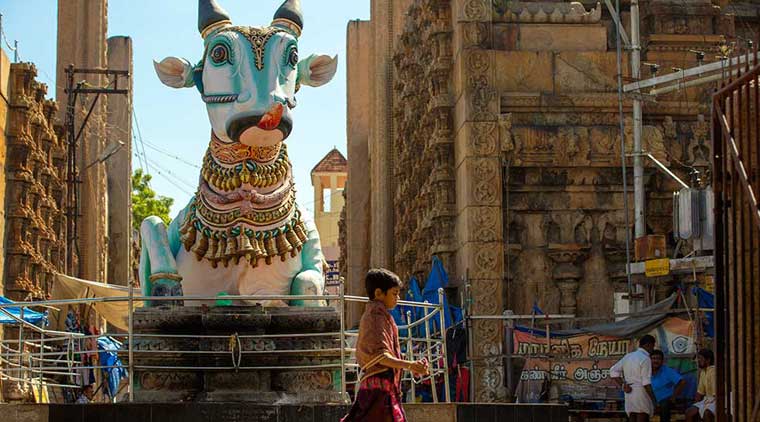 5D / 4N
Madurai Rameshwaram Kanyakumari Tour Package
- Visit Meenakshi Temple
- Visit Alagar Koil Temple
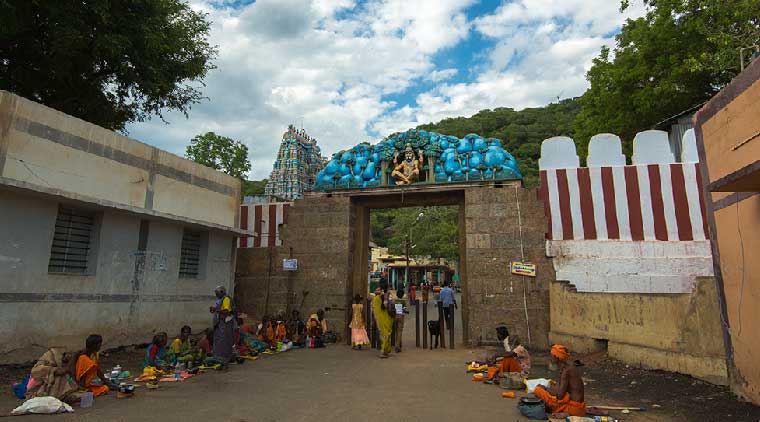 7D / 6N
Tirupati Madurai Rameshwaram Kanyakumari Tour Package
- Tirupati Balaji Temple
- Famous Annamalaiyar Temple
 6D / 5N
Bangalore Mysore Ooty Kodaikanal Tour Package
- Visit Famous Brindavan Garden
- Visit Bandipur National Park
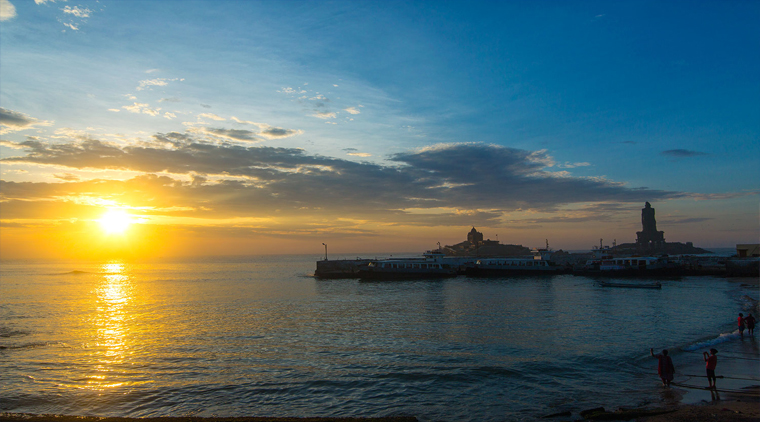 5D / 4N
Tamil Nadu Temples Tour
- Visit Srirangam Temple
- Visit Rock Fort Temple
 3D / 2N
Rameshwaram Jyotirlinga Tour Package
- Visit Meenakshi Amman Temple
- Visit Ramanathaswamy Temple
 6D / 5N
South India Temple Tour
- Visit Uchchi Pillaiyar Koil
- Visit Siva Temple
 4D / 3N
Kodaikanal Tour
- Green Valley View/Suicide Point
- Dolphin’s Nose
 4D / 3N
Kodaikanal Holidays
- Visit Coakers Walk, Green Valley View
- Visit Bear Shola Falls, Kurunji Temple
 13D / 12N
South India Tour
- Visit Shore Temple
- Visit Manakula Vinayagar Temple