 5D / 4N
 All World Heritage Sites
UNESCO World Heritage · Cultural · inscribed 2019
Jaipur City, Rajasthan
The walled city of Jaipur is not just a collection of monuments, it is a whole planned city that became a World Heritage Site in 2019. Sawai Jai Singh II drew it on paper in 1727 and built it in a few short years, and people still live, pray and trade in it exactly as he intended. Walk its straight streets once and you will see why the world calls it the Pink City.
The story of this place
In 1727, Maharaja Sawai Jai Singh II decided to move his capital down from the hill fort of Amber to the open plain below. Most Indian cities of that time had grown slowly, lane by lane, over centuries. Jaipur was different. The king and his architect planner Vidyadhar laid out the whole city at one go, on a grid of straight streets crossing at right angles, guided by the Prastara plan of the Vastu Shastra. Most of the city, its markets, its palaces and its public spaces, came up in just four years, from 1727 to 1731, and the king sent special invitations to traders across the land to come and settle in his new commercial capital.
The city was divided into large square sectors called chowkris, ringed by a city wall with nine gates. Where the main streets cross, the planners created big public squares called chaupars, something you will not find in any other old Indian city. The shops, havelis and temples along the main streets were built by the state itself, so every bazaar got the same neat, uniform face. UNESCO recognised this rare piece of planning in 2019 and placed the walled city on the World Heritage List.
And the famous pink colour? That came later. In 1876, Maharaja Sawai Ram Singh II had the whole city painted in this warm terracotta pink to welcome the Prince of Wales, the future King Edward VII. The colour suited the city so well that a rule was made to keep it, and the bazaars are repainted in the same shade to this day.
What you will see
Begin with the bazaars, because Jaipur was built as a trading city and the bazaars are its soul. Johari Bazaar glitters with kundan and meenakari jewellery, Bapu Bazaar sells textiles and mojari footwear, Tripolia Bazaar is known for bangles, and Chandpole Bazaar for marble carving. The city once housed what tradition calls the chattis karkhanas, the 36 craft industries, and many of those crafts, gemstone cutting, lac work, miniature painting and block printing, are still practised in the same streets.
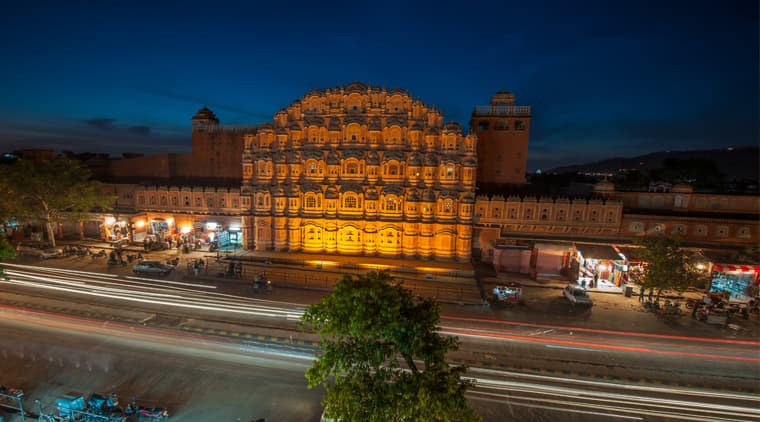
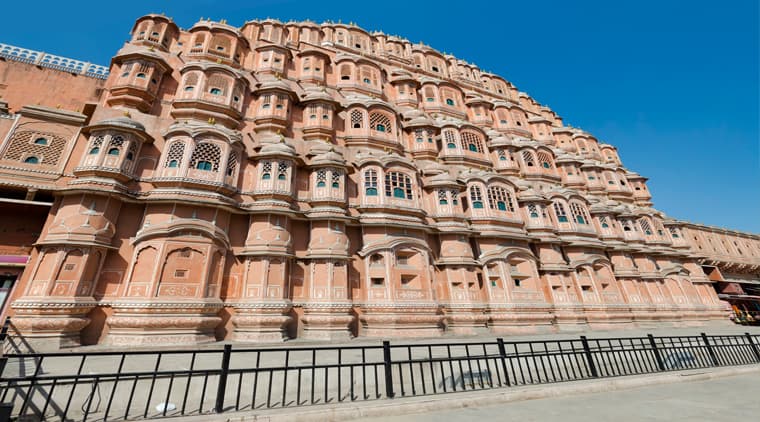
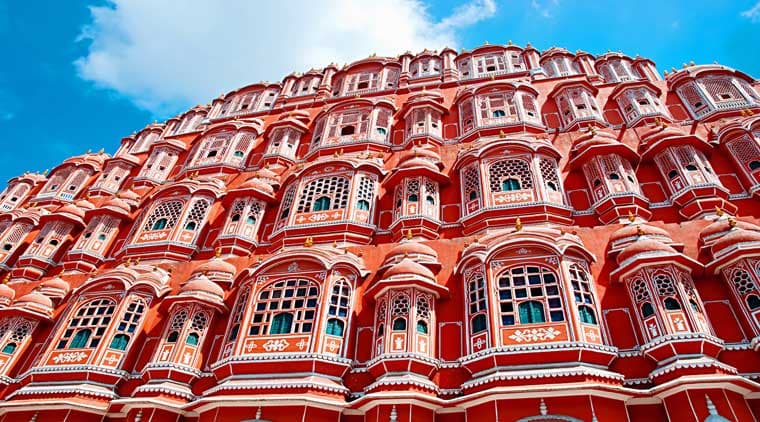
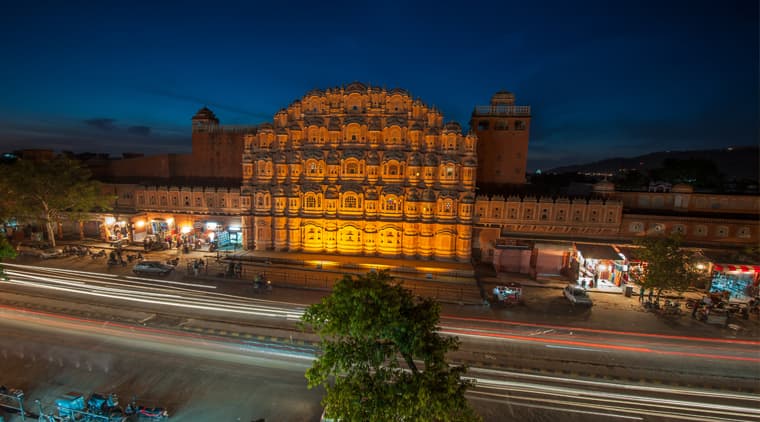
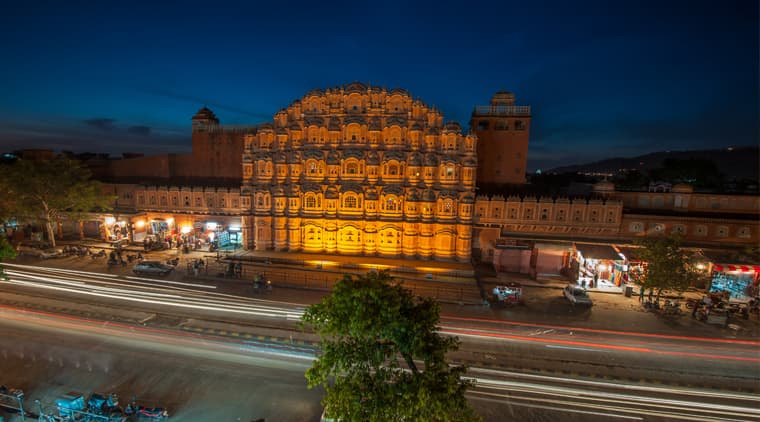
Inside the walled city you will also find its three most loved landmarks. The Hawa Mahal, built in 1799 by Maharaja Sawai Pratap Singh, raises its pink honeycomb face right on the main street, with rows of small jharokha windows from which the royal ladies once watched the processions below. The City Palace at the centre of the city is still the home of the former royal family, and its museum displays royal costumes, weapons and paintings. Beside it is the Jantar Mantar, the great stone observatory of Jai Singh II, which is a World Heritage Site in its own right and which we cover on a separate page.
Do not miss the Govind Dev Ji temple in the palace complex. Jai Singh II placed Lord Krishna here as the true ruler of Jaipur, and the aartis through the day draw devotees from the whole city. Standing in that crowd during morning darshan, you feel the living heart of the planned city.
Best time to visit
October to March is the pleasant season, when the days are mild and you can walk the bazaars in comfort. April to June is very hot in Rajasthan, and July to September brings the monsoon, which cools the city but can interrupt your walking plans.
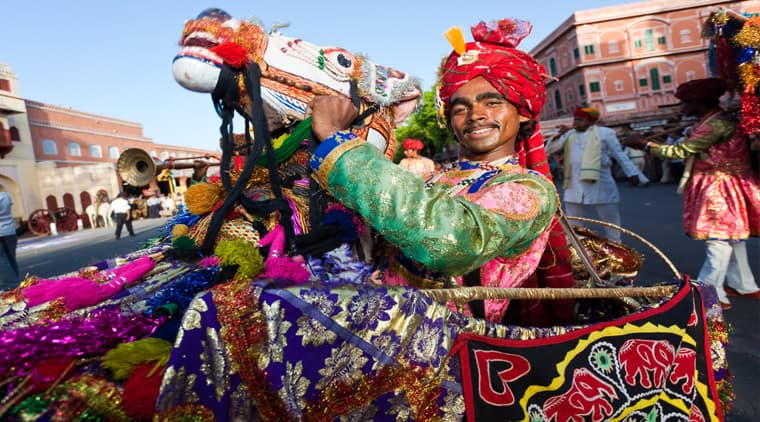
Within the day, come to the old city early. The monuments generally open around 9 in the morning and close by about 5 in the evening, and the first hour is the quietest. The bazaars wake up slowly and are liveliest from late morning till night. If your dates allow, time your visit with Teej or Gangaur, when traditional processions pass through the old city streets, a sight straight out of another century.
How to reach
Jaipur is one of the best connected cities in India. Jaipur International Airport at Sanganer is about 12 to 13 km from the walled city, with direct flights from major Indian cities and select international cities. Jaipur Junction is a major railway station with fast trains from Delhi, and by road the drive from Delhi is about 270 km, roughly 5 to 6 hours on the highway.
Most travellers see Jaipur as part of the Golden Triangle with Delhi and Agra, and that remains the most sensible first plan. Inside the walled city, let the car go. The old city is best explored on foot with an e-rickshaw or cycle rickshaw for the longer stretches, because the joy of Jaipur is in its street fronts, not behind a car window.
Tips from our travel experts
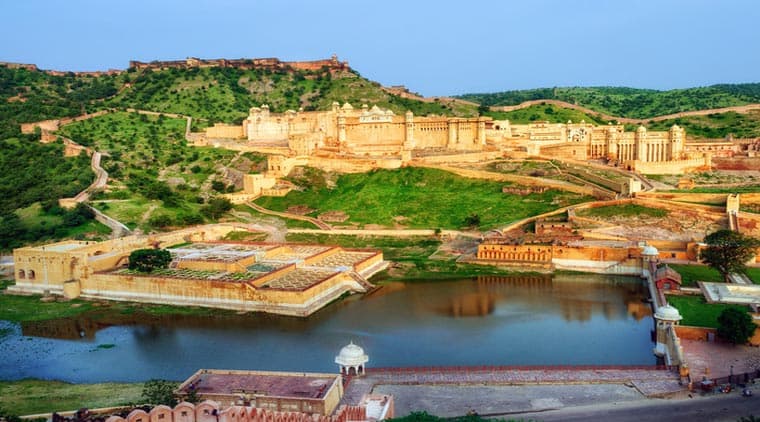
Keep two full days for Jaipur. One day for the walled city, its bazaars, Hawa Mahal, City Palace and Jantar Mantar, and one day for Amber Fort and the hill forts, which stand outside the walls and are a separate experience. Remember that the UNESCO listing is for the walled city itself, so give the streets as much time as the monuments.
The Rajasthan government sells a composite ticket that covers several monuments over two days, and tickets can also be booked on the official portal, obms-tourist.rajasthan.gov.in. There is an entry fee at each monument, please check the current rates there. Take a licensed guide at the City Palace and Jantar Mantar, both places open up completely when someone explains them.
When you shop, bargain politely in the bazaars, and for jewellery buy from established shops and ask for proper certification. For the classic photograph of the Hawa Mahal, stand across the street in the early light, the facade faces the morning sun.
For our NRI and OCI travellers
Carry your OCI card to the ticket counters, and keep some cash for the bazaars, though most shops now accept cards and UPI. Many of our overseas guests come to Jaipur for wedding shopping, and the old city is the right place for it, lehengas, jewellery, mojaris and gifts all within a few streets.
If your parents are travelling with you, hire a car for the day and use e-rickshaws inside the old city so that nobody has to walk long stretches in the sun. And keep one evening free for Govind Dev Ji aarti. For many families it becomes the memory of the trip.
Questions travellers ask us
What exactly is the UNESCO World Heritage Site in Jaipur?
The listed site is the whole walled city of Jaipur, the planned city of 1727 with its grid of streets, chaupars, bazaars, city wall and nine gates. Hawa Mahal, City Palace and Jantar Mantar all fall within it. Jantar Mantar is also a separate World Heritage Site on its own, and Amber Fort, outside the walls, is part of the Hill Forts of Rajasthan listing.
Why is Jaipur called the Pink City?
In 1876, Maharaja Sawai Ram Singh II had the city painted in a warm pink shade to welcome the Prince of Wales. The colour was kept by rule after that, and the bazaars of the old city are repainted in the same shade even today.
How much time do I need for the walled city?
Keep one full day. See Hawa Mahal, City Palace and Jantar Mantar in the morning, and give the afternoon and evening to the bazaars and the Govind Dev Ji temple. Add a second day for Amber and the other hill forts outside the walls.
Is there a common ticket for the Jaipur monuments?
Yes. The Rajasthan government offers a composite ticket covering several monuments, valid over two days, and tickets can be booked on the official portal obms-tourist.rajasthan.gov.in or at the counters. Rates change from time to time, so please check the current fee there.
What should I buy in the Jaipur bazaars?
Each bazaar has its speciality. Johari Bazaar for kundan and meenakari jewellery, Bapu Bazaar for textiles and mojari footwear, Tripolia Bazaar for bangles, and Chandpole Bazaar for marble work. Block printed fabrics and blue pottery are also classic Jaipur buys.
Is the walled city easy for elderly travellers?
Yes, with a little planning. The streets are flat because the city was built on the plain, and e-rickshaws cover the longer stretches. Visit in the cooler months, start early, and keep the middle of the day for the museum sections of the City Palace.
A note on the tours below. These packages travel close to Jaipur City, Rajasthan, but a package may not include a guided visit to the site itself. If you would like this place added to your journey, please tell your Way to India travel consultant and they will happily build it into your itinerary for you.
Tours where you stay right by it
5D / 4NYou stay at Jaipur
 15D / 14N
Agra Rajasthan Tour Package From Delhi
● Starts Delhi
From₹79,393* / person
Explore →EMI from ₹3,887/mo
You stay at Jaipur
 8D / 7N
You stay at Jaipur
 8D / 7N
Delhi Agra Jaipur Udaipur Tour Package
● Starts Delhi
From₹41,357* / person
Explore →EMI from ₹2,025/mo
You stay at Jaipur
 5D / 4N
You stay at Jaipur
 7D / 6N
You stay at Jaipur
 7D / 6N
Gangaur Festival Jaipur
From₹35,923* / person
Explore →EMI from ₹1,759/mo
You stay at Jaipur
 7D / 6N
Golden Triangle and Gangaur Festival Tour
● Starts Delhi
From₹35,923* / person
Explore →EMI from ₹1,759/mo
You stay at Jaipur
 9D / 8N
Golden Triangle and Khajuraho Dance Festival Tour
From₹46,791* / person
Explore →EMI from ₹2,291/mo
You stay at Jaipur
 9D / 8N
Golden Triangle & Khajuraho Dance Festival Tour
● Starts Delhi
From₹46,791* / person
Explore →EMI from ₹2,291/mo
You stay at Jaipur
 6D / 5N
You stay at Jaipur
 6D / 5N
You stay at Jaipur
 5D / 4N
You stay at Jaipur
 4D / 3N
You stay at Jaipur
 4D / 3N
You stay at Jaipur
 4D / 3N
You stay at Jaipur
 8D / 7N
You stay at Jaipur
 9D / 8N
You stay at Jaipur
 9D / 8N
You stay at Jaipur
 9D / 8N
You stay at Jaipur
 9D / 8N
You stay at Jaipur
 10D / 9N
You stay at Jaipur
 8D / 7N
You stay at Jaipur
 10D / 9N
Golden Triangle Tour With Tiger Safari
● Starts Delhi
From₹52,225* / person
Explore →EMI from ₹2,557/mo
You stay at Jaipur
 7D / 6N
You stay at Jaipur
 9D / 8N
You stay at Jaipur
 11D / 10N
Golden Triangle Tour With Varanasi And Khajuraho
● Starts Delhi
From₹57,658* / person
Explore →EMI from ₹2,823/mo
You stay at Jaipur
 7D / 6N
You stay at Jaipur
 9D / 8N
Golden Triangle with Ranthambore & Bharatpur Luxury Group Tour
● Starts Delhi
From₹46,791* / person
Explore →EMI from ₹2,291/mo
You stay at Jaipur
 5D / 4N
Golden Triangle with Ranthambore Tour
From₹25,056* / person
Explore →EMI from ₹1,227/mo
You stay at Jaipur
 14D / 13N
You stay at Jaipur
 10D / 9N
You stay at Jaipur
 12D / 11N
You stay at Jaipur
 4D / 3N
You stay at Jaipur
 5D / 4N
Jaipur Ajmer Pushkar Tour Packages From Delhi
● Starts Delhi
From₹25,056* / person
Explore →EMI from ₹1,227/mo
You stay at Jaipur
 3D / 2N
You stay at Jaipur
 3D / 2N
You stay at Jaipur
 4D / 3N
You stay at Jaipur
 2D / 1N
You stay at Jaipur
 8D / 7N
You stay at Jaipur
 8D / 7N
You stay at Jaipur
 7D / 6N
You stay at Jaipur
 4D / 3N
You stay at Jaipur
 11D / 10N
You stay at Jaipur
 9D / 8N
You stay at Jaipur
 10D / 9N
You stay at Jaipur
 10D / 9N
You stay at Jaipur
 9D / 8N
Rajasthan Tour By Car
From₹46,791* / person
Explore →EMI from ₹2,291/mo
You stay at Jaipur
 12D / 11N
You stay at Jaipur
 7D / 6N
You stay at Jaipur
 7D / 6N
You stay at Jaipur
 3D / 2N
Ranthambore Jaipur Package
From₹14,188* / person
Explore →EMI from ₹695/mo
You stay at Jaipur
 10D / 9N
Wildlife Safari Near Delhi
From₹52,225* / person
Explore →EMI from ₹2,557/mo
You stay at Jaipur
 10D / 9N
You stay at Jaipur
 10D / 9N
Golden Triangle Tour with Jim Corbett National Park
● Starts Delhi
From₹52,225* / person
Explore →EMI from ₹2,557/mo
You stay at Jaipur
 8D / 7N
You stay at Jaipur
 8D / 7N
Pushkar Camel Fair
From₹41,357* / person
Explore →EMI from ₹2,025/mo
You stay at Jaipur