1
Mata Vaishno Devi Bhawan
Jammu and Kashmir
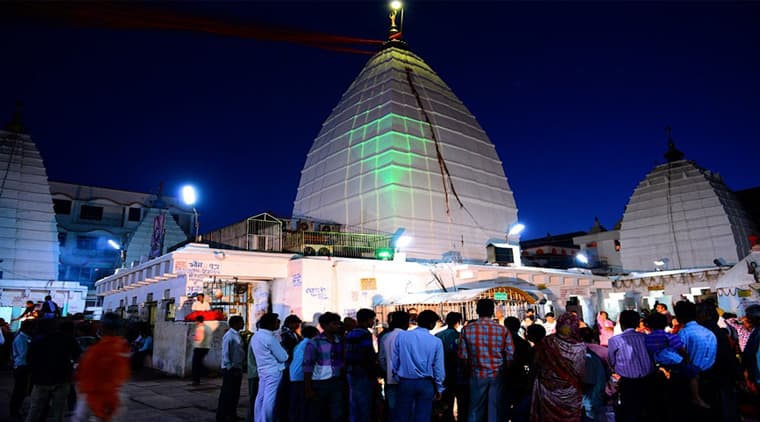
The holy cave at about 5,200 feet, where the Goddess is worshipped as three natural Pindis.
Best time: March to early May and September to November are the most pleasant. Navratri is the holiest but the most crowded.
Overview
Mata Vaishno Devi is one of the most loved shrines for Hindu families across the world. The holy cave sits in the Trikuta hills above Katra, in Reasi district, Jammu and Kashmir. The Shrine Board records show around 9.52 million pilgrims came in 2023. During Navratri, the crowds can rise close to one crore. This page is your honest, step by step guide. It is written for Indian families and for NRI and OCI families planning the yatra from the USA, the UK and Canada.
The holy cave stands at about 5,200 feet, which is around 1,500 metres. Inside, you do not see a statue. You see three natural rock forms called Pindis. Tradition holds these as Mahakali, Mahalakshmi and Mahasaraswati together. The middle Pindi is worshipped as Mata Vaishno Devi. The old cave is about 98 feet, roughly 30 metres, long. A small stream called Charan Ganga flows near the feet of the Pindis. The darshan is short and quiet. Devotees say it stays with you for years.
The Shri Mata Vaishno Devi Shrine Board has run the shrine since 1986. It manages the track, the darshan lines, the battery cars, the helicopter and the ropeway. Because one body runs it all, the yatra is safe and well ordered, even in peak season.
The base camp is Katra town. From Katra to the Bhawan is about 12 to 13 km. Most families take roughly 6 to 8 hours on foot at an easy pace, with rest stops. Fit walkers finish faster. Elders and children take longer, and that is fine.
There are two main tracks up. The older track goes by Banganga, Charan Paduka and Ardhkuwari. It has more shops, ponies and palki service. The newer path is the Tarakote Marg. It is a little longer, about 13 to 14 km, but the climb is gentler. The Tarakote Marg is kept free of ponies, so the air is cleaner. Battery cars run on parts of the new route. Both tracks meet higher up before the Bhawan. You can go up by one track and come down by the other.
This is the one step many families miss. Registration is free and it is required. You must get the Yatra slip, now issued as an RFID based Yatra Access Card. Collect it at the Yatra Registration Counter near the bus stand in Katra. The counter runs from about 5 am to 10 pm. You can also register online through the official Shrine Board portal at online.maavaishnodevi.org. No one is allowed to cross the Banganga check post without this slip. So finish your registration before you start the climb. Confirm the current process on the official site maavaishnodevi.org.
If your legs get tired, you have help at hand. Ponies and palki carriers work on the older track. A palki is carried by four men and is good for elders who cannot walk far. Pithoo porters can carry small children or bags. Battery cars run on set parts of the route, near the Bhawan and Himkoti side. These are simple electric vehicles that save you the steep last stretch. Rates change, so confirm the current rate on the official site before you plan.
The helicopter is the fastest way up, and NRI families with limited days often choose it. The flight goes from Katra to the Sanjichhat helipad. It takes only about 8 minutes in the air. From Sanjichhat, the Bhawan is about 2.5 km further. You walk down a gentle path or take a battery car for that last part. Book only through the official Shrine Board portal. Online booking usually opens from about 60 days down to a few days before travel. Seats sell out fast in Navratri and summer. Never buy from touts or unknown websites. Confirm the current fare and slots on the official site maavaishnodevi.org.
About halfway up you reach Ardhkuwari. This spot is also called Garbhjoon, the Womb Cave. Tradition says the Goddess sat here in meditation for nine months. The passage is narrow, and devotees crawl through it. Many see this as a symbol of rebirth. The line here can be long in peak days, as only a few can pass at a time. Plan for a wait. If you are short on time or cannot crawl, you may skip the inner passage and carry on.
Your yatra is not counted as complete until you visit Bhairon Nath. This temple sits above the Bhawan, about 2.5 to 3 km up a steep climb. Tradition tells that Bhairon Nath chased the Goddess and was beheaded here. Before he died, he was forgiven and given a boon. So devotees believe no yatra is whole without his darshan. You have two ways to reach it. You can climb the steep path on foot. Or you can take the ropeway, the aerial cable car, that has run since 2018. The ropeway ride is short, about 5 to 7 minutes each way. The cable car usually runs from about 9 am to 5 pm. Confirm the current rate and timing on the official site.
Keep your bags light. There is no strict dress code, but dress simply and cover your shoulders and knees out of respect. Warm clothes help, as the top is cold even when Katra is sunny. Free cloakrooms are at the Shrine Board guest houses in Katra and at the Bhawan. Two run all day at the Bhawan, one opposite the main queue gate and one at Sridhar Bhawan. You must deposit shoes, belts, leather items and other listed things before the cave. Video cameras are not allowed on the whole track. Mobile phones and electronic items are not allowed inside the cave area. Liquor, other intoxicants and non vegetarian food are not allowed on the yatra. Do not carry cash valuables in your deposited bag.
Spring and autumn are the kindest seasons for the climb. March to early May is pleasant. September to November is clear and cool. Navratri, in spring and autumn, is the holiest time, but the crowds are very large. Summer, from late May to July, is hot at Katra but the climb is still fine early and late in the day. Monsoon can bring landslips and slippery paths, so walk with care and follow Shrine Board notices. Winter is cold, and Sanjichhat and the upper track can get snow. Flights and the cable car can stop in bad weather. Always keep a spare day so weather does not spoil your darshan.
This yatra suits all ages with the right plan. For elders who cannot walk, use the palki, a pony, the battery car or the helicopter. Wheelchair support and porters can be arranged. Keep regular medicines in your hand bag, not the cloakroom. Carry water and simple snacks. Start early so you are not walking in the midday sun. Children do well with breaks and warm layers. Ask Shrine Board staff for help at any point, as they are used to helping families.
If you are flying in from the USA, the UK or Canada, plan your rail and road ahead. The nearest airport is Jammu Airport, about 50 km from Katra. From Jammu, buses run to Katra every 10 to 15 minutes and take about 2 hours. A taxi takes about 70 to 80 minutes. The best railhead is Shri Mata Vaishno Devi Katra station, in Reasi district. Fast Vande Bharat trains link Katra with New Delhi, Amritsar and Srinagar. Book your Yatra Access Card online before you land, so you save time in Katra. OCI and foreign passport holders are welcome for darshan like all pilgrims. Carry your passport and OCI card for hotel check in and any identity need.
If you have extra days, you can pair the yatra with nearby stops. Shiv Khori is a long natural Shiva cave about 80 km from Katra. From Ransoo base, the walk to the cave is about 3 km. The cave is about 200 metres long and holds a self formed Shiva lingam. Jammu city has the famous Raghunath temple, a large temple with many shrines. Patnitop is a cool hill spot on the way to Kashmir, good for a restful night. Amritsar, with the Golden Temple, is now linked to Katra by a Vande Bharat train.
Best time: March to early May and September to November are the most pleasant. Navratri is the holiest but the most crowded.
Ideal for : families of all ages, first time pilgrims, and NRI and OCI families short on days who want the helicopter option.
Difficulty: moderate on foot due to the 12
Day by day
A carefully paced plan, day by day. Tap any day for the stay, meals and altitude detail.
Today you arrive at Katra, the base camp for the whole yatra. If you fly in, Jammu Airport is about 50 km away, roughly 1.5 to 2 hours by road. If you come by train, use Shri Mata Vaishno Devi Katra station. Check in to your hotel and rest your legs. Then go to the Yatra Registration Counter near the bus stand. Collect your free RFID Yatra Access Card, or show your online slip. The counter runs from about 5 am to 10 pm. For dinner, try a simple plate of rajma and rice, a Jammu favourite. Keep leather bags and belts aside, as they are not allowed near the cave. An easy first day helps elders settle before the climb.
Special Tips for This Day: Get your Yatra Access Card the evening before, not on climb morning. Sleep early and drink plenty of water so your body is ready for the height.
Today you begin the main climb to the Bhawan. Start before dawn to beat the sun and the crowds. Choose your way up first. You can walk the old track by Banganga and Ardhkuwari, or take the gentler Tarakote Marg. Ponies and palki wait on the old track. Battery cars run on set parts. For the fastest route, take the helicopter from Katra to Sanjichhat, a flight of about 8 minutes. From Sanjichhat, the Bhawan is about 2.5 km down. On the way you pass Ardhkuwari, the Garbhjoon Womb Cave, at the midpoint. The temple stays open through the day. Darshan usually pauses only for the morning and evening aarti. Inside the cave, only cash and set offerings are allowed. Leave mobile phones and cameras in the free cloakroom. For elders, book a palki or the helicopter to save the steep parts.
Special Tips for This Day: Carry a light jacket even in summer, as the Bhawan is cold. Keep your Yatra Access Card and any medicines in your hand, not in the cloakroom bag.
Today you complete your yatra with Bhairon Nath darshan. His temple is above the Bhawan, about 2.5 to 3 km up a steep path. Devotees believe the yatra is whole only after this darshan. You can climb on foot in about 1 to 1.5 hours. Or you can take the aerial ropeway, a ride of about 5 to 7 minutes each way. The cable car usually runs from about 9 am to 5 pm. After darshan, begin your walk down to Katra, or use the helicopter and battery car. Take the descent slowly, as knees feel the strain going down. Back in Katra, rest and enjoy warm local food like kaladi cheese. Do not carry liquor or non vegetarian food on the track. Elders should come down by pony or palki to save their knees.
Special Tips for This Day: Do not skip Bhairon Nath, even if you are tired. If your knees hurt, take the ropeway up and a pony down for an easy return.
Today you can add a short trip near Katra if you have a spare day. Shiv Khori is a natural Shiva cave about 80 km away, roughly 2.5 to 3 hours by road. From Ransoo base, you walk about 3 km to the cave, which is about 200 metres long. Inside sits a self formed Shiva lingam. If you prefer a temple in the city, visit the Raghunath temple in Jammu, about 50 km from Katra. For a cool night, Patnitop hill stop is on the Kashmir road. You can also take the Vande Bharat train to Amritsar for the Golden Temple. Carry water and a cap, as the Shiv Khori path is open and sunny. Elders should check the walk length before choosing Shiv Khori.
Special Tips for This Day: Start early for Shiv Khori so you finish the cave walk before the midday heat. Keep your passport and OCI card handy for any hotel or check post.
Travel tips
Your honest family guide to the Mata Vaishno Devi yatra in the Trikuta hills above Katra. Walk it, ride a battery car, or fly by helicopter to Sanjichhat, with clear help for the free RFID card, Bhairon darshan, and NRI and OCI planning.
Registration is free and required. Pick your track before you start, and match it to your family's strength.
Katra to the Bhawan is about 12 to 13 km. Most families take roughly 6 to 8 hours on foot at an easy pace, with rest stops.
You do not have to walk every step. Match the ride to your legs, your days and your budget.
Book the helicopter only through the Shrine Board portal at maavaishnodevi.org. Never buy from touts or unknown websites. Seats sell out fast in Navratri and summer.
Two stops shape the yatra. One marks the midpoint, and one marks its true finish.
If your knees hurt going down, take the ropeway up to Bhairon Nath and a pony down. The descent strains the knees more than the climb.
Pack light, dress with respect, and pick a season that fits your family.
Monsoon can bring landslips and slippery paths. Flights and the cable car can stop in rain, fog or snow. Follow Shrine Board notices and keep a spare day.
A little planning from abroad saves you hours on the ground in Katra.
OCI and foreign passport holders are welcome for darshan like all pilgrims. Keep your passport and OCI card handy through the trip.
Up the Trikuta path, one step at a time, the Mother waits.
Take the climb slowly and let each stop settle in your heart. Register early, carry warm layers, and finish with Bhairon Nath. Then the yatra is truly complete, and you carry the blessing home.
What's included
What travellers say
“Had a wonderful experience with way to india for my badrinath kedarnath yatra.everything was well organized-from travel accommodation to food. A special thanks to Ms. Neha who managed everything so beautifully n was extremely supportive n cooperative throughout the journey. They took great care of us n darshan was done very smoothly.”in the last week · Google
“A big thanks to Way To India for organising such a truly memorable and spiritually fulfilling experience during our 12 Jyotirlinga Darshan pilgrimage from 1st May to 18th May. They organized the entire journey exceptionally well, ensuring that every aspect of the trip was smooth, comfortable, and hassle-free. From transportation and hotel arrangements to darshan planning and coordination, everything was managed professionally. Despite the extensive travel across multiple destinations, the itinerary was well-structured, allowing us to complete all the Jyotirlinga darshans comfortably. Thanks to staff of Way To India, especially, Ms Neha, who was supportive, responsive, and attentive throughout the journey, always ready to assist whenever needed. Her dedication and careful planning made this sacred pilgrimage stress-free and enjoyable. I sincerely appreciate their excellent service, commitment, and hospitality. Highly recommend Way To India to anyone planning a spiritual tour, especially for the 12 Jyotirlinga Yatra. Thank you for making this divine journey so special and memorable.”3 months ago · Google
“We have successfully completed the 12 Jyotirlinga Yatra, with Waytoindia and it was a truly blessed and unforgettable journey. Every aspect of the tour was well planned and professionally organized, from transportation and accommodations to temple visits and sightseeing. Visiting all twelve sacred Jyotirlingas was a deeply spiritual experience. The itinerary was designed efficiently, allowing us to have darshan at each shrine comfortably while enjoying the cultural and religious significance of every destination. We sincerely appreciate the excellent support and coordination throughout the trip. The team was always available to assist, ensuring a smooth and stress-free pilgrimage. Thank you Waytoindia for making our dream of completing the 12 Jyotirlinga Yatra a reality. We highly recommend this tour to anyone seeking a well-organized and spiritually enriching pilgrimage experience. Har Har Mahadev! 🙏🕉️”4 months ago · Google
Travelled with Way to India?
Share your experience on Google — it takes a minute and helps fellow travellers plan with confidence.
You may also like
 8D / 7N
 4D / 3N
 6D / 5N
 2D / 1N
 3D / 2N
Tell us your dates and group size. A WayToIndia travel expert replies within a few hours with a plan you can customise freely. Planning India journeys since 2010.
Explore Way to India
© 2026 Way to India. All rights reserved.