 18D / 17N 5
 All World Heritage Sites
UNESCO World Heritage · Cultural · inscribed 1993
Humayun's Tomb, Delhi
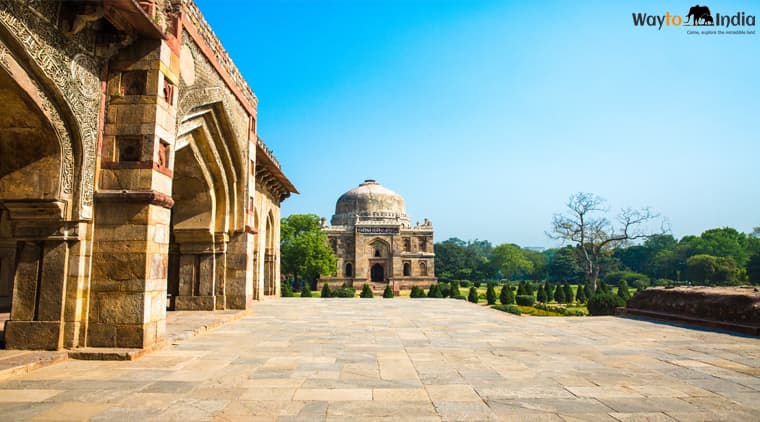
Humayun's Tomb is the building that taught India how to build the Taj Mahal. It rises in red sandstone and white marble above a perfect Mughal garden in the Nizamuddin area of Delhi. See it in the soft morning light, and you will understand why UNESCO placed it on the World Heritage List in 1993.
The story of this place
Humayun was the second Mughal emperor, the son of Babur and the father of Akbar. He passed away in 1556, and his senior widow, Bega Begum, gave the rest of her life to one purpose: building him the grandest tomb the empire had seen. Work began in 1565 and the tomb was completed around 1572. She chose a Persian architect, Mirak Mirza Ghiyas of Herat, and after his death his son Sayyid Muhammad carried the work to its finish.
What they created changed Indian architecture. This was the first garden tomb on the Indian subcontinent, a mausoleum set at the centre of a charbagh, a paradise garden divided into four quarters by walkways and water channels. It was also the first building in India to use red sandstone on such a scale. The Taj Mahal, built about eighty years later at Agra, follows the idea born here. UNESCO recognised this and inscribed the tomb on the World Heritage List in 1993.
The site was chosen with care, close to the dargah of the great Sufi saint Hazrat Nizamuddin Auliya. Over the centuries, so many members of the royal family were buried within the complex that it came to be called the dormitory of the Mughals.
Where the Mughal story ended
This building marks both ends of the Mughal line, and that is worth carrying with you as you walk in.
It is the first of the grand Mughal garden tombs, the design that later reached its peak at the Taj Mahal. So the imperial tomb tradition begins here.
Then, in September 1857, with the British closing in on Delhi after the uprising, the last Mughal emperor Bahadur Shah Zafar took shelter at this tomb, the resting place of his ancestor. He was surrounded here and taken prisoner by Hodson of the British forces, and was later sent into exile in Rangoon. The dynasty that started building tombs like this one effectively ended at this spot.
Stand in the garden for a moment and think about that. It is a quiet place with a very heavy history, and knowing it changes what you are looking at.
What you will see
Give the smaller monuments their due before you rush to the main tomb. Near the entrance is the garden tomb of Isa Khan, a noble of the Suri court. It was built in 1547, before Humayun's tomb itself, and its octagonal shape and glazed tiles belong to an older style. It is a lovely, quiet corner that most visitors miss.
Then the main tomb appears through its gateway, and it is a sight that slows your step. The mausoleum sits on a high, wide platform, built of red sandstone with white marble laid into it, and crowned by a full white marble dome. Around it spreads the charbagh, with narrow water channels running between the lawns. Inside, the cenotaph of the emperor rests in a tall, calm central chamber, and light falls softly through carved stone screens.
Since July 2024 there is one more reason to come. The Humayun's Tomb World Heritage Site Museum, a sunken museum built at the entrance by the Aga Khan Trust for Culture together with the Archaeological Survey of India, displays more than 500 artefacts, from Mughal miniatures and manuscripts to coins, astrolabes and textiles. The building sits low in the ground so that it does not disturb the view of the monuments, and it also connects the tomb complex to Sunder Nursery, the beautiful heritage park next door. The museum runs from 10 am to 9 pm and is closed on Mondays and national holidays, so plan your museum visit around that.
Best time to visit
October to March is the kindest season in Delhi, with cool mornings and clear light. April to June is very hot, and July to September brings humid monsoon weather, though the gardens turn a deep green then.
Within the day, come early. The monument opens at sunrise and closes at sunset, and the first hour of the morning gives you soft light on the sandstone and very few people. Late afternoon light on the dome is also lovely. The tomb is open every day of the week, so only the museum's Monday closure needs planning.
How to reach
The tomb is in Nizamuddin East, in the middle of Delhi, so reaching it is easy. Indira Gandhi International Airport is the gateway for flights, and Hazrat Nizamuddin railway station, one of Delhi's major stations, is only a short drive away.
By metro, the nearest station is JLN Stadium on the Violet Line, and from there it is a short auto ride to the gate. Taxis and app cabs drop you right outside. The dargah of Hazrat Nizamuddin Auliya, Sunder Nursery and Purana Qila are all close by, so this corner of Delhi fills a very satisfying day.
Tips from our travel experts
Keep about two hours for the tomb and its gardens, and add another hour if you visit the museum, which we strongly suggest, because it makes everything you see afterwards more meaningful. If you have half a day, finish with a slow walk in Sunder Nursery next door.
There is an entry fee for the monument and a separate ticket for the museum, with different rates for Indian citizens and foreign nationals. The rates change from time to time, so please check the current rate on the ASI booking portal or ask your consultant. Carry an ID, and buy tickets online to skip the queue.
Wear comfortable shoes, because the complex is larger than it looks, and the platform of the main tomb is reached by a steep flight of steps. In summer, carry water and finish your visit before the midday heat.
For our NRI and OCI travellers
If Delhi is your landing city, this is the gentlest first-day outing we know. The gardens are calm, the walking is easy, and the new museum tells the Mughal story in a way that children raised abroad follow happily. Many of our overseas guests tell us they finally understood the Taj Mahal only after seeing this tomb first.
Carry your OCI card or passport for the ticket counter, since rates differ by nationality and the staff will guide you as per the current rule. If your parents are travelling with you, the paths are level and smooth almost everywhere, so the visit does not tire them.
Questions travellers ask us
Is Humayun's Tomb open every day?
Yes. The monument is open every day from sunrise to sunset. Only the new museum at the entrance is closed on Mondays and national holidays, so if the museum matters to you, avoid Monday.
What is the connection between Humayun's Tomb and the Taj Mahal?
Humayun's Tomb, completed around 1572, was the first garden tomb on the Indian subcontinent, a mausoleum set in a charbagh garden. The Taj Mahal, built about eighty years later, took this idea to its peak. Seeing this tomb first makes the Taj much richer.
What is the Humayun's Tomb World Heritage Site Museum?
It is a sunken museum at the entrance of the complex, opened in July 2024 and built by the Aga Khan Trust for Culture with the Archaeological Survey of India. It displays more than 500 artefacts, including Mughal miniatures, manuscripts, coins and textiles, and it connects the tomb complex with Sunder Nursery. It runs from 10 am to 9 pm and is closed on Mondays and national holidays.
How do I reach Humayun's Tomb by metro?
Take the Violet Line to JLN Stadium station, and from there it is a short auto ride to the entrance in Nizamuddin East. Taxis and app cabs also drop you at the gate.
Who built Humayun's Tomb?
The tomb was commissioned by Bega Begum, the senior widow of Emperor Humayun. Construction began in 1565 and finished around 1572. The architect was Mirak Mirza Ghiyas of Herat, and his son Sayyid Muhammad completed the work.
How much time should I keep for the visit?
Keep about two hours for the tomb and gardens. Add an hour for the museum, and if you can, a relaxed walk in Sunder Nursery next door. Half a day covers all three beautifully.
What happened at Humayun's Tomb in 1857?
During the uprising of 1857, as British forces retook Delhi, the last Mughal emperor Bahadur Shah Zafar took shelter at Humayun's Tomb. He was surrounded there and captured by Hodson of the British forces in September 1857, and was afterwards exiled to Rangoon. Since this tomb is also the first of the great Mughal garden tombs, the dynasty's tradition of imperial mausoleums both begins and effectively ends at the same building.
A note on the tours below. These packages travel close to Humayun's Tomb, Delhi, but a package may not include a guided visit to the site itself. If you would like this place added to your journey, please tell your Way to India travel consultant and they will happily build it into your itinerary for you.
Tours where you stay right by it
18D / 17N 5You stay at Delhi
 19D / 18N
12 Jyotirlinga Tour Package from Delhi
● Starts Delhi
From₹85,000* / person
Explore →EMI from ₹4,162/mo
You stay at Delhi
 18D / 17N
12 Jyotirlinga Tour Package from Mumbai
● Starts Mumbai
From₹90,000* / person
Explore →EMI from ₹4,407/mo
You stay at Delhi
 5D / 4N
Bandhavgarh National Park Tour Package
● Starts Delhi
From₹25,056* / person
Explore →EMI from ₹1,227/mo
You stay at Delhi
 8D / 7N
You stay at Delhi
 10D / 9N
You stay at Delhi
You stay at Delhi
 7D / 6N
You stay at Delhi
 8D / 7N
Delhi Agra Jaipur Udaipur Tour Package
● Starts Delhi
From₹41,357* / person
Explore →EMI from ₹2,025/mo
You stay at Delhi
 4D / 3N
You stay at Delhi
 5D / 4N
You stay at Delhi
 3D / 2N
You stay at Delhi
 4D / 3N
Delhi To Haridwar Rishikesh Tour Package
● Starts Delhi
From₹19,622* / person
Explore →EMI from ₹961/mo
You stay at Delhi
 7D / 6N
Dussehra Festival Kullu
From₹35,923* / person
Explore →EMI from ₹1,759/mo
You stay at Delhi
 7D / 6N
You stay at Delhi
 7D / 6N
Gangaur Festival Jaipur
From₹35,923* / person
Explore →EMI from ₹1,759/mo
You stay at Delhi
 6D / 5N
You stay at Delhi
 7D / 6N
Golden Triangle and Gangaur Festival Tour
● Starts Delhi
From₹35,923* / person
Explore →EMI from ₹1,759/mo
You stay at Delhi
 9D / 8N
Golden Triangle and Khajuraho Dance Festival Tour
From₹46,791* / person
Explore →EMI from ₹2,291/mo
You stay at Delhi
 9D / 8N
Golden Triangle & Khajuraho Dance Festival Tour
● Starts Delhi
From₹46,791* / person
Explore →EMI from ₹2,291/mo
You stay at Delhi
 6D / 5N
You stay at Delhi
 6D / 5N
You stay at Delhi
 5D / 4N
You stay at Delhi
 4D / 3N
You stay at Delhi
 4D / 3N
You stay at Delhi
 4D / 3N
You stay at Delhi
 8D / 7N
You stay at Delhi
 9D / 8N
You stay at Delhi
 9D / 8N
You stay at Delhi
 9D / 8N
You stay at Delhi
 9D / 8N
You stay at Delhi
 10D / 9N
You stay at Delhi
 8D / 7N
You stay at Delhi
 10D / 9N
Golden Triangle Tour With Tiger Safari
● Starts Delhi
From₹52,225* / person
Explore →EMI from ₹2,557/mo
You stay at Delhi
 7D / 6N
You stay at Delhi
 9D / 8N
You stay at Delhi
 11D / 10N
Golden Triangle Tour With Varanasi And Khajuraho
● Starts Delhi
From₹57,658* / person
Explore →EMI from ₹2,823/mo
You stay at Delhi
 7D / 6N
You stay at Delhi
 9D / 8N
Golden Triangle with Ranthambore & Bharatpur Luxury Group Tour
● Starts Delhi
From₹46,791* / person
Explore →EMI from ₹2,291/mo
You stay at Delhi
 5D / 4N
Golden Triangle with Ranthambore Tour
From₹25,056* / person
Explore →EMI from ₹1,227/mo
You stay at Delhi
 14D / 13N
You stay at Delhi
 7D / 6N
You stay at Delhi
 6D / 5N
Haridwar Rishikesh Varanasi Tour Package from Delhi
● Starts Delhi
From₹30,490* / person
Explore →EMI from ₹1,493/mo
You stay at Delhi
 12D / 11N
You stay at Delhi
 11D / 10N
You stay at Delhi
 5D / 4N
Jaipur Ajmer Pushkar Tour Packages From Delhi
● Starts Delhi
From₹25,056* / person
Explore →EMI from ₹1,227/mo
You stay at Delhi
 7D / 6N
Jaisalmer Desert Festival Tour
From₹35,923* / person
Explore →EMI from ₹1,759/mo
You stay at Delhi
 8D / 7N
You stay at Delhi
 7D / 6N
You stay at Delhi
 9D / 8N
You stay at Delhi
 3D / 2N
You stay at Delhi
 11D / 10N
You stay at Delhi
 9D / 8N
You stay at Delhi
 9D / 8N
Rajasthan Tour By Car
From₹46,791* / person
Explore →EMI from ₹2,291/mo
You stay at Delhi
 12D / 11N
You stay at Delhi
 11D / 10N
You stay at Delhi
 3D / 2N
You stay at Delhi
 4D / 3N
Ranthambore From Delhi
From₹19,622* / person
Explore →EMI from ₹961/mo
You stay at Delhi
 3D / 2N
You stay at Delhi
 3D / 2N
You stay at Delhi
 9D / 8N
Uttarakhand Holidays
From₹46,791* / person
Explore →EMI from ₹2,291/mo
You stay at Delhi
 10D / 9N
Wildlife Safari Near Delhi
From₹52,225* / person
Explore →EMI from ₹2,557/mo
You stay at Delhi
 10D / 9N
You stay at Delhi
 3D / 2N
You stay at Delhi
 10D / 9N
Golden Triangle Tour with Jim Corbett National Park
● Starts Delhi
From₹52,225* / person
Explore →EMI from ₹2,557/mo
You stay at Delhi
 7D / 6N
Konark Dance Festival
From₹35,923* / person
Explore →EMI from ₹1,759/mo
You stay at Delhi
 8D / 7N
You stay at Delhi
 8D / 7N
Pushkar Camel Fair
From₹41,357* / person
Explore →EMI from ₹2,025/mo
You stay at Delhi