1
Somnath
Gujarat
By the Arabian Sea at Veraval, rebuilt after independence under Sardar Patel.
Best time is October to March for the plains and the coast, when the weather is cool. Kedarnath is only open from about late April or May to October or November, so keep it for the warm months. Avoid the peak monsoon for the Maharashtra hil
Overview
You want to see all twelve Jyotirlingas of Lord Shiva. That is a big wish and a beautiful one. The hard part is not faith. The hard part is the map. The twelve shrines sit in seven states, from Gujarat by the Arabian Sea to Rameshwaram at the tip of Tamil Nadu, and up to Kedarnath in the Himalayas. If you plan them in the wrong order, you waste days and money going back and forth. This page fixes that for you.
A Jyotirlinga is a shrine of Lord Shiva. The word joins jyoti, meaning light, and linga, the sign of Shiva. Tradition says these are the places where Lord Shiva showed himself as a pillar of light. Devotees believe there are twelve such shrines across India. You may wish to see all twelve in your lifetime, as many pilgrims do. For your NRI or OCI family, this becomes a shared goal across many years.
Here are the twelve, with their state. Somnath is at Veraval in Gujarat. Nageshwar is near Dwarka in Gujarat. Mahakaleshwar is at Ujjain in Madhya Pradesh. Omkareshwar is also in Madhya Pradesh, on an island in the Narmada river. Bhimashankar, Trimbakeshwar, and Grishneshwar are all in Maharashtra. Mallikarjuna is at Srisailam in Andhra Pradesh. Rameshwaram is in Tamil Nadu. Kashi Vishwanath is at Varanasi in Uttar Pradesh. Kedarnath is in the hills of Uttarakhand. The twelfth, Vaidyanath, has more than one claim, and we explain that for you below.
The trick is to group the shrines. You do not chase them one by one. You cover a cluster, then move on. Here are five simple circuits for you.
The Gujarat pair is Somnath and Nageshwar. Both sit in the Saurashtra region near the sea. You can join them in two or three days.
The Madhya Pradesh pair is Mahakaleshwar at Ujjain and Omkareshwar on the Narmada. Both are close to Indore. Two or three days is enough.
The Maharashtra cluster holds Trimbakeshwar near Nashik, Bhimashankar near Pune, and Grishneshwar near the Ellora caves. This is the busiest cluster. Give it four or five days. If you accept the Parli claim for Vaidyanath, you can add Parli Vaijnath here too.
The northern pair is Kashi Vishwanath at Varanasi and Kedarnath in Uttarakhand. Kashi is easy all year. Kedarnath is a hill shrine and opens only for part of the year. Plan four to six days.
The southern pair is Mallikarjuna at Srisailam and Rameshwaram in Tamil Nadu. These two are far apart, so give them four or five days.
This grouping is the thing most pages miss. They print the list. They do not solve the road for you.
Vaidyanath has more than one claim. Many pilgrims go to Baidyanath Dham at Deoghar in Jharkhand. Others hold that the true shrine is Parli Vaijnath in Maharashtra. A third group points to Baijnath in Himachal Pradesh. The old Sanskrit stotram names Parali, which supports the Maharashtra claim. The priests at Deoghar hold their claim strongly. The Government of India has not named one as the official Jyotirlinga. So both main shrines keep their devotees.
What does this mean for your plan? If you choose Parli, you fold it into the Maharashtra cluster. If you choose Deoghar, you add a separate eastern trip. You reach Deoghar from Ranchi, Patna, or the Deoghar airport. Many families like yours visit both over the years, to be sure.
Nageshwar also has more than one claim. The main shrine sits near Dwarka in Gujarat, with a tall Shiva statue you can see from far. Some scholars point instead to Jageshwar in Uttarakhand, because of its old deodar forest. A third view names Aundh in Maharashtra. Most pilgrims today go to the Dwarka shrine, and we place it in your Gujarat pair.
At Ujjain, the special ritual is the Bhasma Aarti. It happens in the early pre-dawn hours, before the normal darshan begins. Sacred ash is offered to Lord Shiva. Seats are limited, so you must book in advance. You cannot walk in that morning and expect a place. Confirm the exact time, the current booking window, and the fee on the official Shri Mahakaleshwar temple portal at shrimahakaleshwar.mp.gov.in. Carry the same photo ID you used to register. There is a dress code. Men wear a dhoti and women wear a saree. Leather items are not allowed. Reach the gate early for the security check.
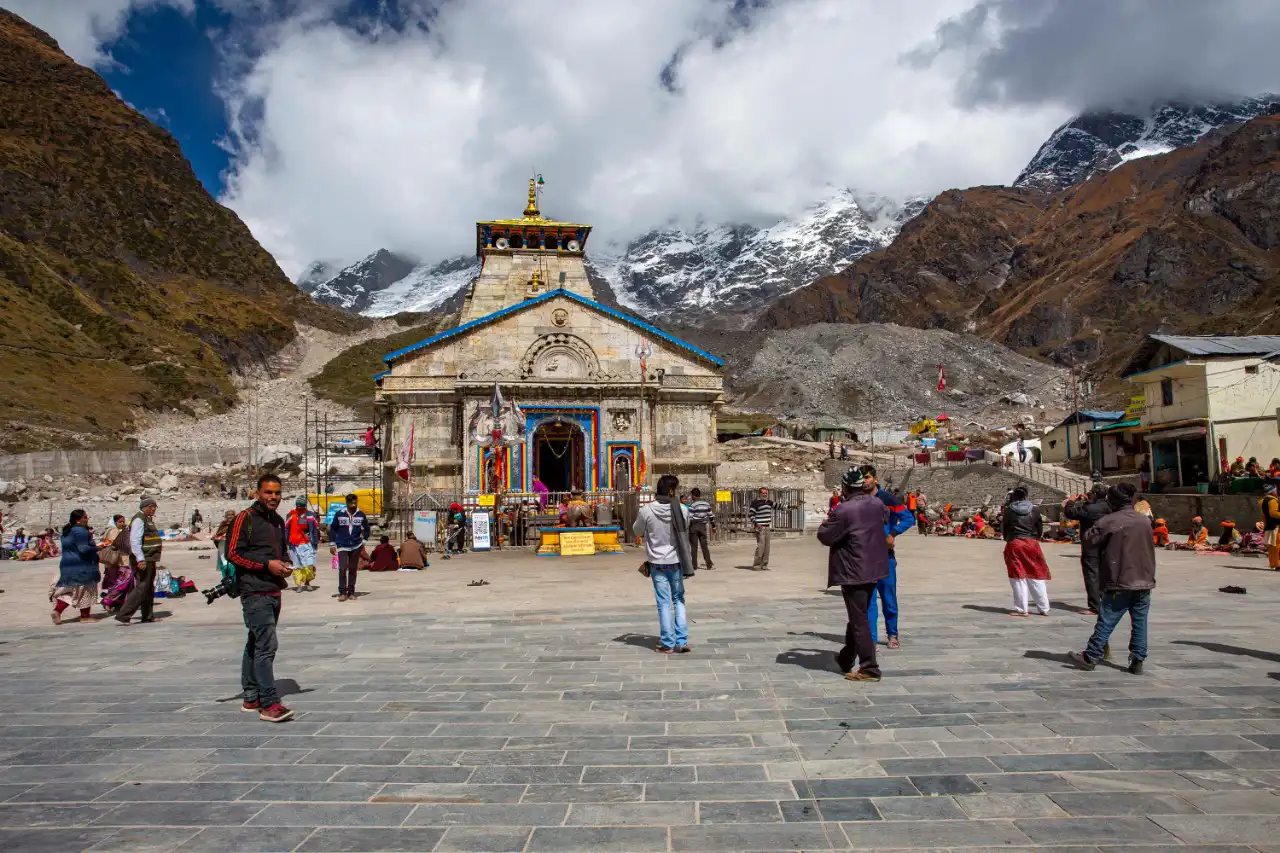
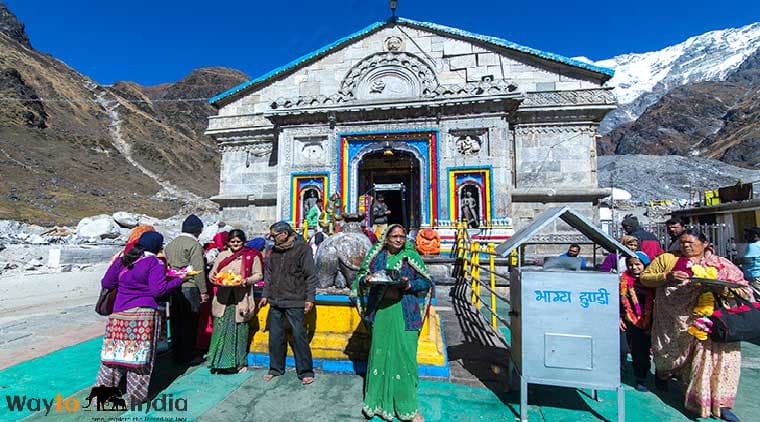
This is the honest part. You cannot finish all twelve in deep winter. Kedarnath sits at about 3,583 metres in the Garhwal Himalayas. The temple opens around Akshaya Tritiya, near late April or early May. It closes around Kartik Purnima, near late October or November. In winter the deity is carried down to Ukhimath and worshipped there for six months. So if your holiday falls in December or January, plan Kedarnath for another year. Confirm the exact 2026 opening and closing dates on the official portal at badrinath-kedarnath.gov.in.
Kedarnath also needs a trek. From Gaurikund, the last road point, it is about a 17 km walk uphill. This takes most people six to eight hours. You can also take a pony, a palki, or a helicopter. Book the yatra registration in advance at registrationandtouristcare.uk.gov.in. Book helicopter seats only through the official portal at heliyatra.irctc.co.in.
At Rameshwaram, the Ramanathaswamy temple has a famous ritual. There are 22 theerthams, which are sacred wells and the sea itself. Pilgrims take a bath at each one, one after another. The temple also has the longest corridor of any Hindu temple in India, with about 1,200 tall pillars. Tradition says Lord Rama set up the Ramalingam here from sand before crossing to Lanka. History places the present structure in the 17th century. Carry a change of clothes for the theertham bath.
Somnath stands at Prabhas Patan near Veraval in Gujarat. Tradition says the moon god Soma bathed here to remove a curse, and the name means lord of the moon. The temple was destroyed and rebuilt many times over the centuries. After independence, Sardar Vallabhbhai Patel led the rebuilding, and the ceremony took place on 11 May 1951. So you frame the moon story as tradition, and the rebuilding as history. You can watch an evening light and sound show by the sea.
For Somnath, the nearest railheads are Somnath Terminus and Veraval Junction. For Nageshwar, the nearest airport is Jamnagar, and Dwarka has its own railway station. For Ujjain and Omkareshwar, fly into Indore. For Trimbakeshwar, use Nashik. For Bhimashankar, use Pune, about 110 km away. For Grishneshwar, use the Chhatrapati Sambhaji Nagar airport, about 30 km from the shrine. For Mallikarjuna at Srisailam, Hyderabad is the main gateway, about 213 km away. For Rameshwaram, use Madurai. For Kashi Vishwanath, use Varanasi airport, about 22 to 25 km from the temple. For Kedarnath, the road and rail base is Rishikesh or Haridwar, and the drive to Gaurikund is long.
Be realistic. This is not a weekend. Done in one long trip, all twelve take about three to four weeks of steady travel. That is tiring for anyone, and hard for your elders. Most families do not do it in one go. You are wiser to split it into four or five shorter trips over a few years. That keeps your yatra restful.
You live in the USA or the UK. Your India time is limited. So plan by cluster, not by the full twelve. On one visit, do the Gujarat pair with your Dwarka darshan. On another, do the Madhya Pradesh pair around Indore. On a third, do the Maharashtra cluster. Keep Kedarnath for a summer visit, since it is seasonal. Keep the southern pair for a trip through Hyderabad and Madurai. This way each visit stays restful, and the whole yatra becomes a family story over years. No special foreign quota is needed at these temples. You carry your passport and OCI card as ID. We have arranged pilgrim trips since 2010.
Dress simply and modestly at every shrine. Many temples do not allow leather belts, wallets, or bags inside. At Grishneshwar, men must enter the inner sanctum bare-chested, as the local custom asks. At the Bhasma Aarti in Ujjain, a dhoti and saree are required. Phones and cameras are often not allowed near the sanctum. Rules change, so check the notice board or ask at the counter each time.
Think about the elders in your group. Somnath, Nageshwar, Ujjain, Omkareshwar, Kashi, and Rameshwaram are all reachable with little climbing. Srisailam has a long flight of steps down to the Krishna river, but your darshan itself is easy. Bhimashankar sits on a hill and has steps. Kedarnath is the hard one, with a 17 km trek, so a pony or a helicopter helps your elders a lot. Plan slow days and keep your medicines with you.
Best time is October to March for the plains and the coast, when the weather is cool. Kedarnath is only open from about late April or May to October or November, so keep it for the warm months. Avoid the peak monsoon for the Maharashtra hil
easy to moderate for most shrines
Day by day
A carefully paced plan, day by day. Tap any day for the stay, meals and altitude detail.
Today you reach Somnath at Veraval in Gujarat. From Veraval Junction the temple is only a short drive, and the nearest railhead is Somnath Terminus. Do the morning darshan, when the sea air is cool and the crowd is lighter. The temple stays open with a midday gap, so plan your darshan for early morning or late afternoon. You can try a simple Gujarati thali for lunch, with rotli, dal, and shaak. A quiet fact: excavations found no ancient temple remains here, though the site was a holy tirtha in old texts, so we call the moon god story a tradition. Leather items and often phones are not allowed near the sanctum, so leave them in the car. For elders, the walk inside is flat and easy. In the evening, sit for the light and sound show by the sea.
Special Tips for This Day: Keep your footwear and leather at the cloak counter. Book a hotel near the temple so elders can rest between the morning and evening darshan.
Today you drive from Somnath to the Nageshwar shrine near Dwarka. The road runs about 230 to 250 km along the coast and takes roughly 4 to 5 hours. Reach by late morning for a calm darshan. The tall Shiva statue outside is easy to spot. While you are here, you can also visit the Dwarkadhish temple of Lord Krishna in Dwarka town. Try Kathiyawadi Gujarati food, such as bajra rotla with garlic chutney. A lesser-known point: scholars still debate whether the true Nageshwar is here, at Jageshwar in Uttarakhand, or at Aundh, but most pilgrims come to Dwarka. Leather and bags are usually not allowed inside. The shrine is flat and gentle for elders. Fly out of Jamnagar for your next cluster.
Special Tips for This Day: Carry your passport and OCI card as photo ID. Combine Nageshwar with Dwarkadhish on the same day, since they are close.
Today you begin the Madhya Pradesh pair at Ujjain. Fly into Indore, then drive about 55 to 60 km to Ujjain, which takes roughly one and a half hours. The special ritual is the Bhasma Aarti in the pre-dawn hours, so you must book it in advance on the official portal at shrimahakaleshwar.mp.gov.in. Sacred ash is offered to Lord Shiva at this aarti. For food, try Ujjain poha with sev, and dal bafla. A quiet fact: Mahakaleshwar faces south, which is rare among Shiva shrines, and pilgrims hold this dear. For the Bhasma Aarti, men wear a dhoti and women wear a saree, and leather is not allowed. Elders should reach the gate early and slowly, as the security check takes time.
Special Tips for This Day: Book the Bhasma Aarti weeks ahead and carry the same ID you used to register. Confirm the exact time and the current fee on the official portal, since seats are limited.
Today you drive from Ujjain to Omkareshwar, about 130 to 145 km, which takes roughly 3 to 4 hours. The shrine sits on Mandhata island in the Narmada river. People say the island is shaped like the Om symbol. Reach by mid-morning and cross by the bridge or a boat. There are two shrines, Omkareshwar on the island and Mamleshwar on the bank, and many pilgrims see both. You can do a parikrama around the island. Try local poha and jalebi near Indore on the way. A quiet fact: the temple was built by the Paramara kings of Malwa in the 11th century. Leather and phones are often not allowed inside. For elders, take the boat rather than the steps.
Special Tips for This Day: Do the island parikrama in the cooler morning. Keep a light shawl, as the river breeze is strong.
Today you start the Maharashtra cluster at Trimbakeshwar. From Nashik the shrine is only about 28 to 30 km, roughly one hour by road. Reach early, as the morning darshan is calm. This shrine is special because its lingam has three faces, for Brahma, Vishnu, and Shiva. The sacred Godavari river begins nearby at Brahmagiri hill. Try Nashik misal pav or sabudana khichdi for a light meal. A quiet fact: the crown of the deity is shown to devotees on Mondays in the late afternoon. Leather items are not allowed, and there may be a separate line for touching the lingam. The shrine is easy for elders, with little climbing.
Special Tips for This Day: Ask about the sparsh darshan rules at the counter, as they change. Visit the Kushavarta kund, the holy source pond, while you are here.
Today you travel to Bhimashankar, on a peak in the Sahyadri hills. From Pune the drive is about 110 km and takes roughly 3 to 4 hours on winding hill roads. The Bhima river is said to begin here. The shrine stands inside the Bhimashankar Wildlife Sanctuary, so the air is green and cool. Reach by late morning, since the road is slow. Try a hot plate of poha or sabudana vada near the temple. A quiet fact: the temple is built in the old Nagara style, and a bell here was gifted by Chimaji Appa in 1739. There are many steps down to the shrine, so this day is harder. Elders should walk slowly and rest often, and a helper can be hired for the steps.
Special Tips for This Day: Start early to avoid mist and slow traffic on the hill road. Wear good shoes, as the steps can be wet.
Today you reach Grishneshwar, the last shrine of the Maharashtra cluster. It sits at Verul, about 30 km from the Chhatrapati Sambhaji Nagar airport, roughly one hour by road. The shrine is only about 1.5 km from the famous Ellora caves, so you can see both in one day. Reach the temple in the morning, then visit Ellora before it gets hot. The temple is built in black stone with fine carvings. A local rule to know: men must enter the inner sanctum bare-chested, as the custom asks. For food, try a simple Maharashtrian thali in the town. A quiet fact: queen Gautama Bai Holkar of Indore rebuilt this temple in 1729. Elders will find the shrine easy, with flat access. If you follow the Parli claim for Vaidyanath, you can add Parli Vaijnath from here.
Special Tips for This Day: Men should carry a spare cloth, since a bare chest is required inside. Pair the darshan with the Ellora caves to save a day.
Today you reach Kashi Vishwanath at Varanasi, the shrine every Shiva devotee dreams of. The airport is about 22 to 25 km from the temple, and the city has two railway stations. The new Kashi Vishwanath Dham corridor now links the temple to the Ganga ghats, so the walk is open and clear. Go early for darshan, then take a boat on the Ganga at sunrise the next morning. Try Banarasi kachori with sabzi and hot jalebi for breakfast. A quiet fact: the temple spire carries about one tonne of gold, gifted long ago by Maharaja Ranjit Singh. Leather and phones are not allowed near the sanctum, and there are lockers outside. The corridor is elder-friendly and mostly step-free.
Special Tips for This Day: Use the cloak lockers for phones and leather before you join the darshan line. Book a dawn boat ride on the Ganga for the aarti view.
Today you attempt Kedarnath, the highest of the twelve. Remember it is seasonal and opens only from about late April to October or November. The temple sits at about 3,583 metres. From Gaurikund, the last road point, it is about a 17 km trek uphill, which takes roughly 6 to 8 hours. You can also take a pony, a palki, or a helicopter. Book the yatra registration in advance at registrationandtouristcare.uk.gov.in and any helicopter seats only at heliyatra.irctc.co.in. Carry warm clothes, since the weather turns cold and wet fast. A quiet fact: in winter the deity is carried down to Ukhimath and worshipped there. This day is not for weak knees, so elders should take the helicopter and rest a day before.
Special Tips for This Day: Confirm the 2026 opening dates on badrinath-kedarnath.gov.in before you book flights. Keep a raincoat and warm layers, even in summer.
Today you begin the southern pair at Srisailam. From Hyderabad the drive is about 210 to 215 km and takes roughly 5 to 6 hours through the Nallamala hills. The Mallikarjuna shrine sits above the Krishna river. It is rare, since the goddess Bhramaramba shakti peetha stands in the same complex. Reach by afternoon and take the evening darshan. There are about 852 steps down to the river for a holy dip, so plan that only if you are fit. Try a South Indian meal with rice, sambar, and rasam. A quiet fact: old inscriptions here go back to the Satavahana period. Leather is not allowed inside. Elders can skip the river steps and still have a full darshan.
Special Tips for This Day: Leave early from Hyderabad, as the hill road is slow. Keep a torch, since the river steps are dark by evening.
Today you complete the yatra at Rameshwaram in Tamil Nadu. The nearest airport is Madurai, and the train crosses the sea on the Pamban route. The Ramanathaswamy temple has 22 theerthams, and pilgrims take a bath at each well one by one. The temple corridor is the longest of any Hindu temple, with about 1,200 tall pillars. Reach early, since the theertham bath takes an hour or more. Tradition says Lord Rama set up the Ramalingam here from sand. For food, try idli, dosa, and filter coffee, with Chettinad meals nearby. A quiet fact: the present temple is from the 17th century. Carry a change of clothes for the wet bath. Elders can do a shorter darshan and skip some wells.
Special Tips for This Day: Bring dry clothes and a towel for the 22-well bath. Start the theertham round by 6 am to finish before the midday heat.
Travel tips
You visit all twelve shrines of Lord Shiva, grouped by region so you never backtrack. Built for NRI and OCI families in the USA and UK who want a lifetime darshan done the wise way.
The shrines sit in seven states. You cover them cluster by cluster, so you do not waste days going back and forth.
Most pages only print the list of twelve. They do not solve the road. Grouping by region is the one thing that turns a messy plan into a restful yatra.
Two darshans cannot be walked into. You must register early on the official portals, and carry the ID you used.
No price is fixed here. Confirm the current rate and timing on each official portal before you travel.
Kedarnath closes for about six months. So the full twelve is a warm-season goal, not a December plan.
The exact 2026 Kedarnath dates come from the shrine board on Maha Shivaratri. Check badrinath-kedarnath.gov.in before booking flights.
Your India time is short. So do one cluster per visit and let the whole yatra become a family story over years.
In one long trip the twelve take three to four weeks. Split across four or five visits, each darshan stays calm and restful.
Rules differ at each shrine. A little preparation keeps the darshan smooth for the whole family.
Phones and cameras are often not allowed near the sanctum, and rules change. Read the notice board or ask at the counter.
From the sea at Somnath to the snow at Kedarnath, the same light of Lord Shiva waits for you.
You do not have to rush all twelve. Take them cluster by cluster, year by year, with your elders and children beside you. That is how a lifetime yatra is meant to unfold.
What's included
What travellers say
“A big thanks to Way To India for organising such a truly memorable and spiritually fulfilling experience during our 12 Jyotirlinga Darshan pilgrimage from 1st May to 18th May. They organized the entire journey exceptionally well, ensuring that every aspect of the trip was smooth, comfortable, and hassle-free. From transportation and hotel arrangements to darshan planning and coordination, everything was managed professionally. Despite the extensive travel across multiple destinations, the itinerary was well-structured, allowing us to complete all the Jyotirlinga darshans comfortably. Thanks to staff of Way To India, especially, Ms Neha, who was supportive, responsive, and attentive throughout the journey, always ready to assist whenever needed. Her dedication and careful planning made this sacred pilgrimage stress-free and enjoyable. I sincerely appreciate their excellent service, commitment, and hospitality. Highly recommend Way To India to anyone planning a spiritual tour, especially for the 12 Jyotirlinga Yatra. Thank you for making this divine journey so special and memorable.”3 months ago · Google
“We have successfully completed the 12 Jyotirlinga Yatra, with Waytoindia and it was a truly blessed and unforgettable journey. Every aspect of the tour was well planned and professionally organized, from transportation and accommodations to temple visits and sightseeing. Visiting all twelve sacred Jyotirlingas was a deeply spiritual experience. The itinerary was designed efficiently, allowing us to have darshan at each shrine comfortably while enjoying the cultural and religious significance of every destination. We sincerely appreciate the excellent support and coordination throughout the trip. The team was always available to assist, ensuring a smooth and stress-free pilgrimage. Thank you Waytoindia for making our dream of completing the 12 Jyotirlinga Yatra a reality. We highly recommend this tour to anyone seeking a well-organized and spiritually enriching pilgrimage experience. Har Har Mahadev! 🙏🕉️”4 months ago · Google
“We recently entrusted our honeymoon planning to 'Way to India', and it turned out to be one of the best decisions we made. From itinerary finalization to on-ground execution, everything was handled with remarkable professionalism, warmth, and attention to detail. Every aspect of our trip — flights, hotels, transfers, experiences, and even the small thoughtful touches — was perfectly curated. The itinerary was balanced, well-planned, and tailored exactly to what we wanted. We never had to worry about a single thing; all arrangements were seamless and absolutely hassle-free. What truly stood out was their responsiveness and genuine care. They were always available, always patient, and consistently went the extra mile to ensure our journey was special. Special thanks to Neha Ma'am for planning everything. We are incredibly grateful and wholeheartedly recommend their services to anyone looking for a stress-free, personalised, and delightful travel experience. Thank you for making our honeymoon truly magical!”7 months ago · Google
Travelled with Way to India?
Share your experience on Google — it takes a minute and helps fellow travellers plan with confidence.
You may also like
 11D / 10N 5
 8D / 7N
 12D / 11N
 6D / 5N
 4D / 3N
Tell us your dates and group size. A WayToIndia travel expert replies within a few hours with a plan you can customise freely. Planning India journeys since 2010.
Explore Way to India
© 2026 Way to India. All rights reserved.