6 days
5 nights
Joshimath
start point
N/A
best season
16+ yearscrafting India journeys · since 2010
Trustedby travellers worldwide
Local repsIndia + overseas support
No prepayfree customisation · GST invoice
Overview
Tour overview
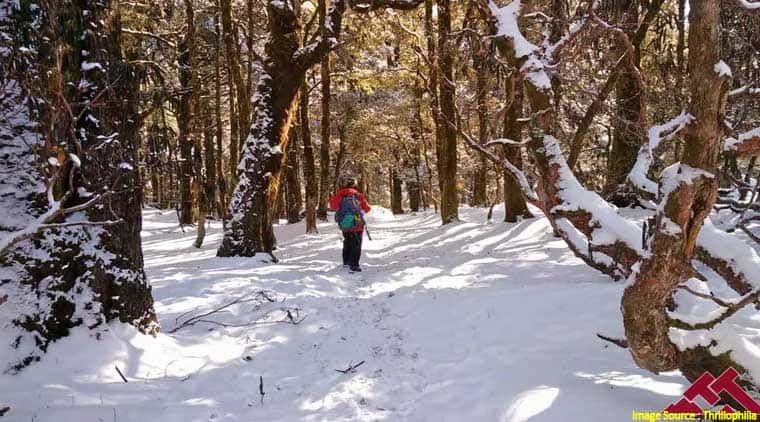
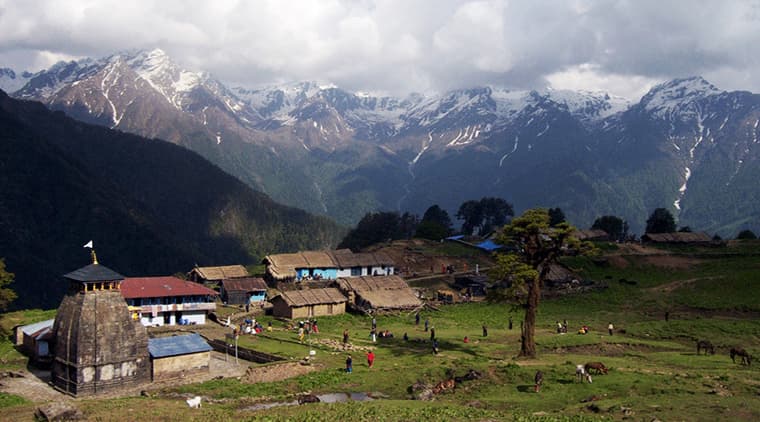
Kuari Pass Trek is one of the most famous treks in the Garhwal Himalayas. The trek provides a magnificent view of greater Himalayas, forests and alpine pasture lands. The difficulty level of the trek is easy to moderate.The best time for the trek is summer between the months of June to October. The vegetation of pristine rhododendron, oak and deodar forest can be seen during the trek. The trek passes through attractive scenic views of Neelkanth peaks, HathiGhodaParvat, Trishul, Mana, Dronagiri and twin peaks of Nanda Devi. Kuari Pass provides a splendid view of the Himalayas and that is why Kuari is also termed as “getaway”. The flowing tributaries of Ganges River can be seen, providing a mesmerizing sight for the eyes. The Kuari Pass Trek is an enthralling experience which every adventure loving person must try.
Kuari Pass Trek is one of the most famous treks in the Garhwal Himalayas.
Tour highlights
Badrinath
Auli
Hemkund Sahib
Destinations covered
Best Time
N/A
Ideal For
N/A
Day by day
Day-by-day itinerary
A carefully paced plan, day by day. Tap any day for the stay, meals and altitude detail.
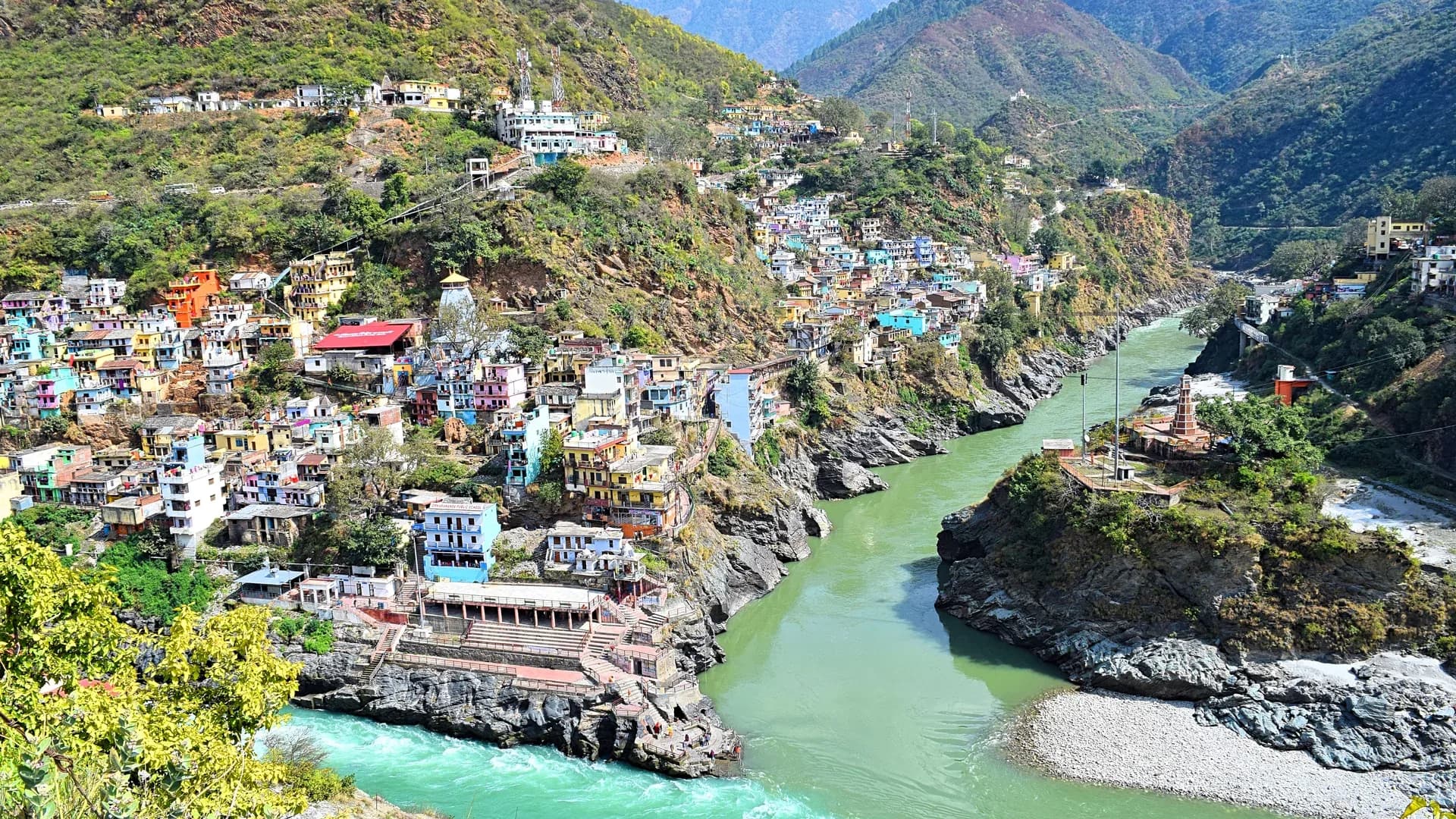
The trekkers shall arrive at the starting point of the trek at Joshimath. Trekkers can reach Joshimath from Haridwar. The distance is about 260 km. long and takes around 10 hours of drive to reach. Along the way you witness some beautiful scenic view. You also get to see the confluence of Alaknanda and Bhagirathi River to form the Ganga River. Joshimath is a centre place for pilgrims traveling to Badrinath and Hemkund Sahib, so a lot of rush can be seen while driving towards Joshimath. After arrival, have dinner and overnight stay at Joshimath.
To start the Kuari Pass trek we drive to Auli which is 13 km. from Joshimath. Auli is located at a height of 2,750m. Auli is famous for long ropeway, ski, and many other winter sports. After reaching Auli take the chairlift up to tower 10 from tower number 10. Auli offers a spectacular panoramic view of Nanda Devi Peak (7816m.), Hathi Peak (6727m.) andGhodi Peak (6590m.), Bethartoli Peak (6325m.) and Doonagiri Peak (7066m.). The slopes of Auli are covered with oak forests and evergreen conifers covered with snow. From tower number 10, trek to Gorson Bugyal(3510 m.) begins. The distance of trek is around 4 km. Gorson Bugyal is the big patch of green meadows and trekking towards it is relatively easier. The route provides a beautiful view of the entire Himalayan range. The trekkers can enjoy skiing activities. Have dinner at Gorson Bugyal and overnight stay is in tents.
After early morning breakfast, start the trek from Gorson to Tali. The trek distance is 8km. The trek beyond Gorson Bugyal is steep in places. The entire trek toTali is the gradual ascent. Along the trek, you view Nanda Devi Peak (7816m.), Hathi Peak (6727m.) and Ghodi Peak (6590m.), Bethartoli Peak (6325m.), Doonagiri Peak (7066m.), Changbang (6864m.) and Nandakot (6861m.). The majestic view of the mountain ranges makes the trek an unforgettable experience. Trekking through the alpine meadows is a feast to eyes and soul. The calmness in the surroundings with cool breeze takes you in a divine world closer to nature. After reaching Tali proceed for dinner. Overnight stay is at a tent camp at Tali.
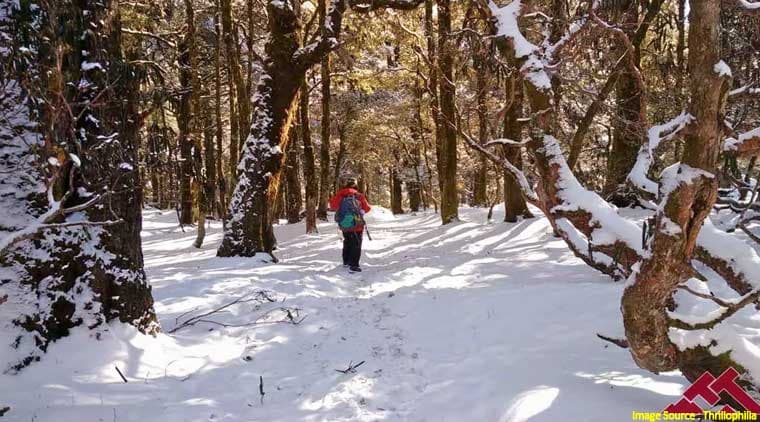
After having early morning breakfast we start our trek to Kuari Pass. The total trek distance is 15 km. which takes around 8 hours. Initial hour of the trek is relatively easier. You find patches of snow during the trek. After walking through half km. a steady ascent starts. The trail curves increases as we move closer to Kuari Pass and cold gusty winds welcome you at Kuari Pass. Many Himalayan peaks can be viewed easily and the never ending mountains follow throughout the trek. Nanda Devi Peak (7816m.), the highest peak of the Himalayas in India is an incredible sight from where we see Rishi Ganga making a route before it flows into the Alaknanda River. Some other prominent peaks that are visible are Hathi Peak (6727m.) andGhodi Peak (6590m.), Bethartoli Peak(6325 m.), Doonagiri Peak (7066m.), Changbang (6864m.), TalithroughNandakot(6861m.) and Pangarchulia peak (5183 m.).Prepare for return trek from KuaTali through the same route. Come back to camp and stay overnight at Tali.
This day we start trek from Tali to Dhak. The route is approximately 9 km. long. We reach Dhak passing through Tugashi, Gulling and Karachi. Trekking starts from Gulling village. On this route, you find the trek full of dusty trails. As you move ahead, you see lust green step farms, streams of water, village lifestyle, cattle, etc. Viewing the natural habitat is a mesmerizing sight. Later we drive from Dhak to Tapovan to Joshimath which is 17 km. Tapovan is a must visit a place. Hot spring of water emerges from the earth. The water has medicinal values according to many believers. Trekkers can take bath in the hot water if they like. Along with hot water spring, Tapovan offers the scenic view of mountains. Then we drive to Joshimath for an overnight stay at the hotel.
Have breakfast, checkout from hotel and proceed for your onward journey.
Temples on the way
Sacred temples you can visit
On this journey you come close to 2 holy temples of India, from the Char Dham, Chota Char Dham, Jyotirlinga circuits. Below you can see each temple and how far it is from where you stay, so you can plan your darshan with a calm mind and enough time.
A short drive from your stay
Badrinath Dham
Char Dham · Chota Char Dham · Vishnu · Uttarakhand
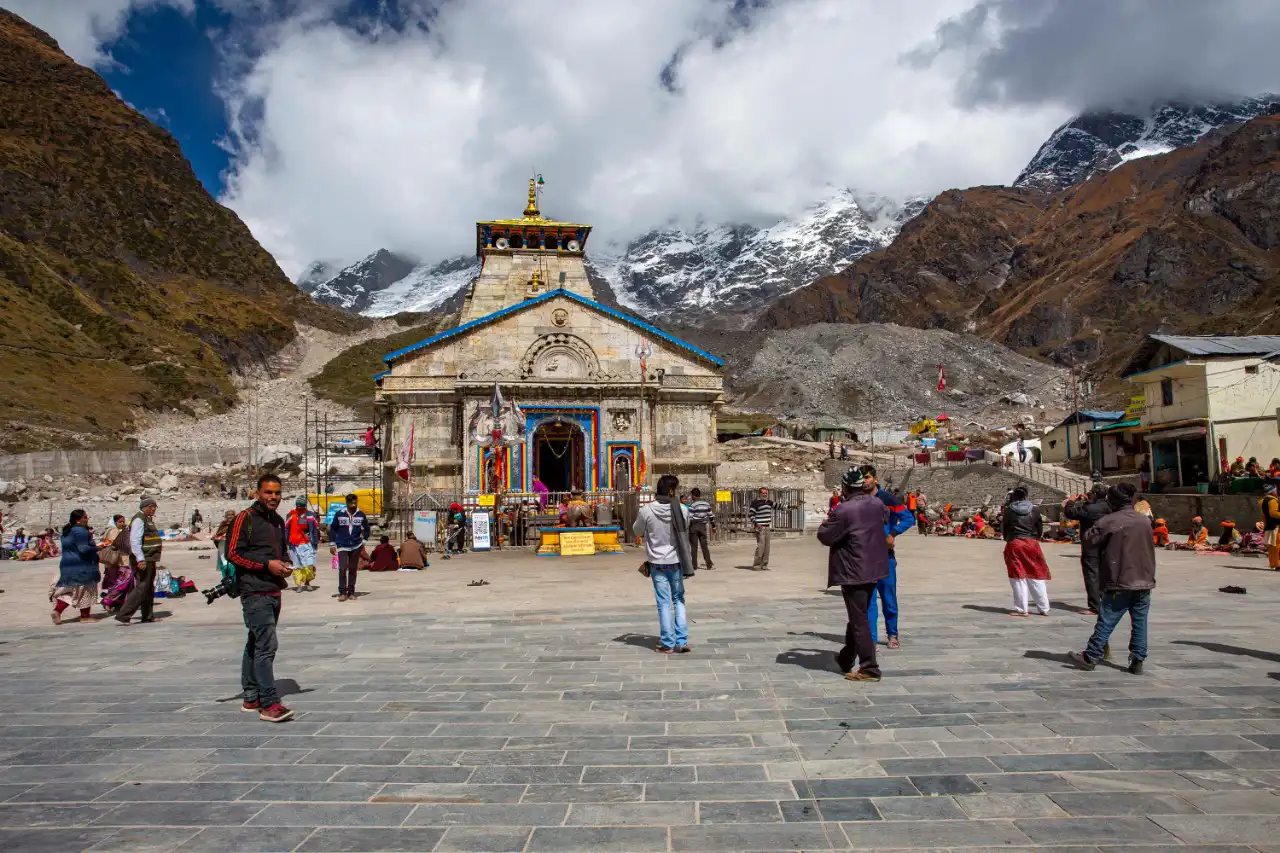
Badrinath Dham is a short drive from your stay at Joshimath (about 22 km). You can go for darshan and come back the same day.
An easy day trip from your stay
Kedarnath Jyotirlinga
Jyotirlinga · Chota Char Dham · Shiva · Uttarakhand
Kedarnath Jyotirlinga is an easy day trip from your stay at Joshimath (about 52 km).
UNESCO World Heritage
World Heritage Sites on this journey
This tour takes you close to 1 UNESCO World Heritage Site of India. These are places the world has recognised as our shared treasure. Below you can see each one and how far it is from where you stay, so you can plan your darshan and sightseeing with time to spare.
Right where you stay
Nanda Devi and Valley of Flowers National Parks
Natural · Inscribed 1988 · Uttarakhand
While you stay at Joshimath, you can visit Nanda Devi and Valley of Flowers National Parks, a UNESCO World Heritage Site.
Want to plan your trip around India’s World Heritage Sites? See all UNESCO World Heritage Sites of India.
Travel tips
Travel Tips
Travel Tips For This Tour
Travel Tips For Kuari Pass Trekking
Travel Tips For Kuari Pass Trek
- The Kuari Pass Trek is an easy to moderate trek and is a great place to start your trekking adventure if you are new to the world of trekking. Even in summer, the temperature can fall below zero during nighttimes. It is advisable to carry adequate clothing and snow glasses to protect oneself from snow blindness.
- First-time trekkers are urged to carry a trekking pole and buy hardy trekking shoes to protect your feet from the rugged terrain of the Kuari Pass Trek and snakebites. Also, try to exercise regularly so that you are accustomed to the continuous walking and climbing that you have to do on this trek.
- Carry energy bars with you as a snack if you get hungry on the Kuari Pass Trek as there very few shops.
- The best time to go on this trek is from April-June (summer) and September-October (autumn). Monsoons are very harsh in the Garhwal Himalayas as it as a rain shadow region and the roads are unsafe. The winters are bitterly cold.
- The Kuari Pass Trek is also called the “Lord Curzon Trail” as the erstwhile Viceroy of India, Lord Curzon was said to have travelled on this trail. The key feature of this trail is the lush alpine vegetation that you will get to experience firsthand, be it the silvery birch trees or the beautiful rhododendron. Strewn across the trail are innumerable chances of coming face to face with the Himalayan Black Bear or the Snow Leopard! The Kuari Pass Trek is the perfect match for the adventurer in you!
- Auli-Gorson is the place in India if you want to try your hand at some daredevil winter adventure sports like skiing and tobogganing. It is home to rolling snow-covered slopes and three of the country’s premier skiing resorts. Contact 91-983 793 7948 for more information.
- At Tapovan, try to take a dip in the sulphur hot springs. It is not only a religious experience but it also has many medicinal properties and has been known to cure many ailments.
- Drink only boiled water. Carry a well-equipped first-aid kit with you at all times.
Kuari Pass Trek
Rare Facts
- The difficulty level on this trek is low. Thus it is a great trek for first timers who wish to experience the adrenaline rush of trekking.
- Since the difficulty level is low, children above the age of 8 years can go on the Kuari Pass trek.
- A trekker hikes uptil an altitude of 3000 metres on the Kuari Pass trek.
- You may be lucky enough to spot footprints of the rare Himalayan Bear and leopards on your Kuari Pass Trek.
- The temperatures for the summer trek range from 13-18 degrees in the daytime and 1-6 degrees in the night time. The temperatures for the winter trek range from 14-18 degrees during the daytime and up to - 4 degrees during the nights.
- The usual trekking duration per day is 4-5 hours, except on days of cross passing when the duration may go up to 7 hours.
- The best time to undertake the Kuari Pass trek is in the months of November to Mach.
Additional Tips for the Trek
- Mobile network will only be available at Joshimath. Thus make sure you inform your family members about limited connectivity well in advance.
- In case of extremely cold night time temperatures on your Kuari Pass trek, keep in mind the formula of wearing 3 layers of clothing, woollen, inners and lower wear.
- Beware of Langurs and vultures on your Kuari Pass trek.
- You can find snow if you take up the trek in the months of December-April. Make sure you carry snow boots on your trek.
- Make sure you are well equipped before you commence your Kuari Pass trek. The basic equipment required is raincoats, backpacks and trekking poles.
- A trekker should have an experience of a short trek of 3-5 days before opting for the Kuari Pass trek.
What travellers say
What travellers say
4.7
Way to India · rated 4.7★ on Google across 46 reviews
Y
Yashvind Kumar Poteeram★★★★★
“A big thanks to Way To India for organising such a truly memorable and spiritually fulfilling experience during our 12 Jyotirlinga Darshan pilgrimage from 1st May to 18th May. They organized the entire journey exceptionally well, ensuring that every aspect of the trip was smooth, comfortable, and hassle-free. From transportation and hotel arrangements to darshan planning and coordination, everything was managed professionally. Despite the extensive travel across multiple destinations, the itinerary was well-structured, allowing us to complete all the Jyotirlinga darshans comfortably. Thanks to staff of Way To India, especially, Ms Neha, who was supportive, responsive, and attentive throughout the journey, always ready to assist whenever needed. Her dedication and careful planning made this sacred pilgrimage stress-free and enjoyable. I sincerely appreciate their excellent service, commitment, and hospitality. Highly recommend Way To India to anyone planning a spiritual tour, especially for the 12 Jyotirlinga Yatra. Thank you for making this divine journey so special and memorable.”3 months ago · Google
A
Aruna Persand★★★★★
“We have successfully completed the 12 Jyotirlinga Yatra, with Waytoindia and it was a truly blessed and unforgettable journey. Every aspect of the tour was well planned and professionally organized, from transportation and accommodations to temple visits and sightseeing. Visiting all twelve sacred Jyotirlingas was a deeply spiritual experience. The itinerary was designed efficiently, allowing us to have darshan at each shrine comfortably while enjoying the cultural and religious significance of every destination. We sincerely appreciate the excellent support and coordination throughout the trip. The team was always available to assist, ensuring a smooth and stress-free pilgrimage. Thank you Waytoindia for making our dream of completing the 12 Jyotirlinga Yatra a reality. We highly recommend this tour to anyone seeking a well-organized and spiritually enriching pilgrimage experience. Har Har Mahadev! 🙏🕉️”3 months ago · Google
Y
Yash Bhargava★★★★★
“We recently entrusted our honeymoon planning to 'Way to India', and it turned out to be one of the best decisions we made. From itinerary finalization to on-ground execution, everything was handled with remarkable professionalism, warmth, and attention to detail. Every aspect of our trip — flights, hotels, transfers, experiences, and even the small thoughtful touches — was perfectly curated. The itinerary was balanced, well-planned, and tailored exactly to what we wanted. We never had to worry about a single thing; all arrangements were seamless and absolutely hassle-free. What truly stood out was their responsiveness and genuine care. They were always available, always patient, and consistently went the extra mile to ensure our journey was special. Special thanks to Neha Ma'am for planning everything. We are incredibly grateful and wholeheartedly recommend their services to anyone looking for a stress-free, personalised, and delightful travel experience. Thank you for making our honeymoon truly magical!”6 months ago · Google
Travelled with Way to India?
Share your experience on Google — it takes a minute and helps fellow travellers plan with confidence.
FAQ
Frequently asked questions
The best times to trek the Kuari Pass are from April to June during the summer and from September to October in the autumn. These months offer favorable weather conditions with clear skies and moderate temperatures. Monsoon season can bring heavy rains, making trails slippery and unsafe, while winter temperatures can drop below freezing, especially at night.
For the Kuari Pass Trek, no special permits are typically required for Indian nationals. However, foreign nationals may need to obtain an Inner Line Permit (ILP) depending on the specific areas you plan to visit. It is advisable to check with local authorities or your trekking agency for the latest requirements.
When packing for the Kuari Pass Trek, include warm clothing, a waterproof jacket, trekking shoes, and snow glasses to protect against snow blindness. Energy bars and snacks are essential as there are limited shops along the route. A trekking pole can also be beneficial for stability on rugged terrain.
Yes, the Kuari Pass Trek is considered an easy to moderate trek, making it suitable for beginners. However, it is recommended that first-time trekkers engage in regular exercise to prepare for the physical demands of continuous walking and climbing.
The Kuari Pass stands at an altitude of 4,268 meters (14,000 feet). At this elevation, trekkers may experience mild altitude sickness symptoms. It's important to acclimatize properly, stay hydrated, and ascend gradually to minimize risks.
While the Kuari Pass Trek is generally safe, trekkers should be cautious of slippery paths, especially during or after rain. Carrying a first-aid kit and being aware of your surroundings can help mitigate risks. It's also advisable to trek with a guide or in a group for added safety.
Connectivity in the Kuari Pass region can be limited. Mobile networks may not be reliable in higher altitudes, and internet access is scarce. It's advisable to inform family or friends of your trekking plans before departure.
The Kuari Pass Trek typically spans 6 days, starting with your arrival in Joshimath. The itinerary includes driving to Auli, trekking from Gorson to Tali, ascending to Kuari Pass and back, and concluding with a trek to Dhak before returning to Joshimath.
Accommodation during the Kuari Pass Trek usually consists of tents or basic lodges along the route. In Joshimath, you can find more comfortable hotels. It's advisable to check with your trekking agency for specific arrangements.
If you experience symptoms of altitude sickness, such as headaches or nausea, it's crucial to descend to a lower altitude immediately. Rest, hydrate, and seek medical assistance if symptoms persist. Always listen to your body and prioritize safety.
The terrain on the Kuari Pass Trek varies from well-defined paths to rocky and uneven trails. Trekkers will encounter steep ascents and descents, especially on the way to Kuari Pass. Proper trekking shoes are essential for navigating the rugged landscape.
When trekking in the Kuari Pass region, it's important to respect local customs and traditions. Dress modestly, ask for permission before taking photos of locals, and be mindful of your waste to preserve the natural beauty of the area.
While solo trekking is possible, it is generally safer and more enjoyable to join a group or hire a guide. This ensures you have support in case of emergencies and enhances the overall experience through shared camaraderie.
You may also like
Similar journeys
 6D / 5N
 12D / 11N
Panch Kedar Tour Package: Five Shiva Temples of Garhwal in 12 Days
● Starts Rishikesh
₹45,000
From₹35,000* / personEMI from ₹1,714/mo
 11D / 10N
North India Divya Desam Tour Package: 7 Vada Naadu Temples in 11 Days
● Starts Delhi
From₹85,000* / person
Explore →EMI from ₹4,162/mo
 16D / 15N
 6D / 5N
Ready to plan your Kuari Pass Trekking?
Tell us your dates and group size. A WayToIndia travel expert replies within a few hours with a plan you can customise freely. Planning India journeys since 2010.
✓ No payment now✓ Free customisation✓ GST invoice✓ India + overseas support