01
Parmarth Niketan
Swarg Ashram
The sunset Ganga aarti, with a yagna half an hour before
September to November and February to April are the easiest months. Rafting runs about 10 months a year and stops in July and August. Avoid the Shravan month for crowds. May can touch 45 C.
Overview
This is a 2 nights and 3 days Rishikesh tour package. You start in Delhi or at Dehradun's Jolly Grant airport, and you end at the same place. You stay both nights in one hotel in Rishikesh, so you unpack only once.
On Day 1 you reach Rishikesh and sit for the evening Ganga aarti at Parmarth Niketan. On Day 2 you see the sunrise at Kunjapuri Devi, raft the Ganga if the season is open, walk across the new Bajrang Setu, see the Beatles Ashram and end the day at the Triveni Ghat aarti. On Day 3 you take darshan at Neelkanth Mahadev, sit in the satsang at Sivananda Ashram, and drive back.
Many packages list Laxman Jhula and Ram Jhula as places to walk across. In 2026 you cannot walk on either. We tell you what is open, and how to reach each ghat without getting stuck.
Yes, for the main places. Two nights give you two evening aartis, one sunrise, one temple day and one rafting run. Rishikesh is small, and most of it is close to the river.
Add a third night if you want a full yoga day, a quiet morning at the ashrams, or the Har Ki Pauri aarti at Haridwar. If you also want hills, our Haridwar Mussoorie tour package adds Mussoorie to the trip.
Most families come by road from Delhi. Here is what each way in looks like for you.
If you fly in from abroad, land in Delhi and rest one night first. A long flight and then a 6-hour drive is too much for most parents. The short Delhi to Dehradun flight is often the better choice. For a ready plan with the Delhi drive, see our Delhi to Haridwar Rishikesh tour package.
The old Laxman Jhula is closed. Experts declared the iron suspension bridge unsafe in 2019, and it was shut to the public. It was built between 1927 and 1929. Its plaques say it opened on 11 April 1930. Tradition says Lakshmana crossed the Ganga here on jute ropes. You can still see the old bridge from the banks, but please do not plan to walk on it.
Next to it now stands Bajrang Setu, a new bridge 132 m long and 8 m wide. On each side there is a walkway with thick glass under your feet, so you see the river below you. In late July and early August 2026, news reports said the bridge was complete and open. The glass walkways were open from 6 am to 10 pm. The middle part was free at all hours.
The same reports said a fee for the glass walkways had been approved, but was not yet being charged. Rules here are new and may change. Please confirm the current rate and timings on the spot. If you fear heights, walk in the middle part. Two-wheelers also use it, so keep children close.
No. Ram Jhula was built in 1986. It links Sivananda Nagar on the west bank with Swarg Ashram on the east bank. Two-wheelers were stopped on it in 2023. On the evening of 25 July 2026, it was closed to walkers too, for repairs to its foundation and cables.
The public works department aims to finish the work by December 2026. That is a target, not a promise. Until it opens again, you cross by Janki Setu, the bridge opened in November 2020. It links the Parmarth Niketan side with the Kailash Ashram side. It has separate lanes for walkers and two-wheelers, so keep children close to you.
Rafting on the Ganga runs for about 10 months a year. It stops in July and August for the monsoon. In some years it stops earlier: in 2025 it was halted on 24 June as the river neared the warning level. It opens again only after an official team inspects the river. That was 27 September in 2025 and 23 September in 2026.
The rapids on these stretches range from easy to very rough. The longer stretches upstream have bigger rapids. Here are the rules that matter to you:
For full rafting trips with camps, see our Shivpuri river rafting package. If you want rafting and a short trek together, see rafting in Rishikesh with trekking in the Himalayas.
See both. You have two evenings, so you can. They feel very different.
At Parmarth Niketan, the aarti is held every day at sunset on the ashram's own ghat. A yagna begins about half an hour before. Then come the lamps, the bhajans and the prayers, with the large statue of Lord Shiva on the bank behind. The ashram itself says the time changes with the season. In winter it is usually around 5 pm, and in summer around 6 pm. Ask at the reception that day.
At Triveni Ghat, near the main market, devotees believe the Ganga, Yamuna and Saraswati meet. People take a dip here and offer water for their ancestors. The evening aarti lasts about 45 minutes, and people float diyas on the river. It is usually around 5.30 pm in winter and around 6.30 pm in summer.
At both places, reach 45 minutes early for a good spot on the steps. Keep your bag in front of you. Parmarth also warns that it never asks for room payment by phone or WhatsApp. If anyone does, it is a fraud.
Yes. The sale of meat, fish and eggs is banned in Rishikesh. In 2004 the Supreme Court upheld the town's ban on eggs and non-vegetarian food. Alcohol is banned in the whole Rishikesh municipal area, and also within 2 km of the Virbhadra temple. Haridwar has the same rule on meat, fish, eggs and alcohol.
Please do not carry alcohol or non-vegetarian food into the town or to the ghats. Respect this rule as you would in a temple. The food is pure vegetarian and very good, so you will not miss anything.
Yes. The Beatles Ashram is the old ashram of Maharishi Mahesh Yogi. People call it Chaurasi Kutia, which means 84 huts. It sits in a corner of Rajaji Tiger Reserve, and the forest department runs it. The Beatles came here in February 1968 to learn meditation. In the weeks they stayed, they wrote about 30 songs.
The ashram was left empty in 1997. The forest department opened it to visitors again in December 2015. You walk among stone meditation huts, the old halls and big painted walls. There is an entry ticket, with a different rate for Indians and foreigners. Please confirm the current rate at the gate. In 2015 the park said it would open from November to June, so check it is open before you go in the monsoon.
Kunjapuri Devi is a temple of Goddess Durga at about 1,676 m, in Tehri district. The district site counts it among the 13 Shakti Peethas of the Shivalik hills, set up by Adi Shankaracharya. Tradition says a part of Goddess Sati's body fell here. At sunrise you see the snow peaks of Swargarohini, Gangotri, Banderpunch and Chaukhamba, and the valley of Rishikesh and Haridwar far below.
Neelkanth Mahadev is in Pauri Garhwal, deep in the forest. Tradition says Lord Shiva drank the poison that came out of the Samudra Manthan here, and his throat turned blue. The temple stands where the Pankaja and Madhumati rivers meet. The district site gives about 22 km by the Ram Jhula side and about 32 km by the barrage road. In Shravan, Kanwar devotees walk here from Haridwar, and the crowds are very large.
September to November and February to April are the easiest months. Days are pleasant, the river is clear, and rafting is open. In March, Rishikesh also holds the International Yoga Festival. In 2026 it ran on 16 to 22 March. Check the dates for your year on the official site.
May is hot. The temperature can touch 45 C. Plan outdoor places early and late. July and August bring the monsoon, rafting is closed, and the Shravan Kanwar crowds fill the roads and hotels. Unless you are coming for Shravan itself, avoid these weeks.
Haridwar holds the Ardh Kumbh from January to April 2027. The ten bathing days include 14 January, 6 March, 8 March and 14 April, the last three being Amrit Snan days. On these days roads near Haridwar close and crowds are huge. If your dates touch the Ardh Kumbh, please talk to us before you book.
Everything here is vegetarian. For a full thali, families go to Chotiwala, on the Swarg Ashram side. It opened in 1958. Today two Chotiwala restaurants stand side by side after a family split, each with its own Chotiwala mascot sitting outside. Parmarth Niketan's cafeteria serves simple satvik thalis. In the main market, try hot aloo tikki, samosa and jalebi, and chai at any corner stall.
For shopping, the lanes near the ghats sell religious items, incense, brass diyas, rudraksha malas and small bronze Shiva statues. Prices are usually fair, and you do not need to haggle much. Avoid unofficial guides who offer to take you to a shop. Never agree to carry stones or gems abroad for a gem shop. That is a known fraud.
If you want a longer holy trip, see our Haridwar Rishikesh tour, or the Char Dham yatra tour package, which starts from this side. For the whole state, see our Uttarakhand tour package.
We read the top pages that sell Rishikesh packages. Most give no day-by-day plan. None of them says that Ram Jhula is closed, and only one names Bajrang Setu. Most never give the rafting months or the safety rules. None explains the vegetarian and alcohol-free rule.
This page gives you the bridge status, the rafting months with the 2025 and 2026 opening dates, the aarti times by season, the Ardh Kumbh dates, and a clear river safety warning. Official sites come first, and then trusted guides. Where sources differ, we tell you so.
September to November and February to April are the easiest months. Rafting runs about 10 months a year and stops in July and August. Avoid the Shravan month for crowds. May can touch 45 C.
Hindu families with elders, devotees of Lord Shiva and Goddess Durga, couples, yoga seekers, young groups who want rafting, and NRI and OCI families on a short trip from Delhi.
Easy
Route & distances
Accurate distances and travel times for every leg: 485 km by road. Road times include a traffic buffer; distances marked “aerial” are straight-line for flight, helicopter, ropeway and water legs.
| # | Leg | Mode | Distance | Time |
|---|---|---|---|---|
| 1 | Delhi → Rishikesh | By road | 242 km | ~4h 31mest. |
| 2 | Rishikesh → Delhi | By road | 243 km | ~4h 21mest. |
Day by day
A carefully paced plan, day by day. Tap any day for the stay, meals and altitude detail.
Today you leave Delhi by 6 am, before the traffic builds. Our driver picks you up at the airport, the railway station or your hotel. The road to Rishikesh is about 230 to 250 km, about 6 to 7 hours with a tea stop. If you fly into Jolly Grant airport at Dehradun instead, you reach Rishikesh in about 45 minutes.
Check in to your hotel, have a light lunch and rest. The evening is the main part of today.
At about 4 pm, walk across Janki Setu to the east bank. Ram Jhula is closed for repairs, so this is your bridge. Walk slowly along the Swarg Ashram lanes, past ashrams and small temples, to Parmarth Niketan.
The yagna at the Parmarth ghat starts about half an hour before the aarti. Sit on the steps facing the river. As the sun sets, the priests and students lift the lamps, the bhajans begin, and the large statue of Lord Shiva glows on the bank. Float a diya on the Ganga if you wish. After the aarti, have dinner at Chotiwala on the Swarg Ashram side. It has fed pilgrims since 1958. You will see two Chotiwala restaurants side by side, each with its own Chotiwala mascot sitting outside. Then walk back over Janki Setu with a torch, as the lanes get dark.
Special Tips for This Day: Wear simple, modest clothes for the aarti, with shoulders and knees covered. Keep your shoes in the car or in a bag, as the steps are for bare feet. Monkeys near the bridges grab food and bags, so keep snacks out of sight. For elders, Jolly Grant is far easier than the long drive. Our driver can drop them close to the Janki Setu end so they walk less.
Today you wake early. Leave the hotel at about 4.30 am in summer or 5.30 am in winter, about an hour before sunrise. The hill road to Kunjapuri Devi climbs all the way. The temple stands at about 1,676 m. The Tehri district site says it is 15 km from Rishikesh, but by the hill road it is about 25 km. From the parking, you climb a long flight of steps to the temple.
Take darshan of the Goddess, and then stand on the east side. As the sun comes up, the snow peaks of Banderpunch, Gangotri, Swargarohini and Chaukhamba turn pink and then white. Far below, you see Rishikesh, Haridwar and the Doon valley. Carry a shawl; it is cold up here before the sun.
Come back for breakfast. If rafting is open, our team books you with a licensed operator. The operator drives you upstream, gives a safety talk, and fits your helmet and life jacket. Then you paddle down the Ganga to Rishikesh. A run takes about 2 to 3 hours. If rafting is closed, or you do not want it, rest at the hotel or join a yoga class at one of the ashrams.
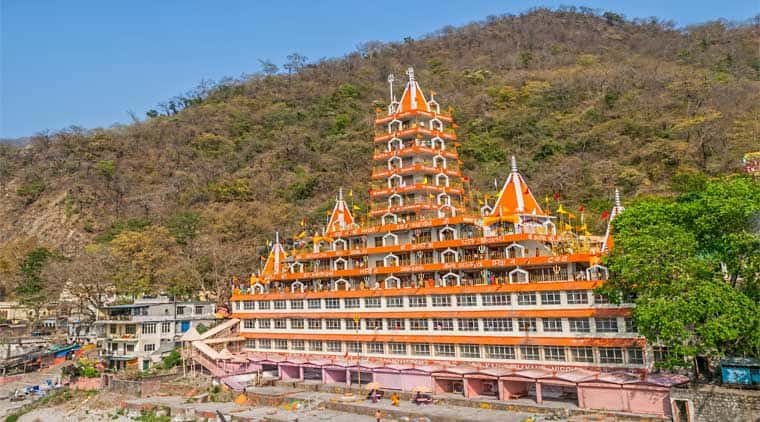
After lunch, drive to the Tapovan side and walk across Bajrang Setu. From the glass walkway you look straight down at the river. Next to you stands the old Laxman Jhula, closed since 2019. Close by rises the tall Tera Manzil temple, 13 storeys high.
At about 3 pm, visit the Beatles Ashram, run by the forest department inside Rajaji Tiger Reserve. Walk among the round stone huts and the painted halls. In the evening, go to Triveni Ghat near the main market for the Ganga aarti, about 45 minutes of lamps, bells and chants. For dinner, the market stalls sell hot aloo tikki and jalebi.
Special Tips for This Day: Carry a light jacket for Kunjapuri, even in March and October. For rafting, wear quick-dry clothes and strapped sandals, and leave phones and gold at the hotel. Do not jump into the river unless the guide says it is safe. This is a long day, so elders can skip rafting and the Beatles Ashram, rest after lunch, and come out only for the Triveni Ghat aarti.
Today you leave at about 6 am for Neelkanth Mahadev. The temple is in Pauri Garhwal, in thick forest. By the Ram Jhula side the road is about 22 km, and by the barrage road about 32 km. The road is narrow and winding, so allow about 1.5 hours each way. Going early means a short queue.
Tradition says Lord Shiva drank the poison of the Samudra Manthan here, and it turned his throat blue. Offer water, milk or bel leaves to the Shivling, as devotees do. Outside, small stalls sell puja items and hot chai.
Come back by about 11 am. If you have time before the drive, visit Sivananda Ashram on the west bank, about 3 km from the town. Swami Sivananda set up the Divine Life Society here in 1936. Sit quietly in a temple there, or join the daily satsang if it is on. Have an early lunch.
Then you drive back. Delhi is about 230 to 250 km, about 6 to 7 hours. Jolly Grant airport is about 45 minutes away. If you added the Haridwar night, you drive about 25 km to Haridwar instead. There you sit at Har Ki Pauri for the sunset aarti at Brahmakund, one of the best-known aartis on the Ganga.
Special Tips for This Day: Avoid Neelkanth in the Shravan month and on Maha Shivaratri unless you come for them; the queue then runs for hours. Carry water and a little cash for the stalls. People who get car sick should sit in front and eat a light breakfast. If you fly out of Jolly Grant, keep at least 2 hours between leaving Neelkanth and your check-in.
Travel tips
On this trip you sit for the Ganga aarti at Parmarth Niketan and Triveni Ghat, watch the sunrise at Kunjapuri Devi, take darshan at Neelkanth Mahadev, and raft the Ganga when the river is open. Here is what you should know before you go, and while you travel.
The easiest months are September to November and February to April. Avoid the Shravan month unless you come for it.
Haridwar holds the Ardh Kumbh from January to April 2027. The Amrit Snan days are 6 March, 8 March and 14 April. On bathing days, roads near Haridwar close and crowds are huge. If your dates touch these days, keep one day spare.
In 2026 you cannot walk on Laxman Jhula or Ram Jhula. Use Bajrang Setu at Tapovan and Janki Setu near Parmarth.
A fee for the Bajrang Setu glass walkways was approved in July 2026 but was not yet being charged. Please confirm the current rate on the spot.
Rafting runs about 10 months a year and stops in July and August. It opens again only after an official inspection.
In 2025, rafting was stopped on 24 June, as the Ganga neared the warning level. If you travel in June, keep a backup plan for the rafting morning.
Both aartis are held every evening at sunset, so the time moves with the season. Reach 45 minutes early.
Parmarth Niketan says it never asks for room payment by phone or WhatsApp. If anyone asks you to pay that way in its name, do not pay.
The sale of meat, fish and eggs is banned in Rishikesh, and alcohol is banned in the whole municipal area.
The Ganga at Rishikesh is cold, fast and deep. Take your dip only at a busy main ghat, stay in the shallow part, and never go in alone.
This tour starts in Delhi or at Jolly Grant airport, Dehradun. Choose what suits your family.
Rishikesh is about 230 to 250 km from Delhi, about 6 to 7 hours. Leave by 6 am to miss the city traffic.
The airport is about 20 km from Rishikesh, about 45 minutes. This is the easiest way in for elders.
Most trains from Delhi stop at Haridwar, about 25 km from Rishikesh. Only a few slow trains run on to Rishikesh. Check the current trains on the official IRCTC site.
Land in Delhi and rest one night. Then take the short flight to Dehradun, or drive up the next morning. A long flight and a 6-hour drive on the same day is too much for most parents.
Om Jai Gange Mata, Shri Jai Gange Mata
When the lamps rise at Parmarth and Triveni Ghat, the whole ghat sings to Mother Ganga. Devotees believe the river carries their prayers, and the prayers of their ancestors, down to the plains. Float your diya, watch it drift away in the dark, and you carry a little of Rishikesh home with you.
What's included
What travellers say
“Had a wonderful experience with way to india for my badrinath kedarnath yatra.everything was well organized-from travel accommodation to food. A special thanks to Ms. Neha who managed everything so beautifully n was extremely supportive n cooperative throughout the journey. They took great care of us n darshan was done very smoothly.”3 weeks ago · Google
“A big thanks to Way To India for organising such a truly memorable and spiritually fulfilling experience during our 12 Jyotirlinga Darshan pilgrimage from 1st May to 18th May. They organized the entire journey exceptionally well, ensuring that every aspect of the trip was smooth, comfortable, and hassle-free. From transportation and hotel arrangements to darshan planning and coordination, everything was managed professionally. Despite the extensive travel across multiple destinations, the itinerary was well-structured, allowing us to complete all the Jyotirlinga darshans comfortably. Thanks to staff of Way To India, especially, Ms Neha, who was supportive, responsive, and attentive throughout the journey, always ready to assist whenever needed. Her dedication and careful planning made this sacred pilgrimage stress-free and enjoyable. I sincerely appreciate their excellent service, commitment, and hospitality. Highly recommend Way To India to anyone planning a spiritual tour, especially for the 12 Jyotirlinga Yatra. Thank you for making this divine journey so special and memorable.”4 months ago · Google
“We have successfully completed the 12 Jyotirlinga Yatra, with Waytoindia and it was a truly blessed and unforgettable journey. Every aspect of the tour was well planned and professionally organized, from transportation and accommodations to temple visits and sightseeing. Visiting all twelve sacred Jyotirlingas was a deeply spiritual experience. The itinerary was designed efficiently, allowing us to have darshan at each shrine comfortably while enjoying the cultural and religious significance of every destination. We sincerely appreciate the excellent support and coordination throughout the trip. The team was always available to assist, ensuring a smooth and stress-free pilgrimage. Thank you Waytoindia for making our dream of completing the 12 Jyotirlinga Yatra a reality. We highly recommend this tour to anyone seeking a well-organized and spiritually enriching pilgrimage experience. Har Har Mahadev! 🙏🕉️”5 months ago · Google
Travelled with Way to India?
Share your experience on Google — it takes a minute and helps fellow travellers plan with confidence.
FAQ
Two nights and three days cover the main places in Rishikesh: two evening Ganga aartis, the Kunjapuri sunrise, a rafting run and Neelkanth Mahadev. Add a third night for a quiet yoga day or for the Har Ki Pauri aarti at Haridwar.
Rishikesh is about 230 to 250 km from Delhi, about 6 to 7 hours by car. Leave Delhi by 6 am. Most trains from Delhi stop at Haridwar, about 25 km away. Jolly Grant airport at Dehradun is about 20 km from Rishikesh and is the easiest way in for elders.
No. Experts declared the old Laxman Jhula unsafe in 2019, and it is closed. Next to it is the new Bajrang Setu, 132 m long. In July and August 2026, news reports said the glass walkways were open from 6 am to 10 pm, and a fee had been approved for them. Confirm the current rules on the spot.
Ram Jhula was closed to walkers on 25 July 2026 for repairs to its foundation and cables. The public works department aims to finish by December 2026, but that is only a target. Until then, cross the Ganga by Janki Setu, which links the Parmarth Niketan side with the Kailash Ashram side.
Rafting on the Ganga runs about 10 months a year and stops in July and August for the monsoon. It can stop earlier if the river rises, as on 24 June 2025. It reopens after an official inspection: on 27 September in 2025 and on 23 September in 2026.
Rafting is safe when you follow the rules. Book only with a licensed operator and certified guides. A certified life jacket and helmet are compulsory, and no raft may carry more people than its capacity. Children have a minimum age that differs by stretch, so ask the operator before booking.
The aarti at Parmarth Niketan and at Triveni Ghat is held every evening at sunset, so the time changes with the season. In winter it is usually around 5 to 5.30 pm, and in summer around 6 to 6.30 pm. At Parmarth, a yagna starts half an hour before. Reach 45 minutes early.
No. The sale of meat, fish and eggs is banned in Rishikesh, and the Supreme Court upheld the ban in 2004. Alcohol is banned in the whole Rishikesh municipal area. Haridwar has the same rule. Please do not carry alcohol or non-vegetarian food to the town or the ghats.
The Pauri district site gives about 22 km by the Ram Jhula side and about 32 km by the barrage road. The forest road is narrow and winding, so allow about 1.5 hours each way. Go early in the morning. In the Shravan month the Kanwar crowds make the queue very long.
Yes. The Beatles Ashram, or Chaurasi Kutia, is inside Rajaji Tiger Reserve and is run by the forest department. It reopened to visitors in December 2015. There is an entry ticket with separate rates for Indians and foreigners; confirm the current rate at the gate. The Beatles stayed here in 1968.
September to November and February to April are the best months, with pleasant days and rafting open. March brings the International Yoga Festival. May can touch 45 C. July and August bring the monsoon, rafting closes, and the Shravan Kanwar crowds fill the roads and hotels.
Yes, with planning. Fly into Jolly Grant airport instead of the 6-hour drive. Elders can see both aartis, Neelkanth and the ashrams by car with short walks. Skip rafting and the Kunjapuri steps if knees are weak. Note that Ram Jhula is closed, so cross by Janki Setu.
Before you book
You may also like
 11D / 10N
 6D / 5N
 4D / 3N
 7D / 6N
 12D / 11N
 8D / 7N
Tell us your dates and group size. A WayToIndia travel expert replies within a few hours with a plan you can customise freely. Planning India journeys since 2010.
Explore Way to India
© 2026 Way to India. All rights reserved.